Israel

Is John Fetterman the new Kyrsten Sinema?

Few politicians have managed to surprise the country the way Pennsylvania senator John Fetterman has in the past few months. Fetterman proclaimed on the campaign trail, while running against Republican Mehmet Oz, that he is not just a Democrat, but a “proud progressive”. The junior senator, though, insisted in an NBC News interview on Friday that he is not a progressive and that voters shouldn’t be surprised when he breaks from the party line. Indeed, he has recently taken several high-profile policy positions that suggest an independent streak that brings him closer to Senate colleagues Kyrsten Sinema and Joe Manchin than the left-wing “Squad”.

The folly of LGBT sympathy for Hamas

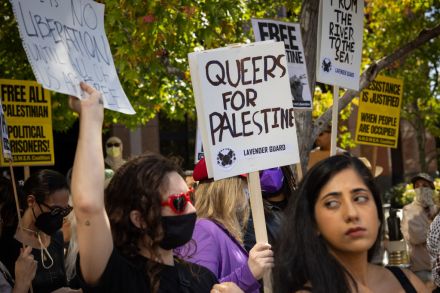
Beyond Hamas’s ruthlessness — and Israeli prime minister Benjamin Netanyahu’s fecklessness — one thing that’s become increasingly clear since the October 7 attack on Israel is that social justice groups and identity crusaders no longer possess even a shred of seriousness. How could they, with feminist organizations still questioning the legitimacy of Hamas’s sexual violence against Israeli women? Or lesbian, gay, bisexual and trans groups insisting that “queer issues are Palestinian issues” — despite Hamas’s paper trail of violent queer death? Or the folks from #BlackLivesMatter unwilling even to consider in the slightest that Jewish lives matter too?

queers for palestine hamas lgbtq

Portrait of the week: Elgin Marbles madness, Israel/Hamas ceasefire and Oscar Pistorius freed

From our UK edition

Home Net migration reached a record 745,000 last year, the Office for National Statistics said, 139,000 higher than the 606,000 it had previously given. Robert Jenrick, the minister for immigration, was reported to be ‘pressuring’ No. 10 with ideas for cutting immigration, such as by making a minimum salary of £35,000 a requirement for a work visa. Rishi Sunak, the Prime Minister, had agreed with Suella Braverman, when she was home secretary, to raise the salary requirement to £40,000, according to a copy of their agreement seen by the Telegraph. Eight small boats carried 364 migrants to England on 26 November. Caolan Gormley, 26, from Co.

biden respect

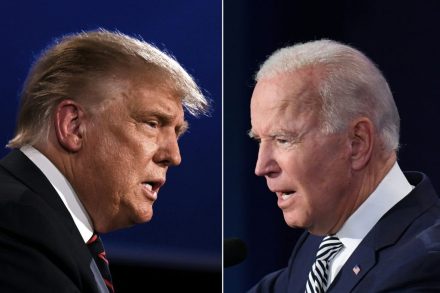
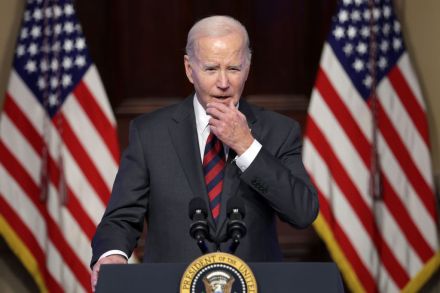
Joe Biden don’t get no respect

During Donald Trump’s tenure in the White House, it became common knowledge that the best way to lobby the president on a particular position was to do an interview on the right cable news programs espousing your views. Gone were the days of relevance of Wall Street Journal op-eds during the George W. Bush administration or articles in the Atlantic for the Barack Obama era. If you wanted to change POTUS’s thinking on something, get in front of a camera and make yourself heard. Now, in the context of the Democratic Party’s split over Israel and the war in Gaza, we are witnessing a surprisingly similar public lobbying campaign play out for Joe Biden’s attention — albeit via different methods than cable news.

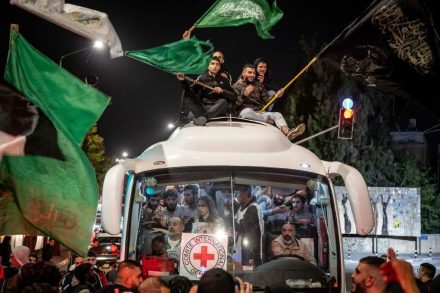
Why hasn’t Hamas freed its American hostages?

Hamas’s most valuable assets are the American hostages it holds. That simple fact means the terrorist organization will demand the highest value in return. What can America give Hamas in exchange? Not prisoners, since the US doesn’t hold any Hamas fighters. That means the US cannot follow the Israeli pattern of giving Hamas three Palestinian prisoners in exchange for every one held by Hamas. Nor can America provide boatloads of cash, as the Biden administration has for Iran. Biden could continuing giving Iran money, but that is much harder in the midst of war. And it is untenable politically to pay Hamas directly while the fighting continues. The Biden team might promise to help rebuild Gaza later, but that’s not valuable to Hamas right now, as it fights for its life.

hamas

Israel’s challenge

From our UK edition

42 min listen

On the podcast: Anshel Pfeffer writes The Spectator’s cover story this week. He voices concern that support from Israel’s allies might begin to waver if they don’t develop a viable plan after the war finishes. Paul Wood – former BBC foreign correspondent – and Dennis Ross – former Middle East coordinator under President Clinton and advisor to President Obama – join the podcast to debate whether Israel can rely on its allies. (01:18) Also this week: In the Books section of the magazine this week we review Andy Stanton’s new book Benny The Blue Whale. It has a fascinating inception and was co-authored by the machine learning tool ChatGPT.

Portrait of the week: tax cuts, hostage releases and highly rated horses

From our UK edition

Home Rishi Sunak, the Prime Minister, said, ‘We can now move on to the next phase of our economic plan and turn our attention to cutting taxes,’ having seen a reduction in inflation. Jeremy Hunt, the Chancellor of the Exchequer, followed suit in the Autumn Statement, cutting personal taxes. The government was to make changes to long-term benefits. The minimum wage, known officially as the National Living Wage, currently £10.42 an hour for those over the age of 23, will rise to £11.44 an hour for those over 21 from next April. The government also drew attention to £8.3 billion allocated to mending potholes, money purportedly saved from the curtailment of the HS2 project. Households living close to new pylons would receive compensation.

I hope David Cameron will find time to drink the odd good bottle

From our UK edition

Back in 1989, a most unsatisfactory fellow called General Aoun started a civil war around Beirut in the hope of seizing control of the Maronite Christian portions of Lebanon. He ended up with political wreckage, which has endured. Château Berliquet 2015 is a fruity St Emilion that deserves to be better known During the fighting, I spent a few days cut off in the British ambassador’s summer residence, watching the battle going on below. We felt safer than we probably were, partly because Pauline Ramsay, the ambassador’s enchanting wife, tried to turn the crisis into a house party. So British: so best of British. We watched, helpless, as one block of flats was regularly hit by shells.

My futile morning guarding Churchill’s statue

From our UK edition

On Armistice Day I made my way to Parliament Square with some vague notion of protecting Churchill’s statue. I’d discussed the need to stop it being defiled by pro-Palestinian protestors a few days earlier with a group I’m involved with called the British Friends of Israel, but in my head this had been a theoretical discussion, not something that involved me personally. Then Allison Pearson, a member of the group, announced in the Telegraph that she intended to stand in front of the statue armed with a rolled-up copy of the paper, and I felt shamed into joining her. Not that I was worried about her being knocked over by some thug in a Hamas headband. Rather, I didn’t want her to hog all the glory if a last-ditch defence proved necessary.

The fight ahead

If there could ever be a positive that comes out of the horrific terrorist attacks in Israel in October, it’s this — the battle lines have never been clearer. That may seem obvious in the context of Israel versus Hamas, but for Americans, watching the drawing of the fault lines has been extremely clarifying. In the hours that followed the atrocities, the people who reject any sort of nuance in politics wanted to “put into context” the murders of 1,400 Jews — including elderly Holocaust survivors, women and children. The Manhattan chapter of the Democratic Socialists of America, of which Representative Alexandria Ocasio-Cortez remains a member, tweeted support of Palestine and its intention of holding a rally in Times Square.

editorial cover

On the ground in Ashkelon

Southern Israel I woke up on Tuesday morning, October 10, having just got back from New York City covering a big pro-Palestine protest. War reporting has been something I’ve always wanted to do. I figured it might be hard to catch a flight to Israel with everything going on, but because of the large Jewish and Israeli population living around Miami, there was a direct El Al flight that evening to Tel Aviv for $800. It was the last direct flight out of Miami for a couple of days, so I thought, “If I am going to do this, today is the day.” I was planning on leaving my job at Townhall the following week to start my independent Substack, but told them I was departing that day to go cover the war in Israel. They wished me well and off I went.

Israel

Is killing civilians ever justified?

Israel said its tanks had “encircled” Gaza City as this went to press, the ground offensive being stepped up after a tentative beginning — but there’s been nothing tentative about Israel’s bombings from the air. Here’s a report of one incident: at 4:30 p.m. on October 10, an explosion collapsed a six-story building in Sheikh Radwan, a district of Gaza City, killing, it was said, at least forty civilians. A man named Mahmoud Ashour had to dig through the rubble with his bare hands to find members of his family. Buried there were his daughter and her four children, a girl aged eight and three boys of six, two, and six months, all killed. They had fled there thinking it would be safer than other parts of Gaza. But, he said: “I couldn’t protect them.

Israel killing

The year’s horrors have left me speechless

I’ve started and stopped three articles, written 1,500 words and hated every single one. This column was due days ago and I’ve been stuck. Completely blocked. I’m not sure if it’s one thing or many things — and sometimes the only way through writer’s block is to sit down and write all the jumbled, disconnected thoughts that are jamming me up. So I will start this piece and end this year with an apology to my editor and to you, dear reader. There is the thought that stands in the way of every other thought — and because I refuse to put horrifically graphic images in your head while you sip your coffee, I’ll let you fill in the blanks yourself. But the thought goes something like: “Hamas did X and Y and Z and I’m supposed to write or care about anything else?

horrors
harvard hamas

How Harvard befriended Hamas

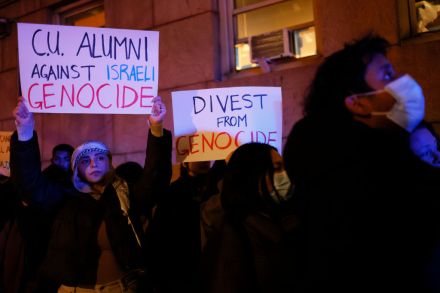
In the aftermath of the October 7 attack on Israel, when videos were circulating on social media showing the enormities perpetrated on Israelis by Hamas terrorists — women raped, old people and children abducted, civilians murdered en masse — students of Harvard’s leftist groups banded together to condemn... Israel. Members of thirty-four student organizations signed a letter declaring that they “hold the Israeli regime entirely responsible for all unfolding violence.” The spectacle of America’s elite youth engaging in a shameless act of victim-blaming sent shockwaves through the world. Reprehensible as the letter is, the reality is that Harvard’s relentless pursuit of elitism has, for generations, been a breeding ground for antisemitism.

post-Cold War era

Why the post-Cold War era is far from over

In various speeches this year, secretary of state Antony Blinken has declared that “the post-Cold War era is over.” The announcement passes all but unnoticed, eclipsed as it is by crises, such as war in Ukraine and the Middle East, that make Blinken’s point in a starker way. Not so long ago, it was taken for granted that the fall of the Berlin Wall in 1989 had inaugurated a new age. Now, if Blinken is correct, the lifespan of that age hardly exceeds the duration of Tom Brady’s career as a star quarterback. By 1989, the United States had ascended to the status of sole remaining superpower. No challenges to its global primacy — political, military, economic or cultural — were visible anywhere on the horizon.

jewish

Indian Exodus: the Jewish population exits after 2,000 years

In December the Gate of Heaven synagogue in Thane, a city that links the peninsula of Mumbai with the Indian mainland, will light the Chanukah menorahs as it has annually since its opening in 1879. Among the initial members were Jews whose ancestors may have arrived in India during the time of King Solomon, when Middle East trade routes were established to exchange iron, peacocks, gems, ginger and other spices. Over the many intervening centuries, waves of Jewish immigration have washed up on the Indian shores from different ends of the earth. The varying groups came with separate traditions and practices and ways of living, but they shared prayers and faith, a distinct identity in a country where identity carries great importance.

The shrinking lifespan of the college president

Twenty-five years ago I published an essay titled “Dogfish.” It was not about the little sharks that skim along the bottom of the Atlantic and Pacific coasts and only rarely end up on the American dinner table. It was rather a fanciful way to draw attention to the brevity of the average tenure of the college president. Back then the average president served 6.7 years. The spotted dogfish, by contrast, was believed to live almost three times as long. A lot has changed in the intervening quarter century. For one thing, it is now believed that the natural lifespan of the dogfish is thirty-five to forty years, though some say eighty.  Meanwhile the average term of a college president has shrunk to 5.9 years.

college president

Portrait of the week: Met in a muddle, King’s Speech and a wine production slump 

From our UK edition

Home Rishi Sunak, the Prime Minister, said of pro-Palestinian demonstrations: ‘To plan protests on Armistice Day is provocative and disrespectful, and there is a clear and present risk that the Cenotaph and other war memorials could be desecrated.’ The Metropolitan Police urged organisers of a pro-Palestinian march on 11 November to postpone it, but they refused. The Prime Minister then said he would hold the Metropolitan Police Commissioner ‘accountable’ for his decision to greenlight the ‘disrespectful’ demonstration. Imran Hussain MP left the Labour front bench over Sir Keir Starmer’s opposition to a ceasefire in Gaza, and Afrasiab Anwar, the leader of Burnley council, and ten councillors left the Labour party.

Benjamin Netanyahu is increasingly seen as Israel’s curse

From our UK edition

Jerusalem On Tuesday, I was driving down to an Israeli army headquarters on the border with Gaza as a massive convoy of police cars and black bullet-proof limousines forced me onto the side of the road by the town of Ofakim. In Israel, only one man travels in a convoy that large.  It was 7 November, a month after the Hamas attack on Israeli communities in which 1,400 were murdered and the war between Israel and Hamas in Gaza began. Even during peacetime the Prime Minister’s movements are shrouded in secrecy until he is safely back in one of his homes or offices.