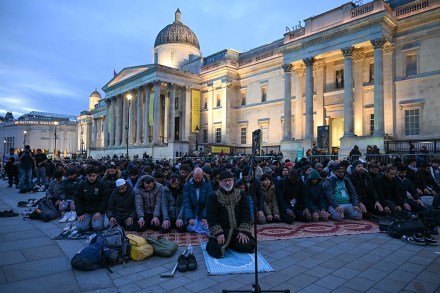
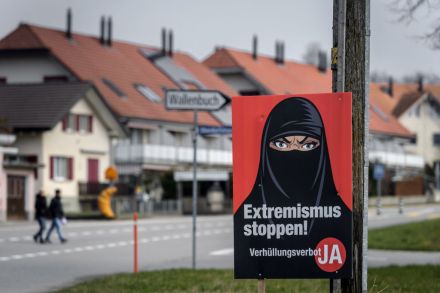
Islamophobia

Minouche Shafik and the great tragicomedy of Diversity in our time

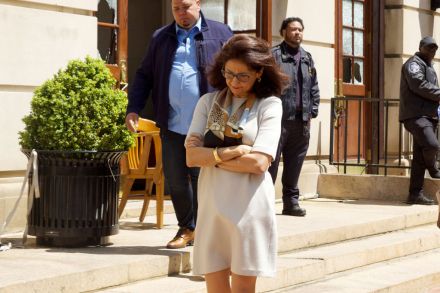
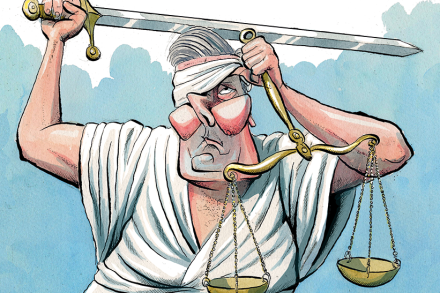
Minouche Shafik has reigned as president of Columbia University. Culture wars, like the kind involving actual armies, have casualties. Shafik is the fourth Ivy League president to step down in the last nine months. She was proceeded by Liz Magill at the University of Pennsylvania and Claudine Gay at Harvard. Magill and Gay were casualties of their hapless testimony before the House Education and Workforce Committee hearing on December 5 and, in Gay’s case, the subsequent revelations about her serial plagiarism. She was also proceeded by Martha Pollack, president of Cornell University, who hung up her mortar board in June, without an assist from the House committee but citing the “enormous, unexpected challenges” of having to deal with antisemitism and Islamophobia.

White House announces effort to counter Islamophobia as antisemitism rises

War is raging in Israel and Kamala Harris is holding down the home front with the same political aplomb she handled the border crisis — that is to say, poorly. With thousands of lives lost in Israel and an increasing number of antisemitic attacks in the US, Harris is proud to announce the White House's new program to target... Islamophobia.   “Taking on hate is a national priority. Today, @POTUS and I are announcing the country’s first National Strategy to Counter Islamophobia. This action is the latest step forward in our work to combat a surge of hate in America,” Harris shared in a post on X Wednesday evening.   https://twitter.

kamala harris islamophobia

The university fighting back against the diversocrats

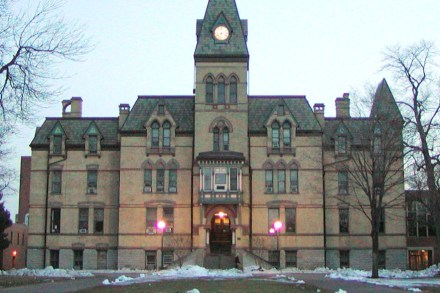
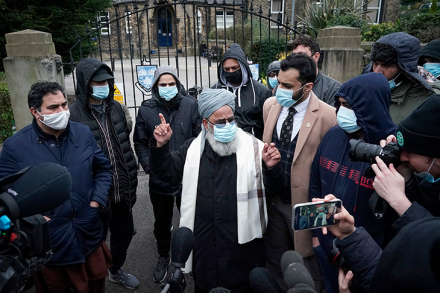
The latest news in the Hamline University saga is that a large majority of the faculty — seventy-one of ninety-two members — have called on university president Fayneese Miller to resign. Miller had played the principal part in the dismissal of art history instructor Erika López Prater, after Prater had shown two images of the Prophet Mohammed in her online art history class. One image was a slide of a fourteenth-century painting by a Muslim artist; the other was Muslim painting from the sixteenth century in which the Prophet is veiled. Condemnation of the Hamline administration for dismissing Prater has been nearly universal in American higher education.

Art history is now ‘Islamophobic’

At a private liberal arts college in Minnesota, art history is now Islamophobic. In October, an art history professor at Hamline University was teaching Islamic art, a segment that included two depictions of the Prophet Mohammed in fourteenth- and sixteenth-century paintings with significant historical value. The professor alerted her students beforehand, careful to ensure that observant Muslims who object to the depiction of their prophet would not have to see him on screen. It seems that the professor had done everything right: providing images of famous paintings for her students’ edification but allowing students to opt out of viewing them if doing so ran contrary to their religious beliefs. But who are we kidding? This is a liberal arts college in the twenty-first century.

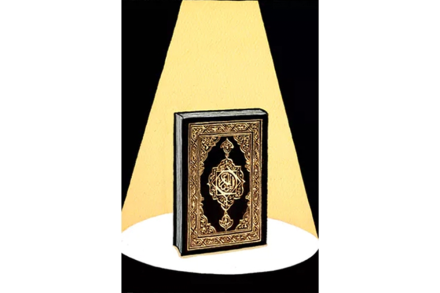
Quaran

China’s war on Islam

The Reuters photo could be mistaken for a shot of one of America’s ‘supermax’ prisons, the ones where the most dangerous criminals are held. An endless green security fence, topped with coils of barbed wire, punctuated by soaring octagonal guard towers with 360-degree views, all fronting what looks like a massive concrete wall or side of a building. Yet the Chinese workers walking outside the fence give away the truth. The picture is not of a US prison, but rather a Chinese ‘re-education’ center in vast Xinjiang, in the country’s far west. According to research by the Australian Strategic Policy Institute, there are 28 such massive detention camps in Xinjiang, most built within just the last several years.

uighurs

Why do terrorists attack houses of worship?

With the mosque shooting in New Zealand, the bombings of churches in Sri Lanka and the attack on a synagogue in Poway, California, each of the major monotheistic religions have had places of worship attacked by terrorists almost within a month. Houses of worship are a common target for racial and religious supremacists. In the United States, there have been, within the last decade, neo-Nazi shootings at a gurdwara in Oak Creek, Wisconsin, a black church in Charleston, South Carolina and the Tree of Life synagogue in Pittsburgh, Pennsylvania. These events have kept alive a grim tradition, going back to the 16th Street Baptist Church bombing of 1963, where Ku Klux Klansmen attacked a church with dynamite and killed four little girls.

places of worship

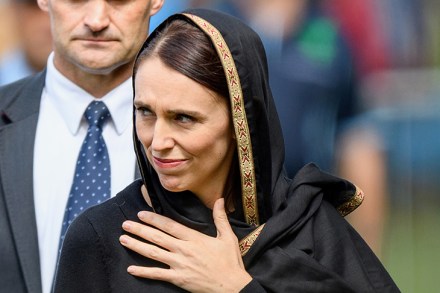
Jacinda Ardern’s hijab shows what New Zealanders really think of Muslims

The reaction of New Zealand’s vast non-Muslim majority to the terrorist attack at the Al Noor mosque in Christchurch is both inspiring and alarming. Inspiring because, faced with a group of mostly recent arrivals who constitute a mere 1 percent of New Zealand’s population, the other 99 percent have chosen not to ignore their loss and distress, but to commiserate and console at a time when liberal democracies are beset by factional resentments. What is alarming is the form the reaction has taken. When New Zealand’s prime minister Jacinda Ardern observed Friday prayers in the park outside the mosque, she and many other non-Muslim women wore a hijab.

jacinda ardern

Ghosts of the Balkan wars are returning in unlikely places

Why is the Christchurch far-right terrorist obsessed with the crazy-haired Serb that the UN just sentenced to life in prison? How Balkan war criminals became idols to Western extremists is a bizarre story that shouldn’t be real, but is. Twenty years ago this week, NATO decided to take Kosovo away from Serbia. The Rambouillet Agreement of March 18, 1999, named for the château outside Paris where negotiations failed to resolve that Balkan crisis without wider war, set the stage for an independent Kosovo under NATO administration and protection. Five days after US, British, and Albanian delegations signed the Rambouillet Agreement – Serbian and Russian delegations refused to sign – NATO bombs started to fall on Serbia, and they kept falling for 78 days.

radovan karadžić balkan