Islam

As a Muslim woman, I’d like to thank Boris Johnson for calling out the niqab | 8 August 2018

From our UK edition

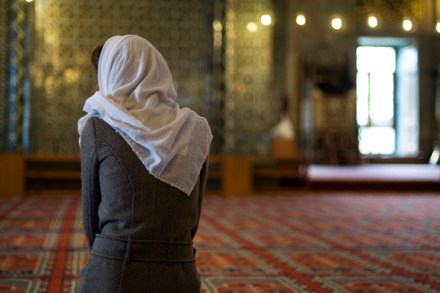
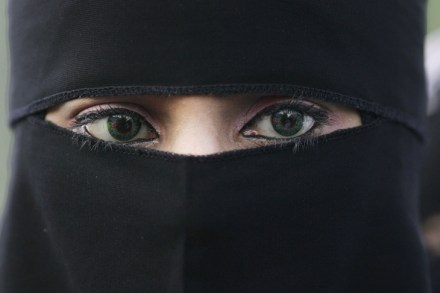
As a Muslim woman observing Islam, I am fully supportive of Boris Johnson’s rejection of the niqab. And I wonder how many of the former Foreign Secretary’s critics understand my religion, what this form of dress represents and the subjugation it implies. To defend the niqab and to defend Muslim women are, I can assure you, two very different things indeed. Growing up Muslim in Britain, not once was I compelled to cover my hair. This changed when I moved to Saudi Arabia to practice medicine. Arriving in the Kingdom, by Saudi Arabia’s Sharia law, I could not go out into public without concealing my entire body, save face and hands, in a flowing, black abayya. This was my first experience of enforced veiling. And my last.

Boris Johnson’s Trumpian path to power

From our UK edition

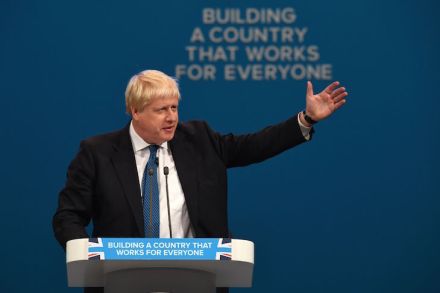
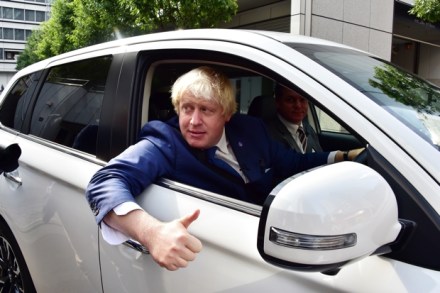
Barely had the ink dried on Stephen Robinson’s imaginative apologia for Boris Johnson — he is compared, courageously, to Churchill — than the former foreign secretary reminded us of his capacity for blunder. In his Telegraph column Johnson assailed the ‘burka’ for leaving Muslim women ‘looking like letter boxes’ and ‘bank robber[s]’. I say 'burka' but 'letter box' suggests he actually meant the niqab. A regular Abu Hanifa is this one. But was it a blunder? Or did Johnson, freed from such responsibilities as he felt bound by in the Foreign Office, consider the renewed vigour of anti-Muslim populism and decide to sound a dogwhistle?

Boris Johnson and the liberal criticism of Islam

From our UK edition

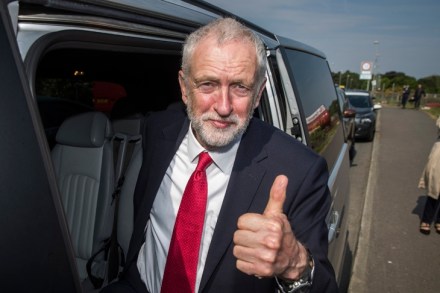
A truly bizarre thing happened yesterday: Boris Johnson was branded an Islamophobe and a bigot for writing in defence of Muslim women who wear the niqab. In his Telegraph column, Johnson said it was wrong for Denmark to ban the niqab and burqa in public places because the state should not be telling any ‘free-born adult woman what she may or may not wear, in a public place, when she is simply minding her own business’. Top-down burqa-banning risks ‘play[ing] into the hands of those who want to politicise and dramatise the so-called clash of civilisations’, he said.

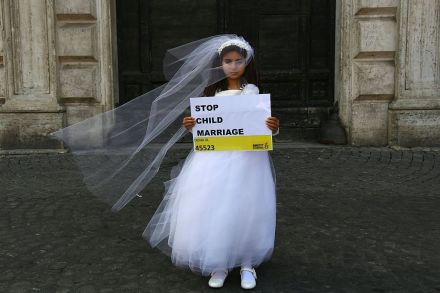
Forced marriage is the MeToo generation’s ‘no go’ subject

From our UK edition

By now you've probably heard of Marie Laguerre. The 22-year-old student was punched in the face last week by a passer-by, a sickening attack that was caught on CCTV and has since gone viral. It's caused uproar around the world, and is being seen as evidence of the physical and verbal abuse with which Frenchwomen have to contend all too often. Laguerre was struck because she gave short shrift to the obscene comments of a man who crossed her path on a busy Parisian street.

Putting our House in order

From our UK edition

My earliest memory of a mosque is being with my father in London’s Brick Lane Mosque. He was a member of its management committee and that gave me, an infant, the right to roam freely the four floors — including its vast basement — as I waited for him to finish meetings. I remember seeing Hebrew writing on a plaque on the top floor. There were mezuzahs on doors, respectfully preserved by the Muslim elders. I played with my brother on the second floor amid the dusty ebony pews left over from the mosque’s days as a French Huguenot church. European Judaism, Christianity and Islam were woven into the historical fabric of Brick Lane Mosque. At weekends, I learned how to recite the Quran in Brick Lane.

Meet Macron’s nemesis: the ‘Malcolm X of French Muslims’

From our UK edition

Emmanuel Macron is becoming quite the curmudgeon in attacking those who don't conform to his view of the migrant crisis. The French president has said the Italian government is "cynical and irresponsible", likened populism to "leprosy" and demanded fines be levied against EU states that don't take their share of migrants. The Italians, increasingly exasperated with the French president, have hit back – labelling him a "chatterbox". There is a subject, however, on which Macron has gone uncharacteristically quiet in recent months: Islam. During last year's presidential campaign it was the one issue on which he appeared uncomfortable when challenged by Marine Le Pen.

Tariq Ramadan and the integrity of French justice

From our UK edition

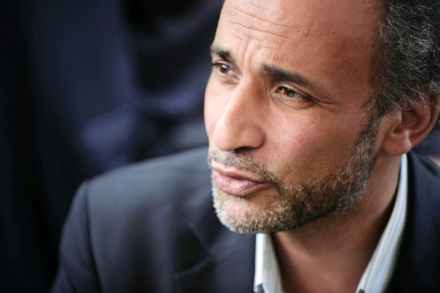
For the last four months, Oxford professor Tariq Ramadan has been rotting in a French jail, like Jean Valjean. He stands accused of rape by several women who came forward during the #MeToo scandal. One says that in a hotel room in Paris in the spring of 2012, the world-renowned Swiss scholar of Islam “choked me so hard that I thought I was going to die”. Another has reportedly described “blows to the face and body, forced sodomy, rape with an object and various humiliations, including being dragged by the hair to the bathtub and urinated on”. If Ramadan is guilty of these despicable acts, he must face the full weight of French law. But he must first be given the chance to defend himself. And there are grave concerns that he is not.

Tariq Ramadan and the integrity of French justice | 15 June 2018

From our UK edition

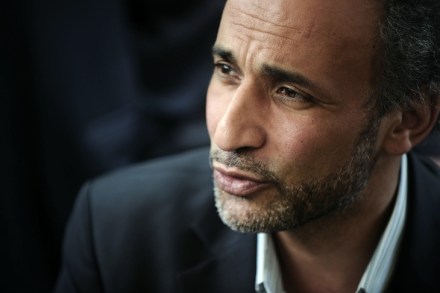
For the last four months, Oxford professor Tariq Ramadan has been rotting in a French jail, like Jean Valjean. He stands accused of rape by several women who came forward during the #MeToo scandal. One says that in a hotel room in Paris in the spring of 2012, the world-renowned Swiss scholar of Islam “choked me so hard that I thought I was going to die”. Another has reportedly described “blows to the face and body, forced sodomy, rape with an object and various humiliations, including being dragged by the hair to the bathtub and urinated on”. If Ramadan is guilty of these despicable acts, he must face the full weight of French law. But he must first be given the chance to defend himself. And there are grave concerns that he is not.

The secret segregation of state schools

From our UK edition

Is it all right for the Muslim parents of children at British state schools to prevent their sons and daughters from being friends with non-Muslim kids? And is it sensible? These questions have been knocking around my head like a pair of trapped moths, unable to find a way out. Quite by coincidence and on separate occasions, in the past month I’ve met two (non-Muslim) women whose children have had trouble at Muslim-dominated state schools. The kids made friends easily in their first term, said the mothers, but as the months went by it became harder to stay pals. Their schoolmates never invited them home, nor would they come round for playdates or parties. The friendships faded away and the kids were left confused.

Letters | 31 May 2018

From our UK edition

What the NHS needs Sir: James Forsyth and Fraser Nelson are right (‘The great Tory health splurge,’ 26 May): an extra 3 per cent will not solve the Tories’ political problem. Labour will still trumpet NHS deficiencies, waste will continue and the NHS will demand ever more resources. Only structural change will solve the problems inherent in our state healthcare monopoly. First, we need to set sustainable limits on what the NHS should provide, learning from other countries how to restrain demand responsibly. Second, we need to look beyond how adult social care is funded, to how it should fit with the NHS. Third, we must slash the top-heavy bureaucracy and split NHS England into manageable units (the size of NHS Scotland, say).

The real special relationship

From our UK edition

In all the agonising about Islamism, and what to do about it, it would be a mistake to forget a very useful fact: that Britain has a special relationship with Islam and has done for centuries. The friendship with Islam is unique. Spain was home to Andalusia, a Muslim empire for 700 years. The Germans, Poles and Austrians saw off Turkish Muslim invaders in the Siege of Vienna in 1529 and then again at the Battle of Vienna in 1683. The French lived in the shadow of 732 and the Battle of Poitiers. Britain alone, cut off from Catholic Europe, forged a relationship with Muslims built on trade, the rule of law, mutual respect and an exchange of ideas and cultures. It would be a terrible shame to forget this friendship now.

The French far left’s common cause with Islamism

From our UK edition

The French have an expression to describe far-left citizens who identity more with Islam than the Republic: 'Islamo-Gauchiste', a term coined by the French philosopher Pierre-André Taguieff, who explained in 2017 that many on the far-left regard jihadism as: "...a legitimate social revolt...they look at jihadists through a distorting lens of victimhood. This compassionate approach sees Islamic terrorists only as lost children, abandoned or rejected by unwelcoming and hostile countries, victims of 'institutional' or 'systematic' racism". The symbiosis between the Western far-left and Islamism has been ongoing for decades, and stems from the left's realisation of their failure to win the hearts and minds of the white working-class.

How London’s gangs could spawn tomorrow’s jihadis

From our UK edition

What will happen when the teenagers stabbing each other on the streets of London grow up? Some will go straight, some will go to prison and some will probably follow a similar trajectory to Michael Adebolajo and Michael Adebowale. These two evolved from being minor figures on the south-east London gang scene into two of the most notorious Islamist killers in Britain, responsible for murdering Lee Rigby outside Woolwich barracks in 2013. In the aftermath of the murder, Harry Fletcher, a former assistant general secretary of the probation union Napo, explained: "A major concern in recent years has been the crossover between criminal groups and Islamist organisations. It's mainly gangs in Southwark and Lambeth and we're talking about dozens, not hundreds, of members who are at risk.

Why should France tolerate Islamic intolerance?

From our UK edition

Why has the refusal of France to grant a passport to an Algerian woman who declined to shake the hand of a state official at her citizenship ceremony because of her "religious beliefs" made the BBC website? Picked up by other news' outlets, including the New York Times, it's not unreasonable to infer that the subtext is: there go the French again, discriminating against Muslims. If it's not the burka or the burkini, it's a handshake. But why would any western country welcome a woman who shuns one of its oldest and most courteous customs? If she finds shaking hands with a man beyond the pale, one is entitled to suspect she may not look too favourably on gays and Jews.

The Spectator Podcast: How to Rig an Election

From our UK edition

On this week’s episode, we discuss how elections across the world have been taken advantage of to give more power to corrupt leaders. We also talk about the international persecution of Muslims, and ask, why don’t young Corbynites care about anti-Semitism? While the world has been reeling from news of Cambridge Analytica’s political interference, two academics have been following the trail of shady election rigging across the world that go deeper than social media. Professor Nic Cheeseman, at the University of Birmingham, and Dr Brian Klaas at the LSE, have visited developing democracies from Asia, to Africa, to Europe. In this week’s cover piece, they explain the extent of election rigging in these countries, and what we, in mature democracies, can do about it.

Stand up for Muslims

From our UK edition

Anti-Christian persecution, for so long a great untold story, has started to gain the world’s attention. But the suffering of Christian communities, from Syria to Nigeria to China, is part of an even broader phenomenon. Religious conflict is on the rise across the globe, with ancient tensions being raised by new political methods. And in many countries — Sri Lanka, India, the Central African Republic and elsewhere — it’s Muslims who have the most reason to fear violence. In Burma, they may even have been victims of genocide. That, at any rate, is what UN officials are trying to investigate after a wave of brutality which has forced 700,000 Rohingya Muslims to flee the coastal region of Rakhine State since last August.

Britain’s flawed definition of extremism is storing up trouble

From our UK edition

Is Allah gay? The eventuality – as Jeeves might say – would seem to be a remote one. If such a being as Allah did exist and was gay then no harm could come from stating the fact. If such a being as Allah exists and is not gay then Allah would presumably be big enough to shrug off such insinuations. And if – and I only mention the possibility – such a being as Allah does not exist at all, then it really is neither here nor there whether he, she, they, ze or zir is alleged to be gay, bi, trans or anything else. Certainly none of this should be cause for being banned from the country. Yet that is what happened last week when a Canadian journalist-activist called Lauren Southern got turned away at the UK border and refused permission to enter the country.

Justin Welby’s stance on sharia law is a welcome relief

From our UK edition

Justin Welby is right to take a stand against his predecessor, Rowan Williams' most controversial announcement: that Britain should introduce sharia law. Ten years ago last month, Williams suggested parts of Islamic sharia law should be incorporated into British law. He argued that some kind of “constructive accommodation” was not only possible but desirable to better integrate British Muslims. The idea provoked almost universal condemnation, and now Williams’s successor has thankfully knocked down Williams' poorly thought through stance. This isn't to say, of course, that Muslims, mosques and halal food are not all welcome in Britain—diversity makes us richer. But law is another matter.

The key difference between the far right and the Islamists

From our UK edition

Mark Rowley, who is just stepping down as the country’s chief counterterrorism officer, is a classic British policeman of the best sort — a low-key, quietly amusing, naturally moderate professional who does not play political games. He became something of a hero (not a word he would endorse) for his cool handling of last year’s atrocities. On Monday night, he delivered the Cramphorn Memorial Lecture at Policy Exchange, firmly entrenching the understanding which the British authorities were too long loth to recognise, that extremism — even when not itself violent — is a necessary condition for Islamist violence to develop. On one point, however, I felt Mr Rowley did not convince. He warned, justifiably, that right-wing terrorism is on the rise.

How a 14th-century Arab thinker influenced Ronald Reagan

 At a press conference in October 1981, Ronald Reagan quoted Ibn Khaldun (1332–1406) in support of what is known as supply-side economics. Although the 14th- century politician and thinker wrote extensively about economics and was almost unique among medieval Arab writers in so doing, it is quite ‘marvellous’ writes Robert Irwin, the author of a new intellectual biography of this famous North African, that he ‘should have anticipated American Republican party fiscal policy’.