Islam

Barometer | 1 September 2016

From our UK edition

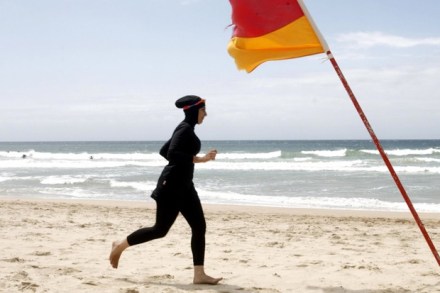
Behind the cover-up Some facts about Burkinis: — The Burkini was invented by Ahedi Zanetti, a Lebanese-born Australian businesswoman, in 2004 after watching her niece trying to play netball in a hijab. — Muslim lifeguards started wearing them on Sydney beaches in 2007. — According to Zanetti, 40% of her customers are non-Muslim. — Two years ago, several swimming pools in Morocco were reported to have banned them for hygiene reasons. Drowning by numbers Five men drowned at Camber Sands in Sussex after being trapped playing football on a sandbank. Where did the 311 people who drowned in Britain last year die?

France is right to ban the burkini

From our UK edition

May I interrupt, for a moment, the howls of anguish from those liberals in uproar at the news that authorities in France are banning burkinis on their beaches? I'd like to relate an incident that occurred earlier this month in France. It involved my girlfriend, who was on her way from Paris to visit her grandmother in eastern France. An hour into her journey she pulled into a service station to fill up with petrol. On returning to her car she made a small sign of the cross as she slid into her seat. Navigating one's way on a French motorway during the height of summer can be a fraught experience, particularly for the nervous driver. Suddenly there was a violent thump on her window. She jumped with fright. A man stooped so his face was level with hers. 'Why do you make that sign?

The burkini ban is a political ruse

From our UK edition

Private Eye used to run a column called the ‘Neo-philes’, listing some of the endless cases of hacks saying ‘X is the new Y’ (‘This season green is the new black’ and so on). So let me put in an early entry for the return of any such column by announcing here that ‘The Burkini is the new Hizb ut-Tahrir’. After 18 months of terrorist attacks across the continent, this summer French and now German politicians are falling over each other to call for a ban on a new Islamic swimwear garment called the ‘burkini’. This is nonsense piled on top of nonsense. Though I do not doubt he spent some time thinking about it, the inventor of Islam had very little to say about women’s beachwear.

Is jailing Anjem Choudary the best idea?

From our UK edition

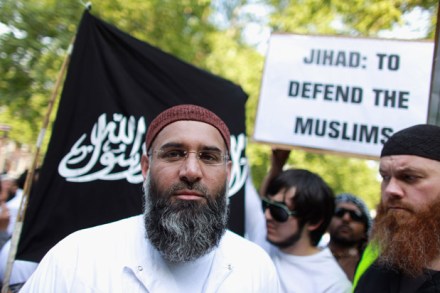
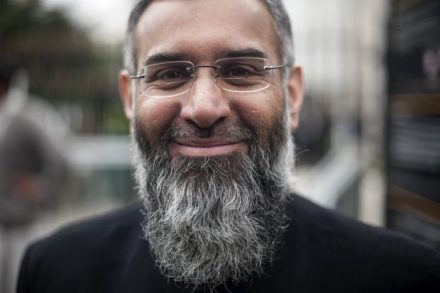
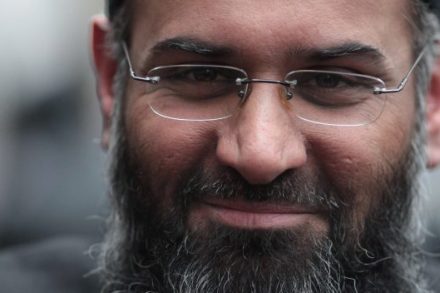
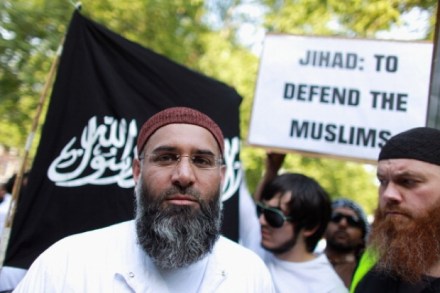
Don’t let off your celebratory party poppers just yet! Anjem Choudary may be facing jail, but he is a slippery man - an ex-lawyer always careful to push the boundaries of the law he despised without breaking it - so don’t think he won’t try to play a bad hand to his advantage. There's a phrase about 'never wasting a good crisis'. And I have no doubt that is precisely what Choudary will do. The judge could order him to be suspended, David-Blaine-style, in a glass box and he would probably find a way to radicalise people using semaphore. A forthcoming study by The Henry Jackson Society think-tank has found that between 1999 and 2015, 23 per cent of all convicted Islamist terrorists in the UK had direct links with Choudary’s now proscribed al-Muhajiroun.

Our golden age

From our UK edition

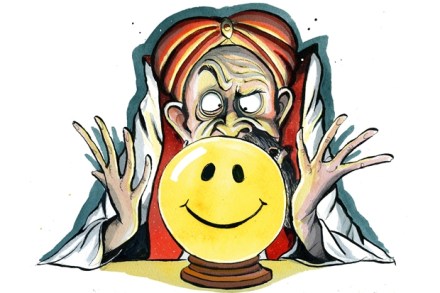
‘We have fallen upon evil times, politics is corrupt and the social fabric is fraying.’ Who said that? Donald Trump or Bernie Sanders? Nigel Farage or Marine Le Pen? It’s difficult to keep track. They sound so alike, the populists of the left and the right. Everything is awful, so bring on the scapegoats and the knights on white horses. Pessimism resonates. A YouGov poll found that just 5 per cent of Britons think that the world, all things considered, is getting better. You would think that the chronically cheerful Americans might be more optimistic — well, yes, 6 per cent of them think that the world is improving. More Americans believe in astrology and reincarnation than in progress.

Why did the BBC give a platform to Anjem Choudary?

From our UK edition

Anjem Choudary's arrogance eventually led to his downfall. He was convinced he could stay one step ahead of the authorities by picking his words carefully. Until now, that is. The hate preacher finally came unstuck when he encouraged others to join Islamic State. Yet whilst his extremist rants were always marked with an alarming confidence, his manner belied a somewhat different reality: Choudary was a man with few followers. His appearance in YouTube videos inevitably showed him with a tiny handful of half-witted acolytes alongside him. His 'protests' were of a kind likely to be greeted with indifference by passers-by. So why have we all heard of Choudary? Many media outlets have questions to answer for giving him a platform in order for him to spout his views.

It’s a bad day for Anjem Choudary – and a good day for secular law

From our UK edition

So farewell then Anjem Choudary.  At least for a few years.  Britain’s biggest loudmouth Islamist has finally been convicted in the UK for encouraging support for Isis.  He now faces up to ten years in prison. There have been reporting restrictions on his conviction for several weeks now, as we waited for the conclusion of the trial of his associate Mohammed Mizanur Rahman.  But now it’s over.  At least for a while.  There is much to say, but allow me one particular reflection for now. Like his mentor and predecessor Omar Bakri Mohammed, Anjem Choudary was always a subject of enormous interest in Britain and abroad.  Indeed you could argue that for some years now he has been Britain’s most famous Muslim.

Why the Prevent strategy isn’t the problem

From our UK edition

Earlier this week the Times had a leader column entitled ‘Protect Prevent’.  As a defence of the government’s counter-extremism strategy it was all well and good, but it missed a very crucial point.  It said: ‘The success of Prevent has been undermined, however, by a failure of public relations. The government failed to cast it as an essential part of child protection, allowing the charge of “spying” to gain credence.  Similar policies designed to prevent sexual abuse or physical violence against children would never be open to that charge.’ But this charge of ‘spying’ did not simply ‘gain credence’.

The post-terror ‘good news’ story came from Islam’s most persecuted sect

From our UK edition

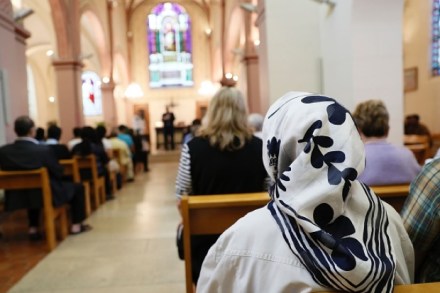
A few months back, after the Brussels terrorist attacks, I pointed out on Coffee House that there is a certain routine after any such atrocity. One part of it is that, after a couple of days pause, we always get the 'Muslim good news story'. This is the part when after a couple of days of everyone insisting Islam has nothing to do with the Islamist attack the national and international media gets to run almost as big a story suggesting that although Islam is not part of any problem, it is, however, a very major answer to almost everything. Fortunately the slaughter of Father Jacques Hamel last week has already got its good news story. Near the top of the news agenda on Sunday was news that Muslims had attended mass across France and Italy in solidarity.

The Spectator Podcast: Summer of terror | 30 July 2016

From our UK edition

After a week where both Germany and France suffered terror attacks, the question of the relationship between Islamic terrorism and Europe’s refugee crisis is once again rearing its head. In his Spectator cover piece, Douglas Murray argues that whilst the public knows that 'Islamism comes from Islam', Europe’s political classes are still refusing to tackle the problem at its core. So how can we bridge this gap between what politicians are saying and what the public are thinking? And does Europe have to come to terms with a new reality of domestic terrorism? On this week's podcast, Douglas Murray speaks to Lara Prendergast. Joining them both to discuss Europe's summer of terror is Haras Rafiq, Managing Director of the Quilliam Foundation, a counter-extremism think tank.

The Spectator Podcast: Summer of terror

From our UK edition

In a week in which both Germany and France have suffered terror attacks, the question of the relationship between Islamic terrorism and Europe’s refugee crisis is once again rearing its head. In his Spectator cover piece, Douglas Murray argues that whilst the public knows that 'Islamism comes from Islam', Europe’s political classes are still refusing to tackle the problem at its core. So how can we bridge this gap between what politicians are saying and what the public are thinking? And does Europe have to come to terms with a new reality of domestic terrorism? On this week's podcast, Douglas Murray speaks to Lara Prendergast. Joining them both to discuss Europe's summer of terror is Haras Rafiq, Managing Director of the Quilliam Foundation, a counter-extremism think tank.

To beat Islamist terror, France must close the gulf between church and state

From our UK edition

At the beginning of his war memoirs, Charles de Gaulle famously wrote, ‘All my life I have had a certain idea of France’ and its ‘eminent and exceptional destiny’. It was not only an abstract concept: the picture in his mind was of ‘the Madonna in mural frescoes’. Douglas Murray and Haras Rafiq discuss Europe's summer of terror: What is President Hollande’s certain idea of France? Presumably it cannot be the Madonna, since Hollande is the child of French laïcité, which creates an unbridgeable gulf between religion and the republic. But what happens when, in the name of one religion, men in France enter the temple of another and slit the throat of a priest, as happened this week near Rouen?

How tolerant are the French expected to be towards Islamic extremism?

From our UK edition

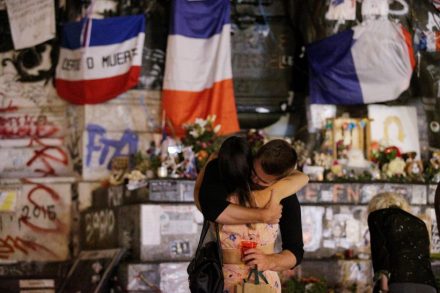
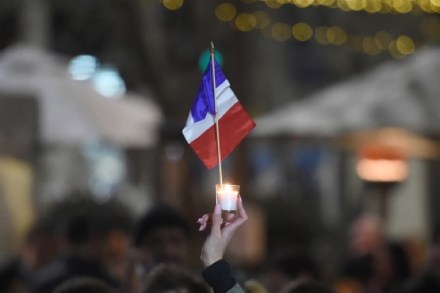
In Saturday's Guardian, Natalie Nougayrède, the former managing editor of Le Monde, wrote that in the days following the slaughter of 84 people in Nice by an Islamic terrorist 'incidents of open, blatant, anti-Muslim hatred have sparked a new, worrying phase' in France. She didn't elaborate on what form this hatred took, nor come up with any examples, but Madame Nougayrède was adamant that intolerance among her compatriots was on the rise following four years of bloody religious mayhem that has left more than 200 dead in terrorist attacks on French soil. Then today comes a new attack, the brutal murder by two Islamic terrorists of an elderly priest as he conducted mass in his Normandy church.

Will Europe finally face up to the threat of Islamism?

From our UK edition

On the bright side, the elderly priest who was murdered during mass in Saint-Etienne-du-Rouvray near Rouen, had pretty well a perfect ending in Christian terms: celebrating the eucharist and targeted precisely because he was a priest. Two men took him hostage during mass, along with a couple of nuns and a couple of members of the congregation and they slit his throat – not quite the decapitation favoured by Islamic State in its own territory, but not for want of trying. By one account, one of the men shouted Daesh during the attack, which is odd, because this is the euphemistic term used by those who wish to call IS by a pejorative name without any obvious Muslim associations.

Being a priest has become a dangerous job

From our UK edition

Fr Jacques Hamel, murdered today by Islamists in Normandy, was 84, and in his life would have seen his country transformed, from the Occupation to the Thirty Golden Years and through to this modern unhappy age. I can't imagine that a young priest in the age of the Piuses would have expected to end his life in such a manner, near to where Joan of Arc was martyred, but then Europeans are getting used to things that a few decades ago would have been absurd. After the war, Europeans thought they could escape history, and retire to a secular, progressive world in which historical conflicts of identity would be a thing of the past. But instead of fascism and communism, even older, more retrograde ideologies have sprung up, and history goes on.

Letters | 21 July 2016

From our UK edition

Our terrified youth Sir: Both Claire Fox’s ‘Generation Snowflake’ and Mary Wakefield’s recent column (What’s to blame for a generation’s desperation?, 16 July) get to the root of the terrified pessimism which (I am told) afflicts much of today’s youth. At 67, I’m fortunate enough to mix with quite a few thoroughly aware, thoughtful and successful young ’uns who eschew the sanctity of ‘safe spaces’ for the rumbustious joy of boozing, singing, dancing, loving and socialising and generally tackling that fearful world head on in ferocious defiance. As Chesterton so perfectly put it in his reply ‘To Young Pessimists’ Some sneer; some snigger; some simper; In youth where we laughed, and sang.

High life | 21 July 2016

From our UK edition

From my bedroom window I can see a little girl with blonde pigtails riding her bicycle round and round for hours on end. She’s German, looks ten years old and lives nearby. Next month I am finally moving to my new home, a beauty built from scratch amid farmland. Cows, deer, the odd donkey graze nearby, a far better bunch than the one Gstaad attracts nowadays. I am, however, king of the mountain. My place is the highest chalet on the Wispille, one of the three mountains that dominate the Mecca of the nouveaux-riche and the wannabee. Life is swell, as long as the old ticker keeps ticking. An approaching birthday tells me that it’s time to take stock, do something of consequence, begin taking life seriously at last.

In the steppes of the Golden Horde

From our UK edition

When I first visited the complex of Buddhist cave grottoes, dating from the fifth to the 14th century, at Bezekilk in Xinjiang province, China, I was struck by the destruction wreaked on them by Muslims whose religion proscribes figurative images of human beings. Eyes had been gouged out and figures lacerated with knives. When and by whom had the vandalism of these exquisite and colourful portraits been done? I later learnt that the Buddhist Uyghurs of the Kingdom of Qocho and Turfan, in which Bezekilk was situated, were converted to Islam by conquest during a holy war at the hands of the Muslim Chagatai Khizr Khwaja. Not easy information to assimilate. The activities of Genghis Khan and the Mongol hordes are widely known but not always in detail.

When the French mood finally snaps, Marine Le Pen will be waiting

From our UK edition

Last Friday I noted that you don’t have to go back many months to get the latest mass-casualty terrorist atrocity in Europe these days.  But even while people were still trying to find ways to portray the Nice truck driver as a victim of urban-planning laws we had the next attack. Yesterday it was an ‘Afghan asylum seeker’ who went around a train in Germany with an axe shouting ‘Allahu Akbar’.  That’s the same ‘Allahu Akbar’ (or ‘Allah is greatest’) that the man who drove the truck into the crowds in Nice was shouting as he ploughed through the crowded streets.  Like last week's Nice attacker, yesterday’s attacker in Germany also happened to be called Mohammed.

Sleepless by the strait

From our UK edition

In my novel Three Daughters of Eve, a well educated housewife with kids looks at her motherland, Turkey, and thinks: ‘They are not that different. My own life and this land of unfulfilled potentials.’ I wrote this novel in English first. It was then translated into Turkish by a professional translator, after which I rewrote it with my own rhythm and vocabulary. It’s a bit crazy, this constant commute between English and Turkish. There are things I find much easier to express in English — e.g. humour, irony, satire — and others I find easier to say in Turkish — melancholy, loss. The book is published in Turkey this summer before being published in the UK in winter. So I fly from London, where I live, to Turkey for a week long book tour.