Iraq

Debating in Iraq

From our UK edition

The university debating circuit isn't quite what it once was. Once upon a time it was, if not a closed shop, a cosy cartel organised by Scottish, Irish and English universities with the Australians and the occasional American or Canadian providing whatever passed for international glamour. Changed times and these days English-speakers can lose to debaters from any number of other countries all of whom are trouncing you in a language that is not their own. Gone are the days when being beaten by Zagreb B ("If that's what they're like, I wouldn't want to come up against Zagreb A etc etc") was considered a rogue result. This is, doubtless, progress and globalisation and all that.

Whistleblowers United

From our UK edition

Good to see three of my favourite whistleblowers - Katharine Gun, Brian Jones and Derek Pasquill - giving evidence to the Public Accounts Committee today. But it seems from the reporting that Carne Ross, former first secretary at the United Nations, rather stole the show by live video link from New York. Ross, it seems he suggested that there is still more to be found out about the Iraq War and said that the full papaer trail should be published. Funnily enough, Alistair Campbell didn't use the opportunity of the guest editorship of my old publication, the New Statesman, to enlighten us further. It was a bold, if rather curious move to get a propagandist turned spin doctor to try his hand at journalism.

Hollywood Beckons

From our UK edition

You will all be delighted to hear that today I finally signed away the rights to my life story. Stop laughing at the back! Longstanding followers of The Bright Stuff will remember that I (perhaps rather grandly) said I was leaving the New Statesman to work on a film project. The Spy Who Tried to Stop a War is the story of Katharine Gun, the GCHQ whistleblower who disclosed details of a joint US/UK operation to fix the vote at the United Nations for a second resolution to authorise war in Iraq. As the recipient of the original leaked document from the US National Security Agency asking for GCHQ's help I played a small part in the drama.

Let’s Look at Who really undermined Cabinet Government

From our UK edition

So Jack Straw has been the subject of an email scam. I hear some fraudster was putting it about that he was a politician of principle. His veto on the release the Cabinet minutes in the run-up to the Iraq war is a disgrace. The man who introduced the Freedom of Information Act has become the minister for secrecy. Listening to Charlie Falconer trying to justify the veto on the Today programme was just embarrassing. The idea that such a release would undermine Cabinet government is an insult to our intelligence. If the series of inquiries into the Iraq War have revealed anything it is that that the Blair administration had scant regard for the niceties of Cabinet consultation.

Smoking Gun: Katharine Goes to Hollywood

From our UK edition

It was great to hear Katharine Gun the GCHQ whistleblower on Saturday Live this morning talking about the morality of the leaker. I suppose the pretext was the banking crisis, but Katharine used the opportunity to explain why she had revealed details of a US/UK spying operation on the United Nations just prior to the outbreak of the Iraq war in 2003. I have a close connection to the story as the journalist who received a copy of the original email request from the States. I published the revelations in the Observer in March 2003. The war went ahead despite Katharine's efforts.

Iraqi Reality Check

From our UK edition

Right now, Afghanistan has become, if you will, the trendy war again. So much so, in fact, that it's now Iraq that threatens to be the "forgotten war". Some of this is obviously due to Barack Obama's promise to bring American troops home within 16 months and some of it because, frankly, Iraq has left everyone exhausted and keen to talk about, well, just about anything else. Here's a reality check from Thomas Ricks, however. His new book The Gamble looks like being a must-read: The other thing that people don’t understand is that this war is far from over. It has changed several times, and it is changing again now, but it hasn’t ended.

Department of Markets

From our UK edition

The US Army is proposing to pay Arabic-speaking recruits bonuses of $150,000. James Joyner explains how this situation is largely one of the Army's own-making, dating back more than a dozen years.

The Rhetoric of War

From our UK edition

Breaking News: George W Bush is not Henry V. Shocking, I know. According to former General Ricardo Sanchez: Among the anecdotes in "Wiser in Battle: A Soldier's Story" is an arresting portrait of Bush after four contractors were killed in Fallujah in 2004, triggering a fierce U.S. response that was reportedly egged on by the president. During a videoconference with his national security team and generals, Sanchez writes, Bush launched into what he described as a "confused" pep talk: "Kick ass!" he quotes the president as saying. "If somebody tries to stop the march to democracy, we will seek them out and kill them! We must be tougher than hell! This Vietnam stuff, this is not even close. It is a mind-set. We can't send that message. It's an excuse to prepare us for withdrawal.

Iraq and conservatism?

From our UK edition

At Tapped Mori Dinaeur says no-one should be surprised by John McCain's lack of interest in policy detail. Well fine. The there's this, however: After Iraq and Katrina, I don't think the public needs to be convinced of the link between conservatism [and] the failure of government. Half of this, at least, is entirely wrong. The Iraq War has little or nothing to do with conservative, or governmental failure, rather it was the result, in more than just part, of an overweening, arrogant belief in the power of government to achieve anything it set its mind to.

Rupert Murdoch’s Curious NATO Vision

From our UK edition

From James Joyner: News Corporation chairman Rupert Murdoch says that NATO is in a “crisis of confidence” because Western Europe is “losing its faith in the values and institutions that have kept us free.” He calls for a radical redefinition of the Alliance in order to save it, including extending membership to Australia, Japan, and Israel. Murdoch, who is receiving the Atlantic Council of the United States’ Distinguished Business Leader Award for 2008, says in his prepared remarks that, “We must face up to a painful truth: Europe no longer has either the political will or social culture to support military engagements in defense of itself and its allies. However strong NATO may be on paper, this fact makes NATO weak in practice.

Lessons from the Tomb Raider

From our UK edition

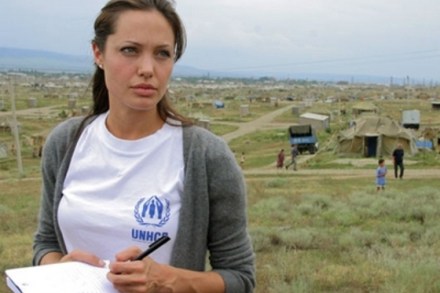
It's easy, of course, to mock actors and pop stars and their worthy pretensions to saving the planet. But whatever else one may say of her, I think it's true that Angelina Jolie takes her role as a UNHCR "ambassador" more seriously than most. Anyway, she has an interesting and persuasive op-ed in the Washington Post today: My visit left me even more deeply convinced that we not only have a moral obligation to help displaced Iraqi families, but also a serious, long-term, national security interest in ending this crisis. Today's humanitarian crisis in Iraq -- and the potential consequences for our national security -- are great.

Belfast on the Euphrates?

From our UK edition

Matt Yglesias sees walls going up in Baghdad and wonders if the US Army is using Northern Ireland as its template: I believe this technique comes to the US Army's counterinsurgency theorists via Belfast, where I believe they have been effective in helping the British maintain a degree of order. To some extent, this brings us back to the question of strategy. If tactics employed in Northern Ireland can be made to work in Iraq (and maybe they can) even though Iraq has ten times as many people as Northern Ireland does and even though Iraqis don't speak English and even though the sectarian violence in Iraq is undergirded by concrete fighting over valuable resources, then does this really seem like a wise strategic undertaking? It doesn't seem that way to me.

Comment is free, facts are extremely expensive

From our UK edition

I agree with Garance that there's lots of interest in Bill Keller's Hugo Young lecture. And like her I was struck by this passage: The New York Times has six correspondents assigned to Iraq, plus a rotating cast of photographers, plus Pentagon correspondents who regularly travel with the troops. We employ, in addition, about 80 brave Iraqis - many of them handpicked stringers based in towns that are no longer safe for westerners. Sustaining the Baghdad bureau costs several million dollars a year. We take extraordinary precautions to keep our people safe, but two of our Iraqi colleagues have been murdered in cold blood, almost certainly because they worked for an American organisation.

Death by Moron

From our UK edition

While I'm at it, here's more deranged idiocy from The Corner. A fellow named Peter Wehner, who until March 2007 apparently served as Deputy Assistant to the President and Director of Strategic Initiatives, has this to say about The New Republic and the gruesome Scott Beauchamp affair: What The New Republic didn’t understand, and still seems unable to grasp, is that they and others saw this for what it was: an effort to use Beauchamp’s story to paint an ugly portrait of those serving in Iraq. The magazine had turned against the war, and this piece would help turn people against those serving in the war. What has happened instead is that the situation in Iraq is turning around — and the TNR piece has utterly collapsed.

Forget 42nd St, Rush to See the 42nd Highland Regiment

From our UK edition

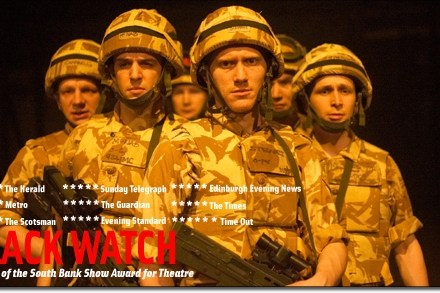
As someone who has, er, fond teenage memories of being barked at by NCOs from the Black Watch during hours of drill on the parade-ground and rather fonder recollections of cricket matches against the regiment, I've been looking forward for months to seeing Gregory Burke's prize-winning play about the regiment's experiences in Iraq during its current run in New York. Today's good news then is that - hurrah! - I snagged one of the two remaining tickets for the shows' final performance on, appropriately enough, Remembrance Sunday. So it's really just a bonus that the New York reviews have been tremendous. Here's Ben Brantley in the NYT: “Black Watch,” which was the hit of the Edinburgh Festival Fringe last year and runs through Nov.

An American Life and Death

From our UK edition

Christopher Hitchens' piece in this month's Vanity Fair is quite something. Mark Daily, a young officer in the Seventh Cavalry, volunteered for the army despite his reservations about the wisdom of the war in part because some of Christopher's articles inspired him to do so. Hitch's latest piece reflects on that heavy burden (shared to one degree or another by all of us who supported the war) and on the life and death of a remarkable young American. If you read one thing today, make it this article. Here's Christopher describing his first meeting with the Daily family: As soon as they arrived, I knew I had been wrong to be so nervous. They looked too good to be true: like a poster for the American way.

Iraq’s magic schools

From our UK edition

President George W Bush has just finished his post-Petraeus address to the nation. Yet again he reported that progress was being made in Iraq - far from the headlines of course - and that this could be measured by the fact that, yes, schools are being rebuilt. Given the frequency with which this nugget of good news is displayed one might conclude that every school in Iraq must have been rebuilt and reopened at least three times. Other, more considered thoughts, later. PS: Megan is not too impressed that Iraq has passed a budget. Or rather, as she says, that's a low bar for progress...

President Micawber speaks!

From our UK edition

George W Bush's speech on Iraq and Petraeus and all the rest of it yesterday had a pretty simple message. Hold tight. Stay patient. Endure. Something extraordinary will turn up. Since the President's transformation into Mr Micawber seems complete, this passage from David Copperfield seems somewhat troublesomely apposite. If Mr Bush is Mr Micawber; then the American (and Iraqi) people are the other Micawbers: Mr Micawber...then addressed himself to me, and proffered me the satisfaction of "witnessing the re-establishment of mutual confidence between himself and Mrs Micawber". After which, he invited the company generally to the contemplation of that affecting spectacle.

Iraq as cause of Scottish independence? Hmmmm…

From our UK edition

Ben Crair has a piece at TNR today headlined, The Iraq War is Responsible for Scottish Independence. Really. Well, up to a point Lord Copper. The "Really" is an unfortunate indication that this pudding may be a little over-egged. Few people would deny that discontent with the war played a part in the SNP's victory in this year's elections. But other factors were at least as, and probably more, important. Among them: 1. Alex Salmond's return from his Westminster exile. Salmond brings a heavyweight presence that trumped anything the SNP could put up in his absence; it trumped Jack McConnell's pretensions to statesman status too. You wouldn't feel embarrassed being represented by Salmond. Alas, the same could not be said of McConnell. 2.

The Seriousness of “The Decider”

From our UK edition

No need for comment, is there? Mr. Bush has often said that will be for historians decide, but he said during his sessions with Mr. Draper that they would have to consult administration documents to get to the bottom of some important questions. Mr. Bush acknowledged one major failing of the early occupation of Iraq when he said of disbanding the Saddam Hussein-era military, “The policy was to keep the army intact; didn’t happen.” But when Mr. Draper pointed out that Mr. Bush’s former Iraq administrator, L. Paul Bremer III, had gone ahead and forced the army’s dissolution and then asked Mr. Bush how he reacted to that, Mr. Bush said, “Yeah, I can’t remember, I’m sure I said, ‘This is the policy, what happened?