Homelessness

How ‘right to shelter’ feeds New York’s migration problem

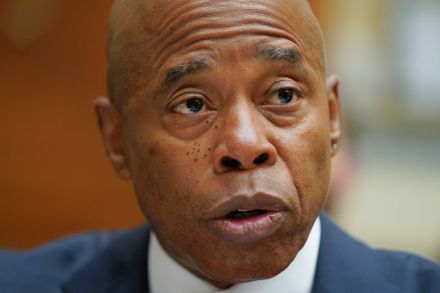
Mayor Eric Adams has found himself stuck between a Texas rock and a New York hard place as thousands of illegal immigrants have been bused to the Big Apple by Lone Star State Governor Gregg Abbott in recent months. Now, a decades-old New York City policy called “right to shelter” has Adams's hands tied as he tries to find beds for the city’s new arrivals. The result is a crisis for the homeless shelter system, mostly of the city’s own making. This week, as Gotham began turning away dozens of homeless New Yorkers from its facilities, the Adams administration suggested it was time to revisit the “right to shelter” policy, which guarantees a bed to anyone in New York City who wants one.
The Everybody Inn: what happened when a hotel opened its doors to the homeless?

From our UK edition

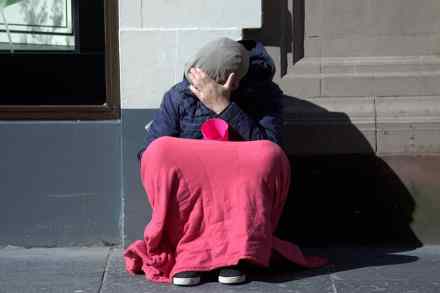
What do you do when you pass someone sleeping or begging in the street? I’ll tell you what I do: pretty much the bare minimum to appease my conscience. Pound coins distributed, some names asked for and learned, sandwiches and snacks for those outside supermarkets (Müller Corners and bottles of chocolate milk particular favourites). After reading this book I realise there is rather a lot more I could be doing. And indeed a lot more others, particularly the government, could be considering. Here is how Christina Lamb describes what Mike Matthews, owner of the historic Prince Rupert Hotel in Shrewsbury, was doing a few years before the pandemic struck: He couldn’t help remembering...

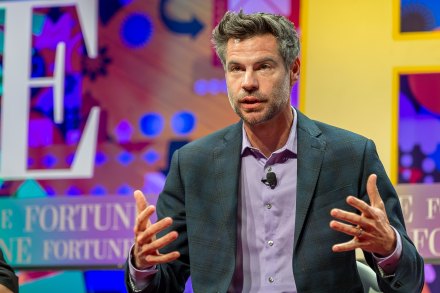
Michael Shellenberger interview: ‘We need to enforce laws’

Michael Shellenberger is an unusual political candidate. He’s also arguably the only person with a chance of stopping Gavin Newsom from spending four more years as governor of California. A fifty-year-old environmentalist, Shellenberger is a former Democrat running for governor as an independent. And he has form when it comes to aiming leftwards. A self-styled ecomodernist, he has been a vociferous critic of the environmentalist movement, its insularity, economic illiteracy and fetish for scarcity. More recently, he has set his sights on the progressive approach to homelessness and addiction.

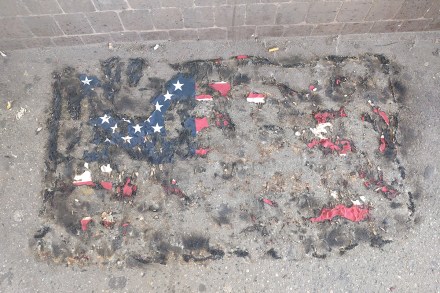
A flag under foot

On my way to work in Midtown Manhattan each day, I pass down 50th Street. Near the corner of Broadway, not long ago someone glued an American flag to the sidewalk and set fire to it. The scorched remnants cry out in resistance to the attempted insult and erasure. I have no idea what protest prompted this indignity, or whether the person who sealed the flag to where pedestrians would trample it was the same who decided to set it on fire. I haven’t noticed any passersby taking special note of Old Glory reduced to such an inglorious state, surrounded by cigarette butts and other debris. This isn’t New York City’s fault. We are amid more pressing crises. The subway entrance nearby — one of the main points of access to Midtown — reeks of urine and sometimes worse.

flag

Stop enabling the crisis junkies

Did you make good use of the neatly palindromic 2/22/22? To refresh your memory, it was a day that turned out be the narrow window between the moment when the evolving “science” suddenly allowed Democratic governors to start lifting their states’ mask mandates, and Vladimir Putin launching his special mission to “protect the people” in eastern Ukraine. I hope you enjoyed it, because given the way the mainstream media portray the news these days, it may be a while before we’re all allowed our next respite from the seemingly permanent existential crisis that runs as a through-line to our human condition.

crisis

Shelter and the world of white homeless privilege

The biggest homeless charity in the UK appears to be teaching its staff that white people who live on the street need to check their privilege because they benefit from white supremacy. This is the latest Wokeyleak from a source inside Shelter, which manages some £70 million ($96.3 million) in donations a year. The charity subjected employees to over 12 hours of excruciatingly woke Zoom tutorials on such edifying topics as ‘Mitigating Whiteness at Work’. Extracurricular reading included courses on ‘Learning How To Apologise’. Some of Shelter’s diverse staff objected to this controversial critical race theory training but were told that participation was ‘not optional’. Every single one of Shelter’s executive team, incidentally, is white.

shelter

Eliminate the positive: Come Join Our Disease, by Sam Byers, reviewed

From our UK edition

Sam Byers’s worryingly zeitgeisty second novel, Perfidious Albion, imagined a post-Brexit dystopia dominated by global tech companies, corrupt spin doctors, shady think tanks and the corporate manipulation of government. So far so true — were it not for the current pandemic, one might call him a soothsayer. His third, aptly titled novel, Come Join Our Disease, dispenses with the crystal ball and instead explores the fear that the internet, despite its boons, is making us all ill. The pestilence, in this instance, is virtual. Byers’s heroine is Maya, a homeless woman once ‘peripherally employed’ in the tech world, now staying in a geographically indeterminate encampment.

My return to New York is a mixed blessing

From our UK edition

New York Ha, ha! What London turned down, the Bagel accepted with alacrity, namely the poor little Greek boy. And it took ten minutes max after disembarking to go through customs and collect my luggage. Kennedy had fewer people than a gay wedding in Saudi, and then some. Mind you, the Upper East Side, where I live, is also as quiet as a grave, the only sound being the occasional ambulance with its siren on racing for a tea break. Central Park, now devoid of tourists, has never looked better, weeping willows with recently sprouted leaves, birds singing the length of an empty Park Avenue, long green lawns stretching out northwards, cherry blossom galore — it makes one feel swell to be alive.

How podcasts have transformed radio

From our UK edition

As if on cue, Lemn Sissay’s new series for Radio 4 tackles all those questions we would rather ignore in this season of good cheer and overindulgence. He starts out with a programme about homelessness, reminding us that the Christmas story begins with a young unmarried couple, ostracised because she’s pregnant and her current partner is not the father, who are desperately in need of a bed for the night. Cut to 2019 years later. ‘How do you decide how much to give?’ he asks a young woman in his audience who, it turns out, works with a charity for homeless people. ‘Do you ever feel you’ve not given enough?

Letters: parliament has a responsibility to stop Brexit

From our UK edition

Parliament’s responsibility Sir: I always enjoy reading the intelligent and outspoken Lionel Shriver. But her latest article (14 September) puts forward an invalid argument. As Ms Shriver points out, no one in the USA seriously argued that the disaster of Trump’s election, and the damage it could cause the country, meant the result should be contested. She compares this with the fact that many in the UK want to overturn the EU referendum result; and concludes from this that our political system is ‘broken’. But had an election been fought here, with one party promising Leave and the other Remain, few would be seriously arguing for the overturn of the outcome — whatever it was. Elections are, rightly I believe, taken more seriously than referendums.

Why do we ignore the real mental health crisis?

From our UK edition

When I first moved to London N1  four years ago, no one seemed to notice let alone discuss all the children stabbed to death in our neighbourhood. Boys from the local estates were hacking each other to pieces quite regularly, but middle-class N1 barely blinked. It was as if these two groups were, and still are, invisible to each other, though living cheek by jowl. Four years later, it seems to me that there’s another set of players, just as isolated from the rest. Let’s call them the screaming souls in Hell. They’re everywhere once you notice them, men and women suffering from some form of psychosis, usually homeless or on the edge of homelessness. Everyone talks about mental health these days — for better and perhaps for worse.

Letters: History has not done justice to Neville Chamberlain

From our UK edition

Helping the homeless Sir: The number of rough sleepers in one of the richest countries on the planet is surely a finger of accusation pointed at our generation (‘Wake-up call’, 31 August). Adam Holloway is correct when he says that giving cash directly to those living on the streets often compounds rather than alleviates the problem. Smarter ways should be found to direct compassion effectively, and a new charity, Nextmeal, is attempting to do just this. It uses GPS mapping technology to locate the nearest centre helping the homeless. The database currently details almost 400 such centres across the country, most of which are charities that can dovetail with state services. Thousands of cards have been printed with a link to the website, www.nextmeal.co.uk.

Rory Stewart: Am I still a Conservative?

From our UK edition

My parents gave me a subscription to The Spectator in 1984, when I was 11. When I was 12, I wrote a letter to the editor, criticising the progressive views of the Bishop of Durham, and Charles Moore — who had just become the editor at the age of 27 — published it under the headline ‘Very young fogey’. Who knows what a weekly diet of The Spectator did to my impressionable mind? Is Taki responsible for my taking up martial arts? Or Roger Scruton for my views on ugly buildings? I think it was the book reviewers, so unintimidated by even the grandest book, who made the greatest impression.

Do progressive municipal leaders want their cities to fail?

In 2017, Seattleites nearly elected a slam poet as mayor. The 31-year-old biracial, queer, poetry artist and community organizer named Nikkita Oliver came in a close third to be the city’s top executive. While on the campaign trail at a slam poetry club, Oliver said the best way to push back against the Trump administration and to achieve a ‘real sanctuary city that is about equity,’ voters in Seattle must cast their ballot for her genitalia. ‘When you go into a community that is struggling and you put the money in a woman’s hands it’s more likely to benefit the community as a whole. This is science, y’all,’ she said being interviewed on a dimly-lit stage by a Gargantua of indeterminate sex or ethnicity sporting a bowtie and trucker hat.

seattle cities

What I’ve learned from five months sleeping on the streets

From our UK edition

Over the years, I have spent around five months sleeping rough on the streets of London, Birmingham and New York, making undercover TV programmes. Matthew, who works in my Westminster office, spent last summer involuntarily homeless after he was cheated by his business partner. I suspect we are the only people within the Palace of Westminster who have been through the unpleasant experience of sleeping rough, and we both have come to the same conclusion. Street homelessness (as opposed to the homelessness of temporary accommodation) is, for the most part, a symptom or consequence of a different problem: addiction to drink or drugs, or mental illness. If politicians want to deal with it, they must accept this. Homelessness is a popular subject in SW1.

I’m a prisoner of Kanye West’s homeless camp

I hear the sound of chanting in the distance, grim and ominous. ‘Boom, boom, boom, boom ba boom, boom, boom...' Suddenly, voices cry out: ‘Je-sus walks!’ A white-robed Kanye West is surveying the geodesic dome structures that he has built across his lands. A MAGA hat is pulled over his brow and the sun glints off his oversized sneakers. Kim Kardashian stands beside him in a bodysuit that strains against her preternaturally tumid curves. Kanye announced that he was building the housing complex for the homeless in 2019.

kanye west

Spirit of place | 4 April 2019

From our UK edition

In 1923, an earthquake with a magnitude of 9 struck Tokyo and Yokohama. A huge area of Tokyo burned. But, Ueno Park, protected by the water of Shinobazu pond, survived unscathed, as did many of the people from around Tokyo who sought refuge there. Emperor Hirohito visited the park and its new homeless residents soon after, and presented it as a gift to the people of the city, renaming it UenoImperial Gift Park. Ueno Park is central to this novel by Yu Miri, whose Family Cinema won the prestigious Akutagawa Prize in 1997. Almost a century on from the Great Kanto Earthquake, the homeless victims of a different type of disaster — the 1990 economic crash — have set up huts and tents there.

Letters | 6 December 2018

From our UK edition

Sleeping on the streets Sir: Mark Palmer claims that ‘homelessness is hardly a top government priority’ (‘Home truths’, 1 December). I was disappointed to read this, given the ambition of this government to make rough sleeping a thing of the past. As I have said previously in this magazine, we are committed to supporting people off the streets and have committed £1.2 billion to tackle all forms of homelessness. We are working tirelessly to end rough sleeping by 2027 and have outlined our long-term plan — backed by £100 million — to get people into a safe and secure home where they can rebuild their lives.

Street life | 16 August 2018

From our UK edition

‘What can you tell me just now,’ asks Audrey Gillan. She’s talking to Tara, who’s been sleeping rough on Fournier Street in Spitalfields, close to Gillan’s home. Tara, aged 47, sounds like a man, so deep and growly is her voice, ruined by drink, cigarettes and the hardness of her life. Gillan wants to know how and why she ended up living on the street. But beyond explaining that she was slung out by her mum when she was 14 there’s little that Tara can or is prepared to tell Gillan.

The best place to be poor

From our UK edition

I was born in north London, at the Whittington Hospital in Archway, and at the age of 62, after many years of trouble and wandering, I have come to rest in the streets where I was born. And in my usual cunning way I have become one of the roughly 300 or 400 people living in inner London you perhaps think of as ‘homeless’, making the rounds from drop-in centres to churches, from morning till night, in the hunt for free food. For this is what my life has come down to as I stand on the threshold of old age, the endless movement from one soup kitchen to the next, which at least gets me to the end of the day by a pleasant route. Or it might be not so pleasant, because of course a lot of conflict erupts at places where a large number of people benefit from organised kindness.