Hitler

When Piers Morgan met Nick Fuentes

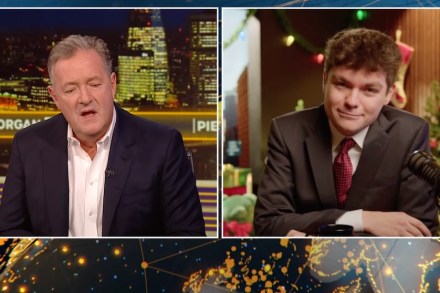
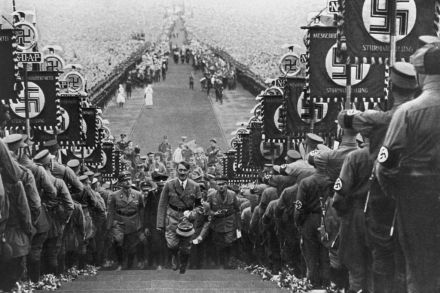
Russell Crowe’s new film is about trying to suss out hidden fans of Hitler, but what happens when the person being questioned makes no attempt to hide? Toward the end of Piers Morgan’s live interview with Nick Fuentes last night, Morgan, in what seemed like a pre-prepared line, accused his guest of trying to “come across as a moderate” — just ten minutes after Fuentes called the old Bohemian corporal “very fucking cool.”  To that line, Morgan told Fuentes that "I think [Hitler] is very fucking a monster." Yet Fuentes burst out laughing in reply: "And that’s a clip! 'I think he’s very fucking a monster?' Do you hear yourself? Can we all grow up?

The internet doesn’t know what a Nazi is

Two things happened online in the past week or so, both online, both quite mad. First was the spread of a podcast clip – hosted by “men’s health” influencer Myron Gains – featuring a rainbow coalition of Gen-Z Americans discussing whether Germany’s 1930s Jews had done something to make the Nazis hate them. They reimagined Hitler as someone who simply had to perpetrate a genocide because the Jews deserved it. The second event was an American Eagle jeans advertisement starring Sydney Sweeney. One of these moments caused a meltdown about the rise of Nazism, and it wasn’t the podcast.

Nazi Germany (Getty)

Kanye West and Arcade Fire: a tale of two cancellations

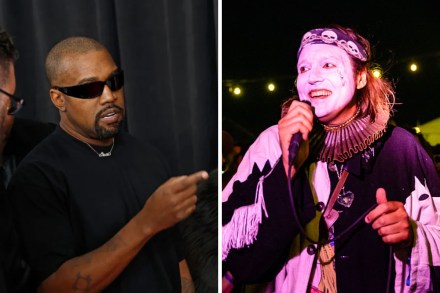
At first glance, Kanye “Ye” West and the Arcade Fire’s lead singer Win Butler might seem to have little in common. Ye has built his increasingly deranged career on provocation and confrontation, and that has now reached its nadir in his latest single, “Heil Hitler,” in which he declares that “All my niggas Nazis, nigga Heil Hitler.” After listing the various perceived wrongs that have been done to him, Ye states, all too accurately, “So I became a Nazi, yeah bitch, I’m the villain.” Inevitably, it ends with the song sampling a Hitler speech, in which the Führer cried that, “Whether you think my work is right... if yes, then stand up for me as I stood up for you.” The song has attracted outrage, upset and genuine confusion as to Ye’s mental state.

win butler arcade fire kanye west

Vance Derangement Syndrome

Bret Stephens has come a long way in his estimation of Donald Trump. Back in 2016, when Trump was first running for the presidency, Stephens wrote in the Wall Street Journal that “the candidacy of Donald Trump is the open sewer of American conservatism.” As the election season progressed, Stephens mostly dropped the sewer talk, sliding into its place evocations of Trump’s “darker antipathies” and warnings that his “candidacy is manna to every Jew-hater.” A “Trump administration,” he explained,“would give respectability and power to the gutter voices of American politics.” At one point he giddily announced that Trump’s chances of victory were “next to nil.

Vance

The great Nazi moral panic

We’re in the throes of a full-blown moral panic, but this time it’s Nazis instead of Dungeons & Dragons. Nazis are everywhere in the United States. There are signs of them everywhere. Their influence is unmistakable, from beverages to hobbies to views on the nuclear family. It’s eleven o’clock. Do you know where your Nazis are? At least, that's the current state of America, according to the same industry that attempts every year to convince you that someone may sneak high-grade narcotics into your child’s Halloween candy. This week, our brilliant commentariat convinced itself that billionaire tech tycoon Elon Musk had performed two "Sieg Heils" during President Trump’s inauguration festivities.

The outlets blaming Trump for his own assassination attempt

Within twenty-four hours of the assassination attempt on former president Donald Trump, several outlets were calling on his fellow Republicans to tone down their violent rhetoric. On ABC’s morning show, Martha Raddatz and George Stephanopoulos cited what they called “conspiracy theories going forward” and stated that “President Trump and his supporters have contributed to this rhetoric as well.” On CBS, Margaret Brennan grilled Steve Scalise, who himself narrowly survived the Alexandria, Virginia softball field mass shooting by a Bernie Sanders campaign volunteer.

Trump versus the moderators

It’s almost here... the first presidential debate between President Joe Biden and former president Donald Trump will take place tomorrow night on CNN. It is quite early in the election cycle, which is by design to account for the fact that many voters now cast their ballots via mail or in an early voting period. Perhaps the biggest surprise is that Biden agreed to debate this early, which could signal his campaign’s uneasiness with polls showing the president trailing in most swing states, losing by double digits on the issues that matter most to voters and hemorrhaging support among various key voting blocs, despite what they may say in public (When First Lady Jill Biden was asked about polls showing Biden losing battleground states, she sharply replied, “No, he’s not!

Will DeSantis make it to Iowa?

Florida governor Ron DeSantis’s 2024 presidential campaign is imploding spectacularly. His first mistake was waiting too long to announce his intention to run while traveling the country for a “book tour,” which allowed former president Donald Trump to sully his name unanswered for weeks. Then when he did jump in, he made his announcement on a glitchy, botched Twitter Space with Elon Musk. In the months that followed, DeSantis struggled to adopt a clear strategy and seemed uncomfortable with the basic prospect of running a national campaign, perhaps best exemplified by an anecdote from 2018 when an advisor told him to write “LIKABLE” at the top of his debate notepad.

Ken Burns’s angry new film

There is probably no American documentary filmmaker more respected than Ken Burns. From his landmark 1990 series about the Civil War to his most recent work that has explored everyone and everything from Ernest Hemingway to country music, Burns has established himself as a fearless chronicler of stories that illuminate the nation’s history, sometimes in ways that viewers might find uncomfortable. His 2005 documentary about the African-American boxing champion Jack Johnson, Unforgiveable Blackness, was a fine example of the filmmaker turning his gaze on a subject that many might have preferred be left obscure, and it won him an Emmy for Outstanding Directing as a result — one of fifteen that he and his films have won to date.

How Hitler’s great gamble nearly paid off

Do we need another wrist-breaking book about Adolf Hitler, the Third Reich and World War Two? What is there left to say? To gain attention, any new study has to have a thesis: some fresh angle that previous writers have overlooked or played down. For Frank McDonough it is the insane impossibility that Germany could ever have won the struggle it launched against the combined powers of the US, USSR and the British Empire that was the Führer’s fatal flaw. McDonough is an academic specializing in Nazi Germany, and he writes clearly and readably, with just enough detail, on the huge canvas that he covers.

hitler

A tinpot Caesar

In 1919, an obscure political agitator called Benito Mussolini assembled a ragbag of Blackshirt diehards in the Lombard capital of Milan and launched the movement that was to become, two years later, the National Fascist party. The party took its name from the classical Roman symbol of authority — an ax bound in rods, or fasces. Once in power, Mussolini introduced the stiff armed Roman salute after the handshake was deemed fey and unhygienic. At times he wore a richly tasseled fez and thrust out his chin pugnaciously for the cameras. For all his posturing and demagoguery, Mussolini was widely admired in pre-war Britain, where Lord Rothermere’s Daily Mail routinely carried flattering portraits of him.

mussolini

From Stalin’s poetry to Saddam’s romances: the terrible prose of tyrants

‘Reading makes the world better. It is how humans merge. How minds connect… Reading is love in action.’ Those are the words of the bestselling author Matt Haig and though I wouldn’t put it quite like that, I too feel that there is something inherently good about reading. Daniel Kalder has no such illusions. His latest book Dictator Literature (published in the US as The Infernal Library) looks at the dark side of the written word. It’s a study of what the great and not so great dictators of modern times read and wrote. In lesser hands this would be a romp (romp isn’t quite the right word, is it?) through Mein Kampf, Lenin’s What is to be Done? and Mao’s Little Red Book, but Kalder is nothing if not thorough.