Historians

A tale of two parties

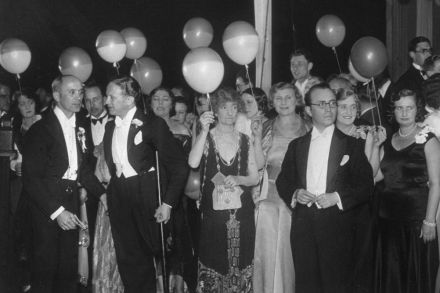
This is a tale of two London parties. They say something about London society, status, power, fame and fun — but I’m not sure what exactly. Party one was what I call a Power Party. It was full of famous faces from the upper echelons of British politics and media. I spotted chancellor of the Exchequer Rachel Reeves talking to the former Tory chancellor George Osborne and the former foreign secretary David Miliband. Party two was what I call a Pulchritude Party — a dazzling array of beautiful women and handsome men. There was a mix of young writers, journalists, lawyers, filmmakers and artists. It did not have the high social wattage of name recognition that the Power Party had — but it had beauty and youth on its side.

parties

Best of 2024 with Dominic Sandbrook, Mary Beard and Harriet Harman

From our UK edition

75 min listen

This week is a special episode of the podcast where we are looking back on some of our favourite pieces from the magazine over the past year and revisiting some of the conversations we had around them. First up: the Starmer supremacyLet’s start with undoubtedly the biggest news of the year: Starmer’s supermajority and the first Labour government in 14 years. In April, we spoke to Katy Balls and Harriet Harman about just what a supermajority could mean for Keir Starmer. Listening back, it’s an incredibly interesting discussion to revisit. The aim of Katy’s piece was to communicate the internal problems that could arise from such a sweeping victory and, crucially, how Starmer might manage a historic cohort of backbenchers.

The difficulties of writing historical fiction

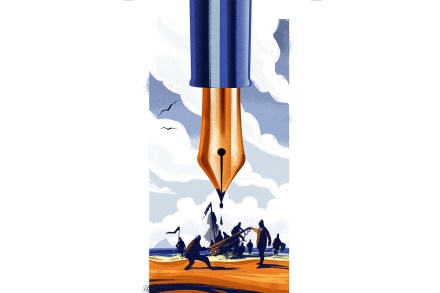
I was dozing, a little hungover, on the morning flight from Prague to London, when I saw them for the first time. Ten men on a beach, dragging a landing craft up the sands. Where? Can’t tell yet. When? The fourteenth century. Who? Don’t know, but they look like trouble. I woke up. Through my AirPods I heard the Blur singer Damon Albarn growling the final song from their 1997 album Blur. “In these towns, the English army grinds their teeth into glass / You know you’ll get a kicking tonight...” I opened my laptop and started making notes. The men came surprisingly well-formed. They were soldiers of fortune in the Hundred Years’ War. They already had names. Faces. Talents. Foibles. Yearnings. Secrets. I wrote down as much as they could tell me before the plane landed.

historical fiction

History must at least be readable if we’re to learn anything from it

From our UK edition

Richard Cohen was once one of our foremost book editors as well as being an Olympic sabre champion. Since moving to New York 20 years ago he has turned author himself, writing books on Tolstoy, the sun and his own sport of swordsmanship. Now he focuses his attention on historians. His aim, he tells us at the outset of this superb survey from Herodotus to Mary Beard, is to discover the opinions, biases and open prejudices of those who chronicled the past and thus shaped the way we view it. Making History is very much a compendium of his own tastes and enthusiasms, and cheerfully omits such masters as Clarendon and Carlyle, whose histories of the English Civil War and the French Revolution laid the foundations of all subsequent historiography of those events.

You say you want a revolution?

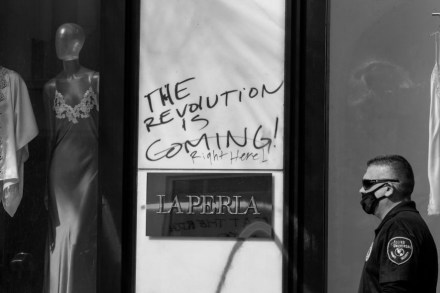
In the early hours of May 30, after a night of violent protests in New York, two lawyers were arrested by the NYPD. Colinford Mattis and Urooj Rahman, Princeton and Fordham graduates respectively, were charged with attempting to firebomb a police vehicle with a Molotov cocktail. Mattis and Rahman are now indicted on seven felony charges for which they could face life in prison. What drove two promising young professionals with top-flight educational credentials to risk everything like this? Gary Saul Morson, an expert on Russian literature at Northwestern University, offered an answer.

revolution