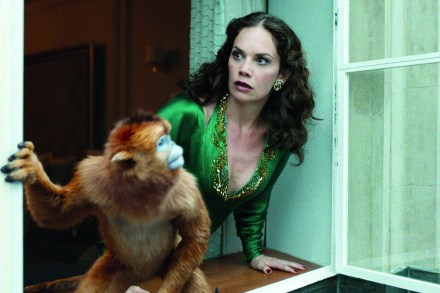
His Dark Materials

Yawn: your childhood just died again

We’re spending all this money to fight Vladimir Putin but what about Mindy Kaling? From Democrats to Republicans, from Atlantic to Pacific, the nation has rarely been as united as it is in hatred of Kaling’s new animated HBO show Velma. The gory and profane rehash of the Scooby-Doo franchise has a whopping 7 percent audience score on Rotten Tomatoes. YouTube commentators leapfrog over each other to denounce the show: Velma is cringe; Velma is garbage; Velma is racist! Far be it for me to agree with the mob: I’d love nothing more than to say I like this show and watch a million Twitter coronaries blossom. But alas, having seen it, I can attest that Velma’s very existence has singlehandedly wiped out centuries of human progress.
childhood

The magnetism of His Dark Materials

When I was in middle school back in the 1990s, there were two sets of books every boy seemed to have in his backpack. One was the Redwall series, Brian Jacques’s swashbuckling tales of heroic mice and tyrannical wildcats. The other was the His Dark Materials trilogy by Philip Pullman. It’s no coincidence, I think, that both Jacques and Pullman are British. What made these books intriguing, beyond their carefully wound plots, was that they were marketed to children yet addressed subject matter that was very much adult. In Redwall, it was the brutal violence. His Dark Materials had some of that too (in the first chapter of the first book, we witness an attempted killing; in the first chapter of the second book, we witness an accidental fatality).

his dark materials