Hinduism

Is the religious right shifting?

In 2021, for the first time in 1,400-odd years, Britain ceased to have a Christian majority. The United Kingdom, the political entity of which the island of Great Britain has been a part since 1801, has had its share of not-quite-Christian prime ministers over the years, with a handful of agnostics and quiet atheists. But in 2022, for the first time, the UK had a prime minister who practiced a non-Christian religion – and Hinduism had the distinction of claiming the first post-Christian head of state, Rishi Sunak. The West’s ethnic and religious foundations have already shifted in our great cities It may be some time before an American president is Hindu. Already, however, there are several prominent Hindus in the Trump orbit and near the top of the Republican party.

religious

The Spectator and Douglas Murray win UK defamation claim

The Spectator and Douglas Murray have today won a defamation claim brought by Mohammed Hegab, who "lied on significant issues" in court and gave evidence that "overall, is worthless." The judge rejected Hegab’s claim because the videos he publishes are ‘at least as reputationally damaging to him as the article’ Hegab, a YouTuber who posts under the name Mohammed Hijab, claimed that an article published in September 2022 about the riots in Leicester, England, had caused serious harm to his reputation and loss of earnings as a result.

douglas murray

Trump unleashes the evangelists

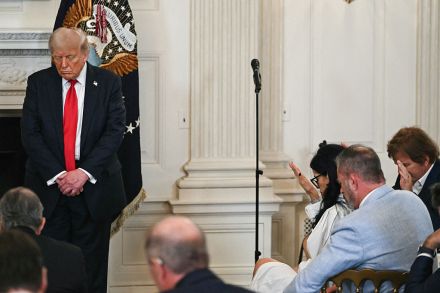
The Trump administration issued a memo Monday saying that federal workers are openly allowed to express religious beliefs in the workplace “to the greatest extent possible unless such expression would impose an undue hardship on business operations.” This means that they can display Bibles, religious artwork and items “such as crosses, crucifixes and mezuzah,” among other religious symbols. But that’s not all. Workers are also allowed to talk about how their own faith is “correct” and how others should “re-think” their beliefs. “During a break, an employee may engage another in polite discussion of why his faith is correct and why the nonadherent should re-think his religious beliefs.

How do you exhibit living deities?

From our UK edition

The most-watched TV programme in human history isn’t the Moon landings, and it isn’t M*A*S*H; chances are it’s Ramayan, a magnificently cheesy 1980s adaptation of India’s national epic. The show has a status in India that’s hard to overstate. Something like 80 per cent of the entire population watched its original run; in rural areas entire villages would crowd around a single television hooked up to a car battery. When the show ended, omitting the ‘Uttara Kanda’, the fairly controversial last book of the original poem, street sweepers across the country went on strike, demanding the government fund more episodes. The government caved. But while every country has its pieces of cult media, in India the cult is literal. Some viewers would take a ritual bath before tuning in.

Internet poet Rupi Kaur boycotts White House Diwali celebration for Palestine

Cockburn was surprised to learn the war in Israel has a more global impact than he had previously imagined. The carnage in Gaza is affecting the way that Indian women living in the United States celebrate Diwali, at least according to the Canadian-Indian poet Rupi Kaur. South Asian women are now the latest group with a moral imperative to weigh in on the war.  Kaur’s crusade to involve an Indian holiday in a regional conflict all started when the internet poet, famous only to her 4 million Instagram followers and readers of New York women’s websites, rejected an invitation to a Diwali celebration that will be hosted by Kamala Harris on Wednesday. https://twitter.

rupi kaur

Leave, convert or perish: The fate of Afghanistan’s minorities

From our UK edition

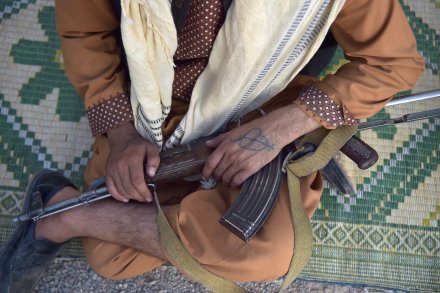
President Biden’s decision to ‘end the war in Afghanistan’ means the complete withdrawal of 3,500 US troops by the 20th anniversary of 9/11. However, what may be domestically popular — particularly among Trump voters — will soon have consequences for the Afghans left unguarded by foreign troops. The Taleban and other jihadist militias are already making significant territorial gains while nuclear Pakistan will be strengthened by the vacuum left by the US military. But it is Afghanistan’s non-Muslims who will really suffer. Extinction is a word normally associated with dinosaurs — but it’s no exaggeration to say some minority religions (including my own) will now face that fate at the hands of Isis, Al-Qaeda, and a resurgent Taleban.

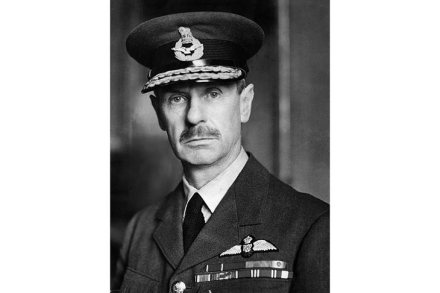
Letters: Why Hugh Dowding deserves a statue

From our UK edition

Police relations Sir: As a former Met Police officer, with a similar background to Kevin Hurley, I was surprised how much I disagreed with his article (‘Cop out’, 27 June). Central to this was the lack of emphasis he placed on the attitude of police officers. The emphasis on violent gang crime undoubtedly leads to a distortion in how young black men are perceived by the police, and this in turn can quickly lead to confrontation on the street. The attitude of young police officers is key to avoiding an escalating reaction between them and members of the public. Senior officers need to develop more holistic ways of addressing crime, and acknowledge that the police cannot arrest their way to safer communities. Communities need to be integral to policing solutions.

When will Britain take a stand against Pakistan?

From our UK edition

Well, now that we’re all fired up about Britain’s moral role in the world courtesy of Theresa May, who is indignant about cuts to the overseas aid budget, how about moving on to Pakistan? This week a Pakistani court has ruled that a 12-year-old Christian girl, Farah Shaheen, consented to her marriage with an alleged abductor over twice her age and consented freely to convert to Islam. When the girl was recovered from the household of Khisar Ahmed Ali in December, she was reportedly too traumatised to speak about what happened to her over the five months since she, ah, consented to marry a 29-year-old and convert to Islam.

Spectacular and mind-expanding: Tantra at the British Museum reviewed

From our UK edition

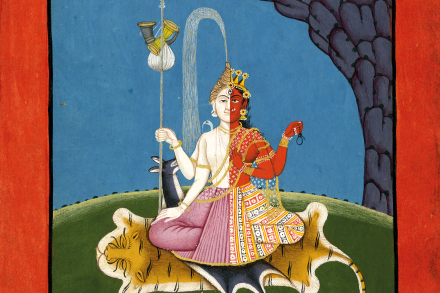
A great temple of the goddess Tara can be found at Tarapith in West Bengal. But her true abode, in the view of many devotees, is not this sacred structure itself but the adjacent, eerily smoking cremation ground. There she can be glimpsed in the shadows at midnight, it is believed, drinking the blood of the goats sacrificed to her during the day. Many holy men and women live in that grisly spot too, adorned with dreadlocks, smeared with ash, and dwelling in huts decorated with lines of skulls painted crimson. As a domestic setting this wouldn’t suit everybody. But the varieties of religious experience (to borrow the title of a celebrated work by William James) are many and extremely diverse.

Letters: We must sing again

From our UK edition

Growing pains Sir: James Forsyth (‘Rewiring the state’, 4 July) shocked this loyal Spectator reader with the following: ‘Even before Covid, this country was in a productivity crisis and it’s nigh-on impossible to improve productivity without government involvement. Increasing productivity requires improvements to be made to physical and digital infrastructure and to the skill base, and those need public investment.’ James clearly has not studied the sources of productivity growth (or lack of it). In the 50 years to 2008, the UK experienced around 2 per cent p.a. growth in real Gross Value Added per hour worked — which is what politicians generally mean when they talk about productivity. Since then, productivity growth has effectively stalled.

The success of British Indians is troubling for some. Why?

From our UK edition

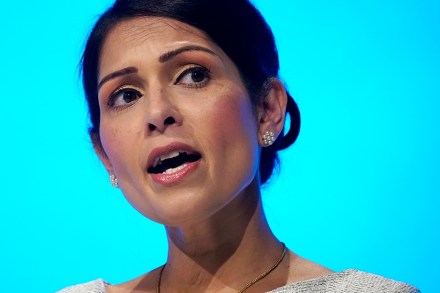
When Priti Patel told Labour MPs that she didn’t need any lectures on racism, they seemed to take it as a declaration of war. Last week, 32 of them signed a letter accusing the Home Secretary of ‘gaslighting’ black people’s experiences. The social media warriors were out in force, rebuking her for not being authentically ethnic. She was attacked for being a ‘coconut’, brown on the outside and white on the inside. It’s not the first time she has faced hostility for not conforming to expectations: one article last year called her ‘a product of internalised whiteness’. Mahatma Gandhi is also now under fire, with a petition to remove his statue in Leicester attracting more than 6,000 signatures.