Himalaya

Sleepless in Shangri-La

“You are suffering from what we call an ‘Alice in Wonderland’ effect,” Dr. Sankar informed me as I climbed out of a rabbit hole. I was late for a very important date to discuss my sleep (or lack thereof). “When you fall asleep,” he continued, “your thoughts race, and you think: What should I be doing? What do I need to do? Where am I? Where am I going?” I had fallen head-first into another wonderland: Ananda in the Himalayas. Located in the foothills of the Himalayas in northern India, Ananda – which translates to “happiness” in Sanskrit – is a world-renowned holistic retreat that towers above the bustling city of Rishikesh and the sacred Ganges River.

A mystery on Mount Everest

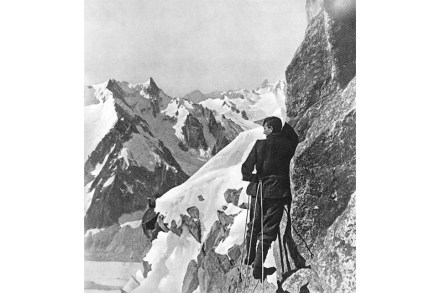
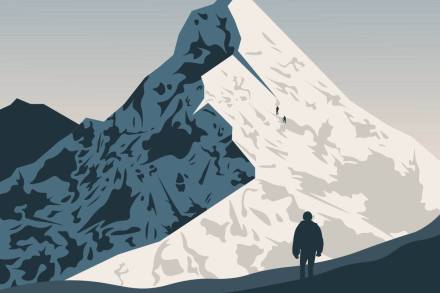
On June 8, 1924, veteran climber and geologist Noel Odell mounted the crest of a Himalayan crag and gazed up toward the tallest peak on Earth. Taking in the awe-inspiring sight, he noticed two tiny “objects” far ahead on a snowy slope “going strongly for the top.” To Odell, a trained and talented observer, the pair of ascending dots appeared to be a mere thousand feet or so below the summit. He later wrote that as he stood intently watching this dramatic appearance, the scene suddenly became enveloped in cloud and the “objects” vanished from his view. It was the last sighting of his fellow expeditionaries, George Mallory and Andrew “Sandy” Irvine, alive.

Mallory

The recklessness of George Mallory

From our UK edition

George Mallory bookended the 20th century history of Everest with his pioneering attempts in the 1920s to climb the mountain – and with the spectacular discovery, in 1999, of his body high up on the North Face, preserved by the ice for 75 years after he had failed to do so. His flip remark to a journalist that he was climbing Everest ‘because it was there’ became mountaineering’s most celebrated quote, while masking other less noble reasons. Mick Conefrey has become one of our finest gazetteers of the Himalaya, with successive books on K2, Kangchenjunga and later exploits on Everest. Now he turns his attention to a great conundrum of mountaineering history.