Heresy

Catherine Nixey’s Heresy is a joy to read

What people tend to forget about Jesus Christ is that he killed children. As a five-year-old, Jesus was toddling through a village when a small boy ran past, knocking his shoulder. Taking it like any five-year-old would, Jesus shouted after him "you shall not go further on your way," at which point the boy fell down dead. Later, when the boy’s parents admonished Joseph and Mary for failing to raise their son properly, Jesus blinded them. Something to bear in mind next time you ask yourself: "What would Jesus do?" If this story is unfamiliar, that is because it doesn’t appear in any of the Bible’s traditional Gospels.

Heresy

The truth one year, heresy the next: The Book of Days, by Francesca Kay, reviewed

From our UK edition

Bad historical novelists assume that people always live at the spearhead of their age. Good ones, like Francesca Kay in her fourth book, know that even when the world spins ‘faster than a weathervane in a gale’, most hearts and minds will tarry in the past, behind events. The Book of Days unfolds in a village north of Oxford in 1546 and 1547, as the unnamed old king dies and the accession of his child heir brings another round of ‘newfanglery’ in faith. The ‘commotion time’ returns with all its frightening convulsions: now, ‘what was truth one year is heresy the next’.

Mass hysteria in Massachusetts: the 17th-century witch crisis in America

From our UK edition

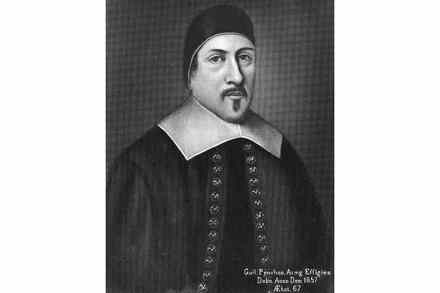
One September day in 1649, in the frontier town of Springfield, Massachusetts, Anthony Dorchester returned from church to the house he and his wife shared with a couple called Hugh and Mary Parsons. He went to check on a cow’s tongue he was boiling for dinner but to his surprise it wasn’t in the pot. He searched high and low but couldn’t find it. Mary told him that her husband had sneaked off mysteriously on the way to the meeting house and was now nowhere to be seen. Given that the two men had argued about possession of the tongue, the obvious conclusion would surely be that Hugh had stolen it. But for Dorchester and his neighbours a more plausible explanation was that Hugh had made it disappear through the ‘juggling’ of witchcraft.