Harlem

Bad vibrations: Lazarus Man, by Richard Price, reviewed

From our UK edition

Richard Price’s tenth novel follows four characters in the wake of a tenement building collapse in Harlem that kills six people and leaves others missing. Detective Mary Roe is on a mission to find a missing resident whose wife was among the dead. Royal Davis is a funeral home director hoping to drum up much-needed business from the tragedy, going so far as to dispatch his young son to hand out business cards at the site. Felix Pearl is a freelance photographer searching for meaning as he documents the aftermath. The titular resurrected man is Anthony Carter, a 42-year-old former schoolteacher, six months clean of a cocaine addiction that has cost him his job and relationship with his wife and stepdaughter.

Bud Powell should be a household name

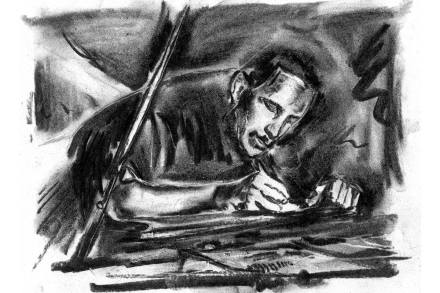
Late one January night in 1945, a young black man stumbled drunkenly toward Broad Street Station in Philadelphia. He was exhausted after playing a long set in a grotty club half a mile away. The naturally nervous musician often used alcohol to settle his unbearable over-excitements and debilitating despairs. On this occasion he had one too many. His awkward gait caught the attention of two policemen. They went to shoo him away, but instead of escorting him peacefully along, something about the twenty-year-old vexed the pair and they began to bash him about the head repeatedly with their truncheons. When the seriousness of his injuries became apparent, after he’d been slung into a frozen cell, he was taken to a hospital to recuperate.

Powell

The cost of decarceration

As grown up as I felt at nine, whenever my parents let me walk to school, the corner store or Prospect Park with friends, I’d have been lying through my teeth if I denied sometimes feeling afraid — even in the little slice of Brooklyn I called home. But it wasn’t the New York Police Department or endemic racism that made me anxious. In the 1990s, getting mugged or beaten up in my own neighborhood always felt like more than a remote possibility. That sense of wariness was dull and could easily be forgotten if I was distracted. But it was always there, just under the surface. That anxiety disappeared when we moved to a mostly white town in suburban Long Island. At school, no one looked like me.

criminal

Liberty and death: Jacob Lawrence’s struggle for freedom

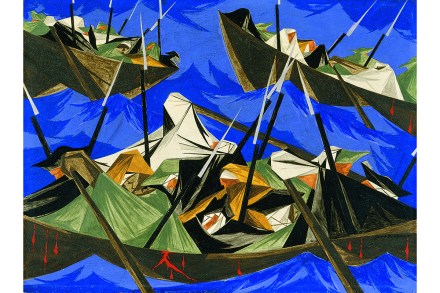
Few artworks could be more responsive to the current upheaval than Jacob Lawrence’s 1954-56 series ‘Struggle...From the History of the American People’. Painted during the dawn of the Civil Rights movement, the cycle of 30 panels tells a history of the American Founding through punchy modernist vignettes, engaging with timely and timeless topics such as brutality, race, memory, justice and our shared national heritage. At the Metropolitan Museum of Art, 24 of the original panels have been reunited for the most complete exhibition of the series since its original showing more than six decades ago. The exhibition will travel to Birmingham, Seattle and Washington, DC from New York.

jacob lawrence