Hans Frank

Derided as ‘feminists’: the unsung witnesses of the Nuremberg trials

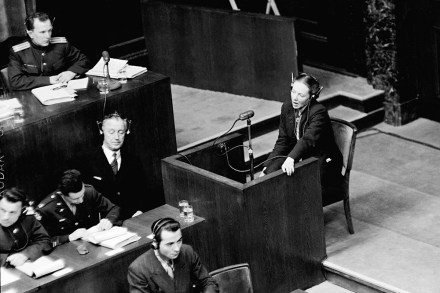
There are several things wrong with James Vanderbilt’s new film Nuremberg, least of all, some might say, the fact that it fails the Bechdel test. This 1985 metric assesses female representation in film by whether two named women have a conversation on screen about anything other than a man. If you are thinking, ‘So what? All the Nuremberg prosecutors were male, as was every defendant’, then you need to get hold of Natalie Livingstone’s revelatory book. While the public face of the trials was resolutely male, as were the indictments (there was no mention of rape, for instance, within the listed war crimes), the truth is that in the trials, as in the war, women played significant though often hidden roles.
How could Hitler have had so many willing henchmen?

Eight decades after the second world war ended, for how much longer will we produce massive books about Hitler and the Nazis? Richard J. Evans, the former regius professor of history at the University of Cambridge, is one of the senior gardeners in this noxious orchard, having devoted a lifetime’s study to the subject. As a minor under-gardener in the same field, I believe that we now know all we need to about the Führer and the crimes of his vile regime, and, barring the unlikely discovery of something new, it is time that historians moved on. The damning facts can be briefly stated, and are cogently summed up by Evans in his conclusion: Hitler was a fanatic, brought to power by a German middle class traumatised by defeat in the first world war and the economic woes that followed.