Handel

A new opera that deserves more than one outing: Royal Opera’s New Dark Age reviewed

From our UK edition

It’s quite a title sequence. Puccini swells on the soundtrack and words flash before your eyes. ‘Ecstatic!’ ‘Spellbound!’ ‘Passionate!’ ‘Dazzled!’ Champagne fizzes, ballerinas pirouette; for some reason Bryn Terfel hovers in the roof of the Floral Hall. The Royal Opera House is back in the game, bringing the uplift of live music-drama to an opera-starved Britain, and if you’re watching it online, the only remaining question is whether the offering on stage can possibly live up to the energy, colour and sheer affirmation of the Royal Opera’s on-screen intro. Don’t be silly. What we get is New Dark Age — a double bill that takes its name from its second half, the latest creation of director Katie Mitchell.

The original Edinburgh Festival

From our UK edition

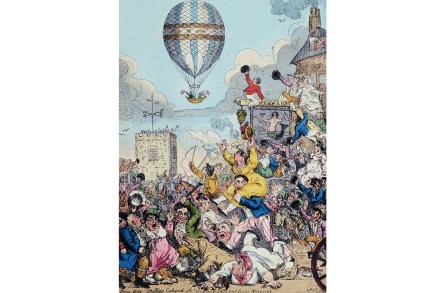
Edinburgh, 3 November 1815. The university courtyard is buzzing. A band is playing. Surrounding streets are filled with thousands of excited spectators, many waiting since 10 a.m. From the Castle, from windows and rooftops, from Calton Hill, Holyrood Park and Salisbury Crags, all strain to get a glimpse. Then finally at 3 p.m., above the university, a large balloon suddenly emerges, climbing wondrously into the crisp November sky. Orchestrating this aeronautical display was pioneer English balloonist James Sadler. His balloon rose majestically as the westerly wind took it towards the sea. Sadler continued waving his flags as long as he could be seen, and the crowds applauded and gasped.

Bigamists, lunatics and adventurers: the raucous world of 19th century British music

From our UK edition

For a patriotic German in the decades before Bismarck, Britain’s power was an object of envy. But there was one thing, at least, that you could always hold over the Anglo-Saxons on their foggy little island. On 1 January 1837, Robert Schumann sat down in Leipzig to hear a new piano concerto by the 20-year-old William Sterndale Bennett. ‘An English composer; no composer,’ commented his neighbour, smugly, before the music started. Few 19th-century German music-lovers failed to point out that the land of Shakespeare had somehow failed to produce a single really significant composer since the late 17th century. We know how that story ended; and if you want to explore the flowering of the British musical renaissance, it’s never been easier.