Gun violence

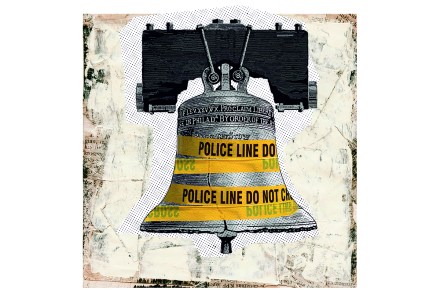
How Democrats failed Minneapolis

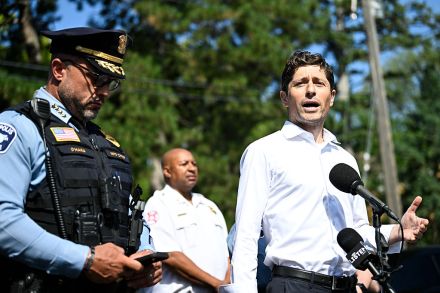
What happens after an unspeakable tragedy? One that comes on an idyllic late August day in Minneapolis that signaled the end of a barefoot summer and the beginning of back-to-school activities, reacquainting with friends, and easing back into a school schedule? For two families, it is the end of any normal life they had known. For countless other families whose children attended Annunciation Catholic School in a peaceful, leafy-treed neighborhood of the city, it marks a new life of contradiction: of being blessed that they are reunited with their loved ones and overwhelming grief at an inhuman, violent targeting of innocent life at its most sacred – within the walls of a church while at prayer.

Who’s afraid of ghost guns?

Brian Thompson, CEO of UnitedHealthcare, was gunned down by Luigi Mangione in New York City on December 4. Surveillance footage hit the internet within hours. Wild speculation spread about the strange gun in the killer’s hands. The elongated barrel, the chamber movements that signaled repeated gun jams, the lack of recoil. Was it a veterinary euthanasia gun? As it turned out, it was a homemade gun, commonly known as a “ghost gun," printed using 3D technology. And, as the furore over Mangione dies down, it’s his weapon that remains the subject of violent disagreement and debate. Two months before Thompson’s assassination, the Supreme Court heard oral arguments in the great ongoing ghost gun case — Garland v. VanDerStok.

ghost

Can anyone save Philadelphia?

Americans may never before have felt their country was farther from its finest hour. And yet, on the Fourth of July last year, residents gathered in the heart of its birthplace for an ever-rarer expression of patriotic sentiment. It was to be a brief display. Blood spilled before the clock struck ten. Though no one saw a gunman or heard gunfire, two police officers were struck by stray bullets on the famous steps of the Philadelphia Art Museum. Word spread quickly, and suddenly no one could be sure whether they were hearing fireworks or gunshots. On the Benjamin Franklin Parkway, patriotism turned to terror, then shrieks gave way to silence.

philadelphia

Chicago is coming apart

There are two ways to think about Chicago. The depressing one is to follow the news. These days it’s pretty bad. In mid-May, two people were killed and seven wounded when a gunman fired into a crowd outside a McDonald’s restaurant on the Near North Side. I know the McDonald’s well. I went to high school nearby, and my three children attended the elementary school across the street. Once scruffy, the area is now affluent. Overlooking the murder site is a seventy-five-story tower where condos sell for up to $6.1 million. The building’s developer described the shootings as “isolated to [that] location.” If only. In fact, it was the tenth mass shooting in the city this year, CBS News Chicago reported.

chicago

The Democrats’ ‘do something’ gun bill

There’s a new federal gun law in the works and it's being heralded as a “bipartisan breakthrough agreement on gun violence.” I can’t even get past the first sentence without issuing an objection, your honor! Because the proposed gun control package is just more manipulative language aimed at eroding Second Amendment rights. “Gun violence” makes it sound as if the guns are the ones causing the violence. The same goes for “gun safety” — a term President Biden used in response to this proposed legislation, which will not make guns any safer or less violent. Guns are inanimate objects, neither violent nor safe. They don’t spontaneously combust. People do.

Don’t ban the AR-15

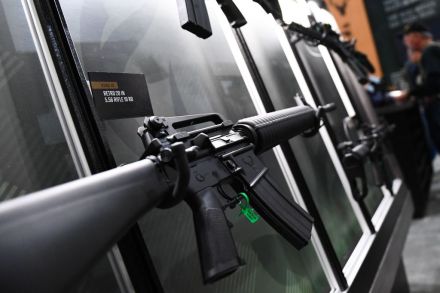
Following every tragic mass shooting, there is outrage directed at the firearms industry. The highly popular AR-15 platform is once more in the crosshairs after the recent killings in Buffalo, New York, and Uvalde, Texas. The AR — erroneously described as an "assault weapon” — has been targeted by politicians and celebrities who think it should be banned. A House Democrat recently introduced a bill that would add a 1,000 percent sales tax to the purchase of the semi-automatic rifle. Misinformation rather than facts has been weaponized against the AR, which has been falsely described as a "high-powered" "weapon of war." Major General Paul Eaton, US Army (retired), even suggested in a series of tweets that the AR-15 has no place in civilian hands.