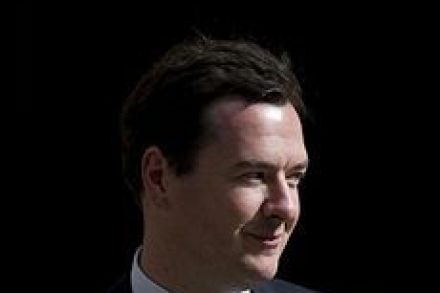
George osborne

Vince being Vince

From our UK edition

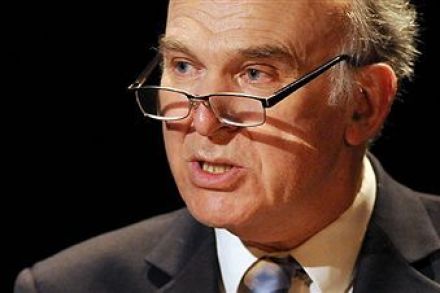
A sweeping and utterly typical performance from Vince Cable in his interview with the Times (£) today. Not only does he plunge his teeth into the exposed flesh of the bankers (criticising them for their "special pleading" over banking reforms), but he also offers another overarching diagnosis of the British economy (there won't be a repeat of 2008's financial crisis, he says, in case you were wondering, but slow growth could be a problem). I feel like a spoilsport for pointing out that, only four months ago, the Business Secretary was actually warning that "you can see" another financial crash happening. But aside from Cable's fiery rhetoric, it's worth noting that his demands are now more restrained than they have been.
Right to reply: Why do so many “new jobs” go to foreigners?

From our UK edition

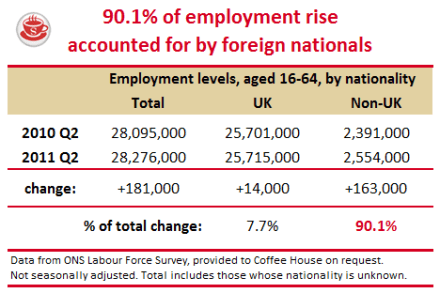
On Monday, we published a post on George Osborne's "jobless recovery" — the point being that 90 per cent of the recent rise in employment can be accounted for by foreign nationals. Here's a counterpunch to it from the IPPR's Matt Cavanagh, who should already be familiar to CoffeeHousers from his previous posts and articles for us on matters military. We're hoping that this will be the first of a new series of "Right to reply" posts, giving outside writers the opportunity to take on your loyal baristas in mortal combat. Here goes: One of the most frequently recycled statistics of recent years is the percentage of "new jobs going to foreigners". The first thing to say is that this is a bad way to phrase it.

Coalition prepares for bank bust-up

From our UK edition

There’s a big coalition split coming down the road. Next month the Vickers’ review into banking reform, which is going to suggest a ring-fencing of the investment and retail arms of banks, will come out. The Liberal Democrats — led by Vince Cable — will push for the instant implementation of the report’s recommendations. The Treasury will argue that banks need to be given time to introduce these new rules. The result will be, as one senior Lib Dem source tells this morning’s FT, ‘a big fight’.   The tricky question for Cameron and Osborne is how do they win this argument when there’s a visceral desire for tough measures against the banks?

The dangers of home ownership

From our UK edition

The slump in home ownership is reported today as a bad thing. Many Conservatives, who believe that home ownership releases what the late Shirley Letwin called "vigorous virtues", may agree. So might Labour, which came to regret its opposition to the Thatcher policy of allowing council tenants to buy their home. Like inflation targeting, home ownership was a solution that worked so well in the 1990s that it was vigorously pursued in the next decade. But here's the rub: it had disastrous effects. In this case, the disaster was governments pursuing greater home ownership as a policy goal. This meant cheap loans, which meant subprime mortgages, which meant a credit bubble.

Exclusive: Osborne’s jobless recovery

From our UK edition

George Osborne was right to boast in the Commons that Britain has the “second highest rate of net job creation in the G7”. Coffee House recently pointed out that all of the increase is accounted for by foreign-born workers. But what if you narrow the definition to foreign nationals? We put in an information request to the Office for National Statistics and the below information came back. It is quite striking. Over the 12-month period to which Osborne refers, 90.1 per cent of the extra employment amongst the working-age population can be accounted for by an increase in foreign nationals working in the UK. Here are the figures. The phenomenon of pensioners returning to work is fascinating, but separate.

British jobs for whom? | 28 August 2011

From our UK edition

“More than 400,000 people have been out of work for more than two years, according to analysis of the latest Government data by think tank IPPR.” So runs its press release today, trailed in the Sunday press and the wires. I hope the IPPR didn’t spend too much of their donors’ money on this research, as the figure is updated quarterly and freely available from the DWP website (click here). Add up only three categories: lone parents, jobseekers allowance and incapacity benefit the figure stands at 2.4 million, certainly “more than 400,000”. Worse, at the peak of the boom (Feb07), this figure was even higher at 2.5 million. And yes, it’s a real problem. As the IPPR goes on to say, unemployment is self-reinforcing.

Osborne’s crusade

From our UK edition

‘Tax evasion is morally repugnant. It's stealing from law-abiding people who face higher taxes to make good the lost revenue. Those who evade taxes, like benefit cheats, are leeches on society. And my message to those who try to hide their incomes from the Revenue in offshore bank accounts and false declarations is simple: we will find you and your money.’ That was written by George Osborne in today’s Observer. He promises that the deal with Switzerland is “just the start” of his campaign to close tax havens. The rest of the article then relates the coalition’s achievements at reducing tax avoidance by increasing charges on capital gains and non-domiciled taxpayers working in Britain.

Clegg at odds with many Lib Dems over 50p rate

From our UK edition

The future of the 50 per cent tax rate is growing issue within the coalition. Unlike most government wrangles, this one doesn’t split on partisan lines, with the yellows on one hand and the blues on the other. The debate is largely being forged by personalities. George Osborne is well entrenched; Eric Pickles weighed-in for the race last weekend, saying that he wanted people “to keep more money in their pockets”, indicating that he hopes the rate is temporary. (He went take a swipe at Vince Cable's mansions tax, which he described as a "big mistake".)   It’s David Willetts’ turn this weekend. The Times reports (£) that Willetts believes the tax must stay for the time being.

Beating fuel poverty

From our UK edition

As Tim Montgomerie has noted, a growing priority for voters is the astronomical cost of petrol. In fact, according to a Populous poll conducted outside the Westminster bubble, people are far more concerned about energy prices than almost any other issue, even public sector spending cuts. With prices hitting 150p per litre at some garages, many fear that petrol and diesel is becoming part of the poverty trap. For example, in my constituency of Harlow, figures show that the average motorist is now paying something like £1,700 a year just to fill up the family car. This is a tenth of the average income in our town. Experts have ruled that spending a tenth of your income to keep warm is classed as fuel poverty.

Stumbling towards fiscal union

From our UK edition

Angela Merkel must tire of repeating herself. Eurobonds are “exactly the wrong answer” to the European debt crisis, she said yesterday for the umpteenth time. She added that they would “lead us to a debt union not a stability union”, a free-for-all funded by German taxpayers. She concluded that “greater commitment” from the 27 member states of the European Union was required to stabilise the situation. Her comments would have, perhaps, placated her mutinous coalition in Germany, which is virulently opposed to Eurobonds and expensive integration.

This autumn, Europe could become the most important issue in British politics again

From our UK edition

Europe will be one of the political issues of the autumn. The government expects another round of sovereign debt crises in the autumn and these will add urgency to the Merkel Sarkozy plan for ever closer fiscal union between the eurozone members. Nearly every Tory MP and minister I have spoken to is instinctively sceptical of the Franco-German strategy. But Cameron, Osborne and Hague believe that because the Eurozone members won’t accept the break-up of the currency union, Britain has to back further fiscal integration in the hope that it will make the euro work. (Cynically, one might add that their position also makes life easier within the coalition given the Lib Dem’s Europhile leanings.

EXCLUSIVE: IDS on British jobs

From our UK edition

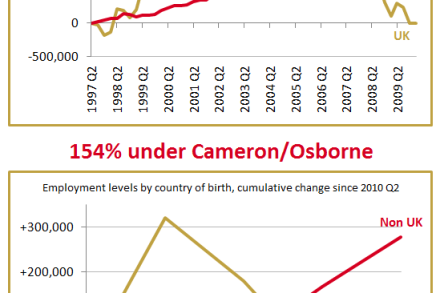
Last week, George Osborne boasted that Britain has the second-fastest job creation in the G7. In tomorrow's Spectator, we disclose official figures showing that 154 per cent of the employment increase can be accounted for by foreign-born workers. We on Coffee House have often questioned Labour's record: 99.9 per cent of the rise in employment was accounted for by foreign-born workers. The graphs for the Labour years and the coalition year are below:     The idea of 154 per cent is strange, so I will reproduce the raw figures below:     Now, no one outside Westminster expects the UK labour market to change the day a new government is elected, but what matters is that the problem still exists.

With an eye on 2015, Osborne is ramping up the growth agenda

From our UK edition

30,000 new jobs by 2015: that is the glittering prediction made by the government as it announces the creation of more enterprise zones this morning. 11 zones* have been identified in total, tailored to foster the expansion of hi-tech manufacturing industries away from London and the M4 corridor. Enterprise zones certainly have their critics – notably the Work Foundation’s Andrew Sissons, who told the Today programme that they were merely an “expensive way of moving jobs around the country.” But the coalition is adamant that it has learnt from past mistakes, insisting that the policy will rebalance the economy and rejuvenate regions that have been “left behind”.

Government expected to renew growth strategy

From our UK edition

The word flying around Westminster this evening is that the government is going to announce a fresh package to stimulate growth tomorrow. In line with recent reports, the expectation is that new enterprise zones will be unveiled. Enterprise zones are, of course, the linchpin of the chancellor’s current strategy, offering generous tax breaks for start-up industries, relaxed planning regulations and investment in state-of-the-art broadband, so this would not be a novel move. But an announcement would be timely nonetheless.

Inflation rises yet again

From our UK edition

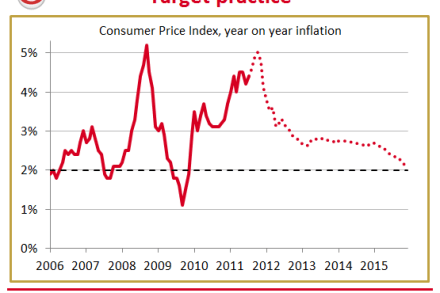
"Inflation destroys nations and societies as surely as invading nations do. Inflation is the parent of unemployment. It is the unseen robber of those who have saved. No policy which puts at risk the defeat of inflation - however great the short-term attraction - can be justified". That was Margaret Thatcher, speaking in 1980 when inflation was much higher but British politicians actually cared about it. You won't even hear the Governor of the Bank of England denounce today's figures: CPI at 4.4 per cent and the traditional measure of inflation, RPI, at 5.0 per cent. It is seen as just another statistic. The government has also chosen to announce that rail fares will be rising by 8 per cent. George Osborne is in charge of getting inflation right.

Boris’ long-game strategy

From our UK edition

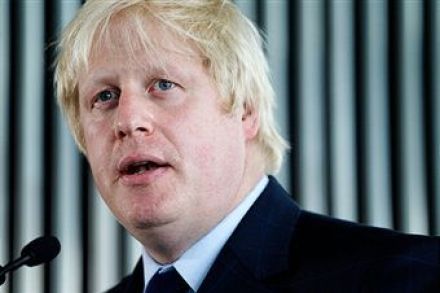
Has the sheen come off BoJo? The question is echoing around some virtual corridors in Westminster this weekend. The Mayor of London was caught off guard by the recent riots and his initial decision to remain en vacances made him look aloof and remote, a sense that grew during his disastrous walkabout in Clapham. Then he joined Labour in calls for cuts in the police budget to be reversed, a decision that reeked on opportunism, superficially at least. The FT’s Jim Pickard has an excellent post on these matters and he reveals that Boris Johnson has been voicing these concerns in private for months and that he has a brace of Cabinet allies: Liam Fox and Michael Gove.

Osborne’s debt dilemma

From our UK edition

If there's one sentiment that defines George Osborne's article for the Telegraph today, it’s that there is no need for us Brits to panic. The economic convulsions of the past few days, contends the Chancellor, serve to prove that the coalition was right to approach deficit reduction as it has. "The alternative of more spending and yet more borrowing is now frankly ludicrous," he says, "and places those who advocate it on the outer fringes of the international debate." He has a point. As I blogged on Saturday, there are reasons to believe that we'd be hurtling towards a credit downgrade and higher borrowing costs were it not for the fact that our debt-GDP ratio is set to decline by 2015.

Would the Darling Plan have satisfied the credit rating agencies?

From our UK edition

Why have we retained our AAA credit rating despite, by S&P's figures, suffering a larger debt-GDP ratio than America? The Taxpayers' Alliance's Matthew Sinclair answers the question in some detail here, but one passage from S&P's own analysis stands out. They explain that: "When comparing the U.S. to sovereigns with ‘AAA’ long-term ratings that we view as relevant peers–Canada, France, Germany, and the U.K.–we also observe, based on our base case scenarios for each, that the trajectory of the U.S.’s net public debt is diverging from the others. Including the U.S., we estimate that these five sovereigns will have net general government debt to GDP ratios this year ranging from 34% (Canada) to 80% (the U.K.), with the U.S.

America continues to unravel

From our UK edition

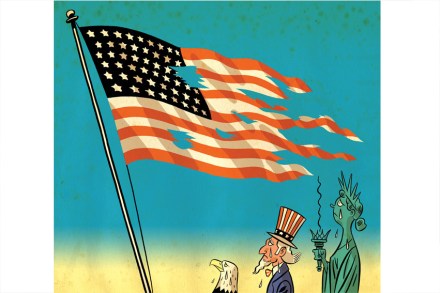
The humbling of America — the cover theme of this week’s Spectator — continues with S&P stripping Uncle Sam of his AAA credit rating. The debt downgrade, it says, “reflects our opinion that the fiscal consolidation plan that Congress and the administration recently agreed to falls short of what, in our view, would be necessary to stabilize the government’s medium-term debt dynamics.” In other words: Obama’s still addicted to debt, and it’s time to stop pretending that his government’s IOU notes rank among the safest investments on earth. Its analysis seems to be pretty much that made by Christopher Caldwell in his brilliant cover story.

Brown still hovers over the 50p tax debate

From our UK edition

A number of papers report today that George Osborne is minded to replace the 50p tax with Gordon Brown's original proposal: a 45p tax. How the ex-PM will be laughing. As he knows, even the 45p tax will lose money — that's why Labour didn't raise the top rate until the final four weeks of its 13 years. But the Tories haven't worked that out yet, and the Treasury is still working on the false assumptions he programmed into it. In short, the amount of money that either tax rate will raise depends on what's called the "taxable income elasticity," or TIE — a figure suggesting how responsive various taxpayers are to rate changes. It varies for income groups. The lower-paid are less able to move their labour or money around than the rich.