George osborne

Through the roof

From our UK edition

When David Cameron said this week that he is worried his children would not be able to afford to buy their own homes, he struck on one of the greatest economic problems of his premiership. The old British promise is that if you work hard and make the right decisions, you can advance in life and own your own home. This is the ladder that most aspire to climb. But for an entire generation, even the hope of home ownership is slipping out of view. A huge number of young Britons cannot hope to have the kind of life their parents enjoyed. The Prime Minister must know he is on dangerous ground here. His own children, of course, will not have to worry — just as he did not have to worry.

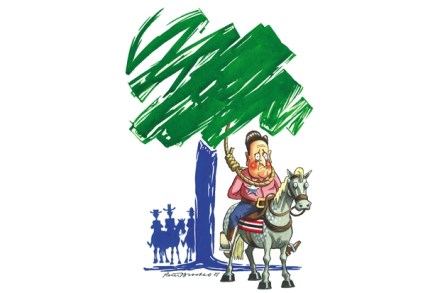
George Osborne has made his own ‘dangerous cocktail’ of economic risk

From our UK edition

When David Cameron said this week that he is worried his children would not be able to afford to buy their own homes, he struck on one of the greatest economic problems of his premiership. The old British promise is that if you work hard and make the right decisions, you can advance in life and own your own home. This is the ladder that most aspire to climb. But for an entire generation, even the hope of home ownership is slipping out of view. A huge number of young Britons cannot hope to have the kind of life their parents enjoyed. The Prime Minister must know he is on dangerous ground here. His own children, of course, will not have to worry — just as he did not have to worry.

Why is George Osborne sounding so gloomy?

From our UK edition

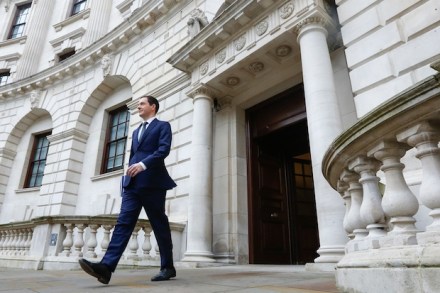
You might have been forgiven for thinking that things were going swimmingly economically at the moment, given George Osborne managed to find £23bn down the back of the sofa for a cheery Autumn Statement. So why is the Chancellor giving such a gloomy speech today? Osborne is warning of a 'cocktail of threats' from around the world, and told the Today programme that 'the difficult times are not over'. Given he started his Today interview with what sounded suspiciously like a memorised string of soundbites, he's clearly up to something. Normally that something would be trying to embarrass Labour, but Osborne really doesn't need to put any effort in on this. Perhaps the Chancellor is just covering himself in case the economy takes a turn for the worse.

Why the government is getting involved in commissioning new housing

From our UK edition

David Cameron’s announcement today that the government will be involved in the direct commissioning of new homes on public land isn’t a huge surprise in that it continues an exploratory policy announced in the last Parliament. But what is a surprise is that this policy was announced by the Lib Dems and is now being continued, rather than killed, by the Tories. It was Danny Alexander who said at the launch of the 2014 National Infrastructure Plan that ‘we will be undertaking a detailed government review to examine the potential of direct government commissioning for housing to deliver the number of homes we need’. Yet it is Cameron today who is trumpeting a ‘huge shift in government policy on housing’.

A knighthood? Lynton Crosby deserves a hereditary peerage

From our UK edition

Was a political knighthood ever more deserved than Lynton Crosby’s? His personal involvement was the difference between defeat and victory – he kept Ed Miliband out of No10. As Tim Montgomerie  observed earlier, a hereditary peerage would be in order for that alone. We saw, in 2010, what a Tory general election campaign looks like if left in the hands of a Tory leadership more noted for its enthusiasm in campaigning than their expertise. Crosby distilled down the Tory offering and encouraged Cameron to drop the misnamed 'modernisation' agenda which had so narrowed the party’s popular appeal (and halved its membership). Crosby focused on the basics: tax cuts, efficiency, jobs, prosperity. The safer bet.

Should ministers spend so much on their advisers?

From our UK edition

Should ministers have so many special advisers? Should a party that promised to cut the number of these SpAds if it came to government admit that it got this wrong, having increased their number? The arguments in favour of more of these political staffers in government are well-rehearsed: if they’re good, they add expertise and political nouse to a department and they make it easier for ministers to communicate what they’re up to. Some are hopeless at both these things, but the best ones - and there are many excellent ones in both main parties at the moment - often keep the show on the road and ensure reforms actually happen. Last week it emerged that the SpAd bill had risen from £8.4 million in 2013/14 to £9.2 million in 2014/15.

If you are so rich, how come you are so left wing?

From our UK edition

A few days ago the Telegraph revealed that the leader of Momentum was – inevitably – the privately educated son of a property tycoon, whose father had the wealth to fund a home in Primrose Hill, a wife, children, and allegedly a couple of mistresses on the side. I shared the news on social media, because I have met and disliked too many of his kind. The complaints began at once. I should not judge a man by his background. He did not choose his parents. What matters are James Schneider’s beliefs. It is where you are going which counts, not where you come from. And so on. And on.

Cameron’s great escape

From our UK edition

The last time David Cameron sat down with The Spectator for an interview, he was on a train and looking rather worried. There were just weeks to go until the general election and the polls were not moving. At the time, almost no one — and certainly not him — imagined that he was on the cusp of a historic election victory that would not just sweep the Tories to power but send Labour into an abyss. This time, we meet on another train. But he’s far more relaxed, reflecting on winning The Spectator Parliamentarian of the Year award and recalling how election night brought him some of the ‘happiest hours’ of his life. These occurred in the men’s changing room at Witney Leisure Centre.

George Osborne needs to mind his language

From our UK edition

Though he had a reasonably good Prime Minister’s Questions for someone who hasn’t done much of it, George Osborne did stumble quite badly on one question. He ended up telling SNP MP Alison Thewliss about the importance of welfare reform - in response to a question about women who had given birth to a third child conceived as a result of rape. She was complaining about the way the government was requiring women in this situation to prove that they had been raped in order to qualify for tax credits once the two-child limit has been imposed. The Chancellor replied: ‘It is perfectly reasonable to have a welfare system that is fair not just for those who need it but for those who pay for it. We have identified the specific cases that the hon.

PMQs sketch: Angela Eagle outshines Corbyn and Osborne

From our UK edition

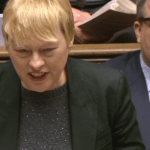
Jeremy Corbyn is like the lights in a planetarium. Whenever he goes off, stars appear. Last week the radiation came from Hilary Benn. At PMQs today it was Angela Eagle who outshone her leader. With Cameron away, George Osborne manned the despatch box but he showed not a flicker of joy or anticipation as he uttered the golden words. ‘Today I had meetings with ministerial colleagues and others…’ Beneath the tomb-stone expression was this. ‘It’s mine already – try and take it off me’. Ms Eagle was dressed for a PTA meeting in a twinkly caravanning jumper and a Primark jacket. Her no-nonsense blonde hair was cropped short at the back with a flicky fringe. Two scarlet lines of lipstick were the only hints a ‘power’ look.

PMQs: Angela Eagle tries to cheer up the Labour party

From our UK edition

How do you unite the Labour party and cheer them up? Today the party’s MPs were cheering happily and laughing along at the jokes offered from their Dispatch Box for the first time in months. And on Monday, they managed to have a cheerful meeting of the parliamentary Labour party. One thing that was missing from both sessions was Jeremy Corbyn. The cheer that accompanied Angela Eagle as she got to her feet to ask her first question of George Osborne, who was standing in for David Cameron, was full and sincere.

After the Black Friday flop, shops can get back to what they do best

From our UK edition

The high street flopperoo that was ‘Black Friday’ may have something to do with terrorism fears, or even the downturn of the Chinese economy: in last year’s ugly scenes of bargain-hunters wrestling over televisions, Chinese tiger--shoppers seemed to win most of the spoils. But this year you could have held a picnic in the entrance of an Oxford Street store without fear of being trampled; trade had migrated massively online, where total UK sales are estimated to have passed £1 billion in a day for the first time and to have peaked (how sad is this?) between midnight and one in the morning. Amazon alone processed 7.4 million purchases in 24 hours.

The EU renegotiation is now the biggest obstacle to Osborne making it to Number 10

From our UK edition

At the start of this week, everyone was wondering how George Osborne was going to get out of trouble on tax credits, avoid a deeply damaging row over police cuts, all while still keeping to his surplus target. But thanks to the Office for Budget Responsibility upgrading its forecasts, Osborne was able to scrap the tax credit changes, protect the police budget and maintain his plan for a £10 billion surplus by the end of the parliament. But now, an even bigger challenge awaits Osborne: the EU renegotiation. I argue in my Sun column today that it is now the biggest threat to his chances of becoming Prime Minister.

It’s time to smash the whole welfare system

From our UK edition

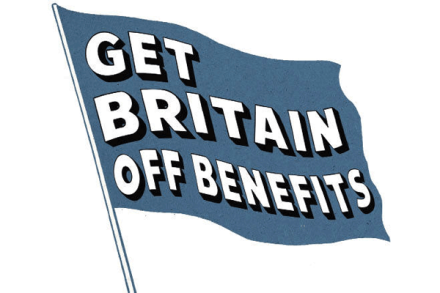
George Osborne’s Autumn Statement, with its backtracking on the slashing of tax credits, leaves a huge question hanging over 21st-century Britain: who has the cojones to do something about the destructive culture of welfarism? Anybody? It seems not. Both the supposedly small-state right and the apparently pro-work left have become bizarrely reluctant to address the spread of the autonomy-sapping welfare state into more people’s lives. Look, the tax credits thing is definitely complicated. It would have been dodgy to cut them without first putting meaningful pressure on business to pay people a proper wage.

The ringfence cycle

From our UK edition

By now, George Osborne had hoped to have completed his austerity programme. Instead, he finds himself making what is, still, the most ambitious round of cuts of any finance minister in the developed world. The Chancellor is paying the price for the leisurely pace that he decided to take in the last parliament - due to his habit of buying time by deferring pain. The Chancellor still doesn’t seem to be in too much of a rush. In his spending review statement this week, he decided to spend some £83 billion more over the parliament than he said he would at the general election.  Foreign aid is not just protected, but will increase by some £3 billion - more than the budget for the Home Office.

This is not the end of ‘austerity’ – the IFS verdict on George Osborne’s Autumn Statement

From our UK edition

This is not the end of ‘austerity’. A swathe of departments will see real terms cuts. On the other hand there is no question that the cuts will be less severe than implied in July. The gap with what one might have expected based on the Conservative manifesto is substantially greater. How has Mr Osborne done that whilst keeping to his surplus target in 2019-20? He has banked some changes in forecasts for lower debt interest payments and higher tax revenues. That was lucky. By adding some tax increases he has made some of his own luck. He's going to need his luck to hold out. He has set himself a completely inflexible fiscal target – to have a surplus in 2019-20. The forecasts will change again, and by a lot more than they have over the past few months.

Podcast: the phoney war with Isis and the 2015 Spending Review

From our UK edition

Is bombing Isis having any effect on destroying it? In the latest View from 22 podcast, Andrew J. Bacevich and Con Coughlin discuss this week’s Spectator cover feature on the West’s war with Islamist extremists and the regional disorder it has led to. What lessons, if any, can be taken from the Iraq and Afghanistan conflicts? Should France, the U.S. and Britain consider deploying troops? And is Barack Obama proving to be a poor leader in the fight against Isis? James Forsyth, Isabel Hardman and Fraser Nelson also discuss George Osborne’s latest Autumn Statement and the results of the 2015 Spending Review.

The spending cuts Osborne flatly refused to make

From our UK edition

[audioplayer src="http://rss.acast.com/viewfrom22/thegreatfakewar/media.mp3" title="Fraser Nelson, James Forsyth and Isabel Hardman discussing the Autumn Statement and Spending Review" startat=870] Listen [/audioplayer]The Autumn Statement on 25 November had long been circled in Downing Street diaries as the season’s defining political moment. Its importance only grew after the Lords rejected the government’s tax-credit changes and George Osborne announced that he would present his revised proposals in this statement.

Why the tax credit cuts had to go

From our UK edition

In the peroration of his statement today, George Osborne declared that the Tories were ‘the mainstream representatives of the working people of Britain.’ This is how he wants to position the Tories and it is why the tax credit changes had to go: they were getting in the way of the Tory attempt to rebrand themselves as the workers’ party. By ditching the tax credit changes, the Tories can now return to this theme—and can try and gain maximum political benefit from the national living wage. Osborne believes that with Jeremy Corbyn / John McDonnell leading the Labour party, the Tories have a real opportunity to pick up support from low income voters who wouldn’t normally have thought of voting for the Tories.

Revealed: Osborne’s Budget giveaways for Tory marginals

From our UK edition

Back in March, the Plymouth Herald was delighted by ‘a Budget with plenty for Plymouth’. As Mark Gettleson noted on Coffee House at the time, Plymouth is a ‘hyper-marginal city’: both its seats are currently held by Tories with small majorities, Oliver Colvile and Johnny Mercer. So the Chancellor’s generosity may not have come out of the blue. Now we have had an Autumn Statement with a bit more for Plymouth – half a million pounds for the 2020 Mayflower anniversary. Some might think it an exaggeration to describe this as pork barrel spending. But it was interesting to see how else Osborne spent the money.