George osborne

Number 10 tries to neutralise Budget row

From our UK edition

David Cameron and George Osborne have got a lot to do to patch up the current Tory wars. But first they need to ensure that those wars don’t get even worse, by making the Budget battles of this week seem less potent. This, it was revealed at morning lobby briefing, will now involve allowing MPs to vote on a Budget that does not set out how the government will save £4bn that the cuts to personal independence payment were supposed to achieve. It will also involve the government not opposing the rebel amendments on the tampon tax and VAT on solar panels and insulation products. This second decision on whipping arrangements has been made out of absolute necessity as the government was going to lose.
Iain Duncan Smith warns government in danger of ‘dividing society’

From our UK edition

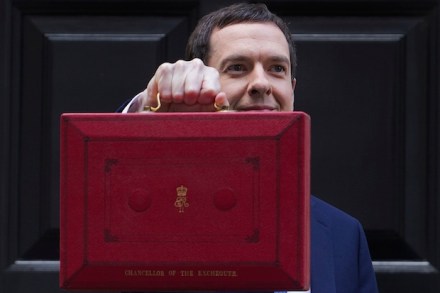
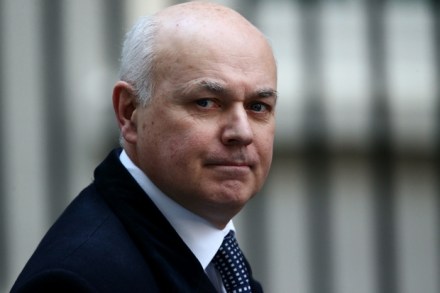
In one of the most extraordinary political interviews of recent times, Iain Duncan Smith has warned that the government ‘is in danger of drifting in a direction which divides society rather than unites it.’ He repeatedly, and pointedly, argued that in drawing up policy the Tories have to have a care for those who don’t, and will never, vote for them—a remark that everyone in Westminster that will see as being directed against George Osborne. Explaining his resignation, IDS that he was ‘semi-detached’ from decisions taken in government, and that his department was being forced to find savings because of the welfare cap which had been ‘arbitrarily’ lowered by the Treasury.

George Osborne should have gone to the Foreign Office after the election

From our UK edition

Imagine how different politics would be now if George Osborne had moved to the Foreign Office after the election. He would have left the Treasury with his economic and political strategy vindicated by the election result and wouldn’t be involved in this deeply damaging row with Iain Duncan Smith. For Osborne to have a former leader, and one of the most respected figures among the party activists, attacking his whole approach to deficit reduction and his conception of fairness is politically disastrous, to put it mildly. The problem for Osborne is that with no fiscal wriggle room and his opponents on the Tory benches determined to cause him trouble at every opportunity, there is no sign of the pressure on him letting up.

Portrait of the week | 17 March 2016

From our UK edition

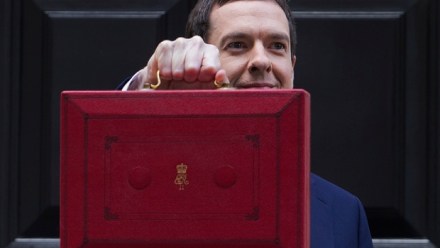
Home In the Budget, George Osborne, the Chancellor of the Exchequer, kept talking of the ‘next generation’. He outlined cuts of £3.5 billion in public spending by 2020, to be ‘on course’ to balance the books. Personal allowances edged up for lower taxpayers, with the higher-rate threshold rising to £45,000. A ‘lifetime Isa’ for under-40s would be introduced. Corporation tax would go down to 17 per cent by 2020. Small-business rate relief was raised: a ‘hairdresser in Leeds’ would pay none. Fuel, beer, cider and whisky duty would be frozen. To turn all state schools into academies (removing local authorities from education), he earmarked £1.5 billion.

George Osborne bullied in the playground

From our UK edition

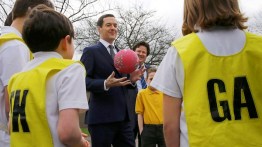
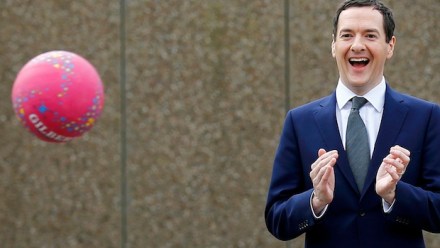
Is George Osborne's newly announced Budget already losing him the youth vote? After the Chancellor of the Exchequer revealed plans to introduce a sugar tax on fizzy drinks and extend the school day, he received a lukewarm reception on a visit St Benedict's Catholic Primary School in Garforth, Yorkshire. There to watch a netball lesson, his attempt to join in on a game of catch fell on deaf ears as he ended up playing an involuntary spot of piggy in the middle. At one point Osborne appeared to think he was being included when a child pretended to throw the ball in his direction. The Chancellor then raised his hands in the air, only to have the boy throw it back to his friend: https://vine.co/v/iwL5EzF62mB Mr S suspects relations will only worsen once the new policies come into play.

Why George Osborne’s sugar tax isn’t a ‘pious, regressive absurdity’

From our UK edition

George Osborne’s announcement in the Budget that he wants to help fight childhood obesity through a tax on sugary drinks has provoked the usual grumbles. But this is not a ‘pious, regressive absurdity’, as some claim. It is practical action that will help to tackle an avoidable health disaster for the nation's children, a quarter of whom from the most disadvantaged families are leaving primary school not just overweight but obese. This is double the rate for the most advantaged children and the inequality gap is rising every year. If that had no consequences for them, there would be no case for action, but obesity blights their future health and life chances. It also adds to the rising and unsustainable bill for the NHS of at least £5bn per year.

Watch: Chris Bryant takes a pop at Osborne’s sugar tax with coke gag

From our UK edition

Today Chris Bryant has been the cause of much laughter in the Commons thanks to a joke about George Osborne and Coke. Discussing the Chancellor's new sugar tax, Bryant said that he was glad Osborne had come round to the dangers of coke: 'I'm delighted that finally the chancellor has realised the dangers of coke.' Bryant appeared to be referencing claims -- which Osborne denies -- surrounding his alleged friendship in the nineties with Natalie Rowe, the former dominatrix. Happily Rowe seemed amused by the joke: https://twitter.com/RealNatalieRowe/status/710463504717914112 Still, not everyone appears to see the funny side. The Financial Times' Jim Pickard reports that Bryant tried to get Jeremy Corbyn to use the joke yesterday: https://twitter.

Did The Times get cold feet about the ‘desperate chancellor’?

From our UK edition

Yesterday George Osborne found himself accused of using spin to distract attention from his missed financial targets -- with the introduction of the sugar tax. Matters weren't helped when the Chancellor's former chief of staff Rupert Harrison appeared to admit -- in a BBC interview -- that the tax was introduced in the hope that it would distract from other potentially more negative Budget headlines. So, how deep does Osborne's spin operation go? Mr S only asks after spying a curious change of phrase in today's Times. At 5.23pm yesterday, a comment piece by Philip Aldrick -- the paper's economic editor -- was previewed online. It ran with the headline 'Comment: the budget of a desperate chancellor'.

Budget 2016: Osborne gets the front pages he wanted

From our UK edition

Normally, a set of newspaper splashes featuring a Chancellor's most controversial Budget policy would be judged a bad thing. But today's newspaper front pages are, by and large, just what George Osborne wanted. The sugar tax is just too irresistible to headline writers - and too controversial a policy not to grab attention and provoke endless debate. It is also much better a policy to grab attention and provoke endless debate than the awkward economic figures that the newspapers could have splashed on. Even front pages like the one published this morning by the Sun that criticise the sugar tax are better than ones criticising a £55bn black hole in the public finances.

If Wiltshire Tories regard George Osborne as a socialist, he has a problem

From our UK edition

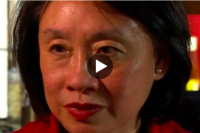
BBC Newsnight sent a crew to North Wiltshire today, to interview voters about the budget. Gladys Pek Yue Macrae, a former Conservative Party branch chairman, said she is fed up because she expected Tory policies to be the result of a Tory majority. Instead, she said, “I find I have a socialist Chancellor. Conservatives are for small government and each individual being responsible for their own destiny. Why do we have a sugar tax? If people should not be eating sugar, then they should not eat sugar.” As her husband, Alan Macrae, put put it: “Surely Conservatism is all about freedom of choice? It’s not about the government telling you what you should and should not do.

Budget brings the focus back to Britain

From our UK edition

[audioplayer src="http://rss.acast.com/viewfrom22/thespectatorpodcast-politicalcorrectness-budget2016andraves/media.mp3" title="The Spectator Podcast: Osborne's Budget" startat=594] Listen [/audioplayer]George Osborne used to tell his aides to prepare every budget as if it were their last: to throw in all of their best and boldest ideas. But this week, the Chancellor has opted for political as well as fiscal retrenchment. This was a cautious budget. Its emphasis on infrastructure was as laudable as it was uncontroversial. There were few hostages to parliamentary fortune, which is sensible given the Tories’ small majority and the way in which the EU referendum is challenging party discipline. British government is on hold.

Why Osborne’s Budget bolsters the case for leaving Europe

From our UK edition

Give thanks for George Osborne — and I don’t say that because I happen to be writing this column on a slow train from Leeds to Manchester, a line that this Chancellor has just promised, for the umpteenth time, to upgrade. I say it because whatever flaws and gimmicks may have leapt out of Wednesday’s budget, however the actualities have drifted away from the forecasts, at least we have a finance minister who is on the front foot. Boost growth; balance the books; keep the state lean; devolve to the regions; nurture self-reliance and entrepreneurship; stay in Europe; succeed Cameron; win the next election. That’s the agenda. You may not buy all of it.

Osborne’s new sugar tax is a tax on the poor

From our UK edition

The fat man of Europe is getting fatter. His teeth are rotting from the sugar in his coke and chocolates. He feeds his children bread and pasta instead of quinoa and couscous. It is time to tax the fat man – he must learn to stop eating sugar. And today, George Osborne has acted. In his Budget, he noted with disgust that some boys eat their own body weight in sugar. He has introduced a tax on sugary drinks - to the applause of the Labour Party, Liberal Democrats and (doubtless) Jamie Oliver who pioneered this snobbish idea in his restaurants. This can be expected to be the first of many. The path was laid out by Public Health England, which proposed a tax of up to 20 per cent on soft drinks and similarly sugary products - just like that proposed by the BMA.

Budget 2016: George Osborne played a difficult hand well

From our UK edition

[audioplayer src="http://rss.acast.com/spectatorpolitics/georgeosbornesbudget-2016/media.mp3" title="Fraser Nelson, Isabel Hardman and James Forsyth discuss today's Budget"] Listen [/audioplayer]George Osborne played a difficult hand well in this Budget. Hemmed in by the worsening fiscal forecasts and the political limitations that the EU Referendum imposes on the government, he delivered a Budget that included some clever politics even if it won’t live long in the memory. The biggest story of the day is the OBR’s view that the productive potential of the UK economy is significantly lower than it previously thought. If that judgement is correct, it will have serious, long term implications for the country and the public finances.

George Osborne’s cautious, strikingly moral Budget

From our UK edition

[audioplayer src="http://rss.acast.com/spectatorpolitics/georgeosbornesbudget-2016/media.mp3" title="Fraser Nelson, Isabel Hardman and James Forsyth discuss today's Budget"] Listen [/audioplayer]There were two striking things about George Osborne’s Budget today. The first was that having made sure that the weekend papers carried reports of all the pain that he was going to have to inflict on the nation to help it weather the economic storm that is coming, the Chancellor then barely mentioned what that pain would entail. He built up the start of his speech by lecturing the Commons on the necessity of the pain, warning that ‘we have a choice: we can choose to add to the risk and uncertainty, or we can be a force for stability’.

Watch: George Osborne’s former chief of staff drops the Chancellor in it over sugar tax stunt

From our UK edition

Of all the pledges in George Osborne's budget announcement today, the most surprising appeared to be that of the sugar tax. As the tax was unexpected -- given that it has been heavily disputed in the past -- it will likely get top billing in the Budget coverage in tomorrow's papers. So, could there be more than meets the eye to the announcement? Given that there was plenty of bad economic news in the Budget -- with growth down and extra cuts announced -- the sugar tax conveniently distracts from some of the more negative news. While Mr S can't claim to be one of Osborne's closest confidantes, happily one such man appeared on the BBC to offer some insight into the decision.

George Osborne’s 2016 Budget: full audio and text

From our UK edition

Mr Deputy Speaker, Today I report on an economy set to grow faster than any other major advanced economy in the world. I report on a labour market delivering the highest employment in our history. And I report on a deficit down by two thirds, falling each year and – I can confirm today – on course for a budget surplus. The British economy is stronger because we confronted our country’s problems and took the difficult decisions. The British economy is growing because we didn’t seek short term fixes but pursued a long term economic plan. The British economy is resilient because whatever the challenge, however strong the headwinds, we have held to the course we set out.

Watch: George Osborne promises to ‘abolish’ the Liberal Democrats

From our UK edition

Of course no Budget announcement would be complete without some customary 'banter' from the Chancellor of the Exchequer. With George Osborne's leadership chances seen to be dwindling, he did his best to show that he had got his 'mojo' back. Clearly free of any guilty feelings over how things turned out for the Liberal Democrats in the General Election, Osborne couldn't resist a taking a pop at the beleaguered party as he discussed his plan for pensions: 'For the past year, we've consulted widely on whether we should make compulsory changes to the pension system but it was clear there was no consensus. Indeed the former pensions minister, the Liberal Democrat Steve Webb said I was trying to abolish the lump sum.