Galileo

May the way the world works remain forever mysterious

From our UK edition

Carlo Rovelli, the Italian theoretical physicist, is one of the great scientific explicators of our time. His wafer-thin essay collection, Seven Brief Lessons on Physics (2015), managed to clarify the unsettling uncertainties of Einsteinian relativity, quantum theory and other physical exotica. It sold more than a million copies in English translation alone. Not since Stephen Hawking’s A Brief History of Time had there been such a consensual success in the science book market. In later bestsellers such as The Order of Time and White Holes, Rovelli continued a tradition of popular scientific writing from Galileo to Darwin that disappeared in the academic specialisations of the past century. The French call it haute vulgarisation – high-class popularisation. Rovelli excels at it.
Are we finally beginning to understand gravity?

From our UK edition

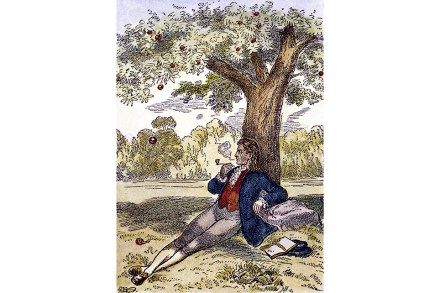
The question of why things fall has puzzled our species since we crawled out from the darkness of our primitive ignorance. Aristotle was the first to offer a serious theory. He proposed that each of the four elements (earth, air, fire, water) had a natural place to which it innately wanted to return. Fire and air rise because their place is in the heavens, whereas earth and water return to the Earth. Aristotelian philosophy had such a profound impact on human thought that this view prevailed for nearly 2,000 years. Only with the Renaissance and the ideas of Kepler and Galileo was it finally challenged; and only by standing on the shoulders of these giants was Isaac Newton able to make probably the greatest intellectual leap ever.

An American inquisition

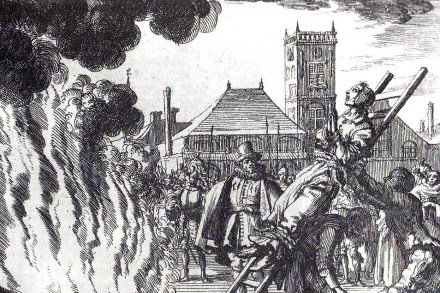
The nation is entering a Galilean moment. Public and private authorities stubbornly pursue make-believe about race, ethnic loyalties, families, men and women, and civic adhesion. They deny the limits of nature. It’s not the first time that human vanity has taken a run at truth and punished those who don’t fall into line. To avoid prison in 1633, the astronomer and polymath Galileo recanted his defense of Copernicus’s discovery that the earth was not the center of the universe. He spent the rest of his life under house arrest. “And yet it moves,” Galileo is reputed to have said later, and bitterly, silenced by haughty thought examiners.

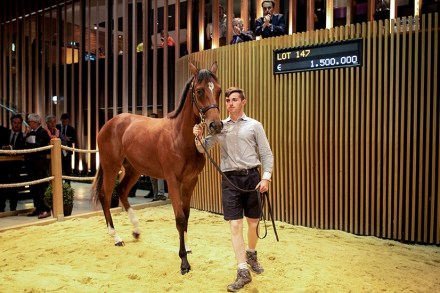
Jockeys suffer online abuse just like footballers

From our UK edition

At least England’s defeat in the European Cup final has spared us the sight of Boris Johnson, who can scent a photo opportunity at 4,000 yards over the horizon, indulging in any more embarrassing antics in a No. 10 football shirt. Not that he is the only prime minister to have sought to ingratiate himself with football-followers. As BBC political editor in Tony Blair’s time, I learned that the government was thinking of supporting a World Cup bid and fixed an interview with sports minister Tony Banks. Later, to gauge just how much government commitment there was, I spoke to Alastair Campbell in Downing Street. That night Banks called me: ‘What the hell have you done? We’ve both been summoned to No. 10 tomorrow morning.