Funerals

The architects redesigning death

From our UK edition

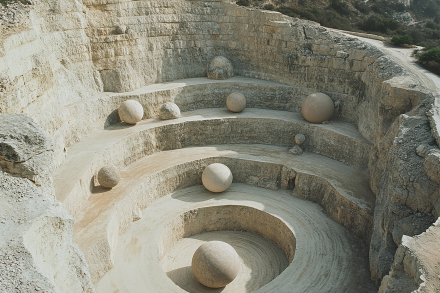
Unesco doesn’t hand out world-heritage status to absences, but if it did, there would be memorials all over the western world to our genius in erasing death from our consciousness. We have airbrushed the deceased from our lives with a ruthless efficiency, banishing them to suburban cemeteries where they can spend eternity unvisited. Burials and cremations are today spiritless, functional affairs, death rituals perfunctory, public grieving rare, graves unworthily negligible or unspeakably vulgar, our wakes pretexts to get drunk and obliterate the memory of what just happened. I exaggerate, but not much. The Maltese architect Anthony Bonnici wants to change all that.

The depressing rise of ‘direct cremations’

From our UK edition

Twenty per cent of last year’s funerals in Britain were direct cremations – up from 14 per cent in 2020. Numbers are continuing to rise, fast, for this most affordable, clinical form of body disposal: cremations with no ceremony and no attendees. Daytime advertising campaigns put out by corporate firms such as Pure Cremation promote the peace of mind of sprightly 75-year-olds at their laptops, or in their conservatories with mugs of tea, who have just pre-paid for the direct cremation package. In the adverts they gush about the future family knees-up, with cupcakes and balloons, that their relatives will splash out on with the money saved by not paying for an attended funeral.

Death comes to the Chelsea Flower Show

From our UK edition

It’s a matter of life and death at the Chelsea Flower Show this year. No murders are planned as far as we know, but there will be gravestones and even a coffin. This is to be a celebration of death. The Royal Horticultural Society’s annual Flower Show will include funeral flowers in the Grand Pavilion for the first time since it moved to Chelsea in 1913. The display is being put together by the Farewell FlowersDirectory and, I’m told, there will be no tightly wired whorls of white carnations spelling out ‘LOVE YOU MUM’. Instead, passers-by will be left thinking of country churchyards, wild grasses and meadow flowers; species like campions, cornflowers and cow parsley.

Letters: Donald Trump’s messiah complex

From our UK edition

He’s not the messiah Sir: To Freddy Gray’s meticulous dissection of Trumpian chaos theory (‘Shock tactics’, 12 April) I would add one element: religion. Donald Trump seems to believe the blood he spilt in the failed assassination attempt anointed him his country’s Redeemer: ‘I was saved by God to make America great again.’ Messiahs look to a higher authority than rational argument. Whatever ideas pop into the President’s head he judges right by definition. Tariffs will achieve miracles and wars will cease at his command. There is a strong Gnostic element to this cult, its followers believing Trump has some secret knowledge guiding his apparently wayward actions. To keep him in check, the rest of us will have to put our trust in the bond markets.

Keep fun out of funerals

From our UK edition

There are two untraditional ways to take your leave of this world in Britain. The bleaker is the ‘direct cremation’ method whereby, with no prayers and no mourners, a funeral director will take your remains from mortuary to crematorium to be burnt without troubling your friends and relations. The other is the ‘celebration’. According to Co-op Funeralcare in its new report, called ‘Go Your Own Way’, no fewer than 68 per cent of people it polled regard funerals as a celebration of life, up from 58 per cent five years ago. Out go prayers, black funeral dress and solemnity; in come Doctor Who themes, glittery coffins and guests dressed in football shirts. Or as the report puts it: ‘Personalisation is key.’ The venues are quirky too.

A miracle beckons: Phantom Limb, by Chris Kohler, reviewed

From our UK edition

In 2021, a financial newspaper estimated the American televangelist Kenneth Copeland’s wealth to be in the region of $750 million. This fortune has helped the preacher build a property empire and purchase a fleet of private jets – acquisitions, he says, ordained by God. Gillis, the principal character in Chris Kohler’s Phantom Limb, has not been quite so blessed. After suffering a knee injury in his twenties that derailed a promising athletics career in England, Gillis gave his life to the cloth. His decision to become a minister, however, came not from any love of God (in fact, Gillis isn’t even a believer), but because it promised to provide a life of relative comfort, complete with a place to live, a modest income and plenty of free time.

Death was everywhere for the Victorians, but it was never commonplace

From our UK edition

Death’s great paradox is its inconstant constancy. Its forms and rituals change from generation to generation. In our own era, antibiotics have reduced the chance of a fatal infection, and average life expectancy has risen to our eighties. Direct cremation means we can even ship Auntie Maudie, when her time comes, to the crematorium sight unseen and have her ashes returned via DHL. Our existential encounter with death in society is muted to a murmur. Unlike the Irish and their open-coffin wakes, the English almost never now see a corpse. So it is hard to imagine how our great-great-grandparents lived in a world where fatal fevers struck at random and the infant mortality rate was 50 per cent.

The problem with cringe-making funerals

From our UK edition

21 min listen

When did supposedly religious funerals turn into ‘celebrations of life’ that are more about entertaining the congregation than mourning the dead person – who, these days, hasn’t died but ‘passed’?  In this episode of Holy Smoke I’m joined by one of my favourite American priests, Fr Joe Krupp, a self-described ‘redneck’ from Michigan who reaches millions with his powerful ministry and wisecracking podcasts. He puts his finger on what’s gone wrong. Wait for the horror story at the end. He had me laughing so much that I could hardly get my questions out. Don’t miss this one!

Everyday life in the Eternal City: Roman Stories, by Jhumpa Lahiri, reviewed

From our UK edition

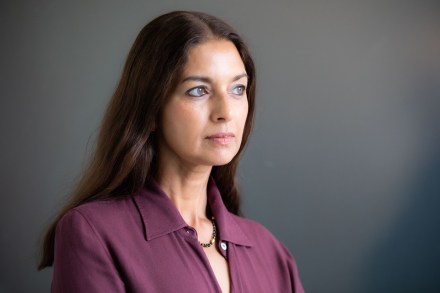
The middle story in this compassionate collection follows disparate folk loosely linked by a set of steps. Among them, there’s the mother who climbs them first thing in the morning, the girl who descends them at two in the afternoon and the screenwriter who lives at the foot of them, and who stays home nearly all day. Together, these men, women and children represent a cross section of society. One comes from ‘a faraway tropical city’; another compares the grubby sight of graffiti to hearing ‘foreigners talking on the street’. Yet, here they are, existing side by side in a Roman neighbourhood, going about their ordinary daily routines. Which is what the Pulitzer Prize-winning Jhumpa Lahiri does so well: pays attention to the everyday.

How hidden fees spiraled out of control 

Last week, a friend was halfway through a Hollywood wax when she complained to her beautician about stubborn hairs that were often missed. “That’ll be extra,” she was told. Apparently now the outcome of a Hollywood — famously meaning that your entire vagina is left completely bare — depends on what the beautician you have at the time can be bothered to do. She paid the money. What’s worse is that she didn’t even recount this story to me with pure, incandescent rage. When she finished talking and saw me red-faced and flapping my arms about, she laughed calmly and said, “It happens all the time now.”  Tragically, this does happen all the time. Last week, I went to Rome and decided that I’d get my hair done for the trip. A treat, I know.

hidden fees

The growing tragedy of unclaimed bodies must be addressed

This holiday season, thousands of recently deceased bodies will be stored in morgues and funeral homes, their loved ones either non-existent or unaware of their passing. My own mother-in-law, whom my husband was estranged from, was nearly one of them. We found out that she died in August, but only discovered her passing after my husband did an in-depth search of her name and paid for the information months later. The phenomenon is a sad and growing tragedy that should be addressed and remedied so that these lives are honored in the way each person deserves in death. An estimated 1 percent of bodies go unclaimed in hospitals and morgues each year in the United States, which translates to about 34,000 people across the nation in 2020 alone.

unclaimed bodies

Style blog rates Meghan Markle’s funeral ’fits

Whisper it — but Cockburn can’t help but love a funeral. Old churches, black clothes that take a few inches from the waist, the spread is always great and the wake is single-handedly the best after-party anyone, dead or alive, could ask for. But there are a few rules. The first, one that should be glaringly obvious, is not taking smiling selfies for Instagram. Now, Cockburn knows that for a funeral such as Queen Elizabeth II’s, photos are unavoidable. But it seems that the people at Meghan’s Mirror, the style blog devoted to Meghan Markle, are lacking in basic etiquette. A little over a month after the death of the Queen, Meghan’s Mirror has splashed photos of Meghan’s outfit at the events surrounding the Queen’s death on their blog's homepage.

meghans mirror blog

Funeral gatecrasher: The Black Dress, by Deborah Moggach, reviewed

From our UK edition

Here is a rare dud from the usually reliable Deborah Moggach. Her protagonist, Pru, finds herself alone at 69 after Greg, her husband of decades, leaves her out of the blue. There is a further loss to come for Pru, and Moggach is good on her ‘howling loneliness’; but what she decides to do about it doesn’t quite ring true. Urged on by her sexy, bolshy friend Azra (who was Linda from Sunderland before a sudden reinvention) to meet someone new, Pru begins searching out the funeral notices of strangers, so that she can gatecrash the ceremonies and hit on the widowed husbands. Azra has told her that widowers are less likely than divorcees to be bitter, and that young women don’t understand bereaved men.

The importance of a good funeral

From our UK edition

In ITV’s otherwise terrible drama Finding Alice, one line struck me with particular force. A funeral director is addressing our heroine, who finds herself unexpectedly having to organise last rites for her partner. Wicker coffins are particularly popular now with relatives, says the undertaker, and I found myself nodding in strong agreement. A light woven coffin, made of pleasingly biodegradable material and topped with a simple but stylish cross of early spring flowers, was exactly what we selected for my father, to be buried in one of the last remaining — and therefore highly sought-after — spots in the churchyard.

The pagan rites of Ruth Bader Ginsburg

When Ruth Bader Ginsburg succumbed to cancer, #RestInPower immediately trended. The ACLU, New York senator Kirsten Gillibrand, actress Reese Witherspoon and the ostensibly Jewish uber-left activists of Bend the Arc all used the woke neologism in their tributes.The play on words likely originated in the 1990s rap. It entered mainstream usage after the 2016 election when the left lost its mind. Even in a culture that’s increasingly — pathetically — obsessed with politics, politicizing death feels like a new low. Ginsburg’s final rite of passage signals a rejection of Jewish and Christian customs along with democratic norms, and a return to paganism and violence.

pagan

Who deserves a funeral?

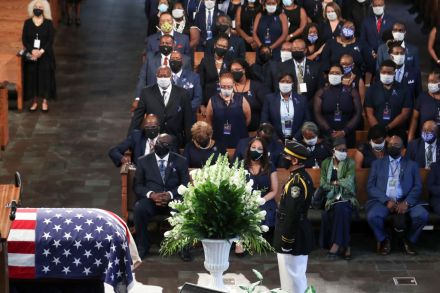
No one would argue that Rep. John Lewis doesn't deserve a proper memorial. He was a civil rights icon and a long-serving member of Congress who was beloved by his colleagues. In the middle of a pandemic, however, how do we decide who gets the pomp and circumstance of a traditional burial and who has to watch their loved one go six feet under via Zoom call? Funerals are important: they acknowledge the sanctity of life and allow friends and family to come together to grieve their loss. This reality doesn't change based on how famous or revered an individual was to the general public: it doesn't hurt any less to say goodbye to someone who was just a dad or just someone's child or just a dear friend. Their lives aren't any less significant.

funerals

Spare a thought for undertakers during this pandemic

From our UK edition

Our neighbour, the much-respected local undertaker, conducted twice as many funerals in April as in the same month last year. One might be tempted to say ‘It’s an ill wind…’, but in fact it has been grim, both from a professional and a human point of view. ‘We have had,’ he says — with a double meaning he notices only after he has said it — ‘to think outside the box.’ Coffins are in short supply, ‘unless people want the willow or bamboo’. With no new traditional wooden ones available until early June, he has had to get in cardboard versions as a back-up.