Friendship

Together and apart: How to Make a Woman, by Marie Darrieussecq, reviewed

From our UK edition

Two girls in Basque south-west France in the 1980s have been best friends since early childhood. Rose is the good one, studious and kind, with a sweetheart she plans to marry. Solange is the wild child: rebellious, dishonest and pregnant at 15. How to Make a Woman might sound like a Gallic take on Elena Ferrante territory, but it’s much more than that. Visceral and cerebral, with echoes of Simone de Beauvoir, it describes what it means to live in a world apparently created by and for men. The novel unfolds as a triptych: Part One ‘According to Rose’; Part Two ‘As told by Solange’; and, finally, ‘Together’. Typically, while Rose goes on a school trip to Madrid, Solange survives a horrific birth, described in unflinching detail.

The appeal of asymmetry: Contrapposto, by Dave Eggers, reviewed

There are novelists who seem to spend their entire careers either apologizing for being themselves or trying to become someone else entirely. And then there’s Dave Eggers, who has spent much of the last quarter century trying – and, it has to be said, as far as one can tell, very happily succeeding – to become Dave Eggers. Ever since A Heartbreaking Work of Staggering Genius appeared in 2000, fulfilling almost entirely the audacious promise of its title, Eggers has occupied that peculiarly American position of being not simply Yet Another Novelist, but the Guy, the Man, the yardstick by which all others might be judged and found wanting. He’s a publisher, campaigner, literacy activist, editor, artist, children’s author, philanthropist and impresario.

contrapposto

The appeal of asymmetry: Contrapposto, by Dave Eggers, reviewed

There are novelists who seem to spend their entire careers either apologising for being themselves or trying to become someone else entirely. And then there’s Dave Eggers, who has spent much of the last quarter century trying – and, it has to be said, as far as one can tell, very happily succeeding – to become Dave Eggers. Ever since A Heartbreaking Work of Staggering Genius appeared in 2000, fulfilling almost entirely the audacious promise of its title, Eggers has occupied that peculiarly American position of being not simply Yet Another Novelist, but the Guy, the Man, the yardstick by which all others might be judged and found wanting. He’s a publisher, campaigner, literacy activist, editor, artist, children’s author, philanthropist and impresario.

Too close for comfort: Family Friends, by Chloë Ashby, reviewed

From our UK edition

‘Across the courtyard the water glistens a pale blue, the sun’s rays shimmering on its surface. The surrounding garden is wild and overgrown with trees and bushes tinged reddish orange, overlooking a valley of scorched grass fields.’ This is the setting of Chloë Ashby’s Family Friends. Taking place over one eventful holiday between old university friends in the south of France, it’s a sun-soaked work simmering with secrets that lurk just below the surface. First, a look at our cast of characters. There’s the ‘endlessly reliable’ Maggie, with weak, ‘beautiful in a boyish way’ Will and their two children, Alice and ‘gangly’ teenage Sammy.

Bryan Cranston and Aaron Paul’s cocktail of choice for toasting the 250th

There’s something special about raising a glass with people you’ve built history with. For us, Dos Hombres has always been about friendship, craftsmanship and creating moments that bring people together. As America turns 250, we’ll be toasting to the freedom to build something of your own, the people who’ve been with you from the beginning and the simple joy of slowing down long enough to appreciate it all. Ingredients for one serving 1 oz Dos Hombres Blanco Tequila 60ml cranberry juice 1 oz Cranberry Juice (sweetened) 1/2 oz Aperol 1/2 oz Fresh Lime Juice Add all the ingredients into a mixing pitcher with ice. Shake well and strain into a large rocks glass rimmed with salt and chili powder.

Dos Hombres

Dear Mary: how do I stop friends buying me pet-themed presents?

Q. I have been working in a large restaurant alongside a very attractive, although shy, girl. I live near the restaurant and she has come back for drinks on a few occasions. She seems to enjoy my company but I have been too feeble to take things further. I fear that if she does not find me attractive, by making a move I could ruin our friendship. What should I do? – Name withheld, London W6 A. Step one: buy a Feverscan forehead thermometer. This liquid crystal strip is held on to one person’s forehead by another, thus requiring a degree of physical intimacy. Step two: ask the girl to your flat along with another colleague. When they arrive, act slow-witted and explain you are feeling odd.

presents

An outpouring of jaunty black comedy

From our UK edition

In 2005 Xandra Bingley published Bertie, May and Mrs Fish, an extraordinarily lively and enjoyable memoir of her childhood on a Cotswold farm during the second world war. Much of the writing was glancing rather than straightforward, its narrative not strictly chronological, while its title hinted at something not fully explained in the text. Dispensing altogether with conventional punctuation, the book contained not a single comma or quotation mark, using instead ellipses. This was brilliantly imitative of both the clipped speech of its upper-class characters, particularly when facing disasters large and small, and the hell-for-leather pace of lives spent galloping on horseback across the Gloucestershire countryside.

Two Tokyo misfits: Hooked, by Asako Yuzuki, reviewed

From our UK edition

Following the enormous success of Butter’s English translation in 2024, it seemed inevitable that another of Asako Yuzuki’s novels would surface in the UK. Nairu pachi no joshikai (The Nile Perch Women’s Club), published in 2014, has now become Hooked. Billed as a literary thriller about female friendship, loneliness and obsession, it is a deeply strange, unsettling read. The novel follows Eriko, a high-flying project manager, and Shoko, a slacker housewife blogger, who both struggle with life – or, rather, with the behaviour expected of Japanese women. Both have achieved a level of acceptance socially (Eriko in her career, Shoko in her relationship), but they find the pursuit of ‘gal pals’ a major stumbling block in their quest for the appearance of normality.

Why do so many of us want to be alone?

From our UK edition

When was the last time you had a truly classic racist cab driver? Mine was a few years ago, coming out of Victoria Station. On the drive to my home in Camden, Classic Racist Cab Driver had a go at all the normal targets. I sat in the back, wearily trying to screen it out, as you do. The trouble kicked in when he ran out of obvious people to be bigoted about. In desperation, he moved on to Belgians, and then on to scorning ‘anyone who takes trains’ (forgetting, or perhaps recalling, that he’d picked me up at Victoria Station). Sometimes I wonder if he is still out there, cruising down Park Lane frothing about Kazakhs or people who eat biscuits, but if he is I have bad news for him. His days are numbered.

Looking on in anger: Happiness and Love, by Zoe Dubno, reviewed

From our UK edition

The fantasy of telling disagreeable friends how awful they really are is a relatable one. But rarely does it find such extravagant, relentless expression as in Zoe Dubno’s debut novel Happiness and Love. The narrator is a nameless woman who finds herself among former friends in New York. While she never succumbs to an outburst, her interior monologue issues forth like a furious esprit d’escalier. The dramatic scenario – modelled on that of Thomas Bernhard’s 1984 novel Woodcutters – is a dinner party in the loft dwelling of an ‘art world’ couple with whom the narrator used to live, following the funeral of one of their cohort.

An unlikely alliance: Drayton and Mackenzie, by Alexander Starritt, reviewed

From our UK edition

Alexander Starritt has form with satire. His 2017 debut The Beast skewered the modern tabloid press, drawing comparisons with Evelyn Waugh’s Scoop. For his third novel, Drayton and Mackenzie, he is back at it, mercilessly mocking everything from Oxbridge and management consultants to tech bros and new parents in a story that hinges on whether two unlikely friends can make a success of their tidal energy start-up. It’s more fun that it sounds. The narrative opens in the early 2000s with James Drayton – someone who gets his kicks by finishing his maths A-level exam in 20 minutes and who finds undergraduate life disappointingly basic. ‘He supposed he’d been naive to think of university as concerned with intellect...

Poll: college-educated women end friendships over politics

New polling data shows what you may already suspect: your experience of losing friends since the 2024 election of Donald Trump is absolutely real – if very divided depending on your political tribe. When national pollster Cygnal offered me the opportunity to suggest a question or two for their latest national survey, it was a chance to put to the test the experience of many Americans I know: in the past six months, they’ve lost at least one friend over the result of the 2024 election. The direction of lost friends seemed very politically consistent in my experience, but anecdotes aren’t data, and knowing more people on the right than the left, it’s possible this personal experience was skewed. It turns out that it isn’t.

poll

The secret to great friendships

From our UK edition

A few years back, a friend from Newcastle was down in London and I was giving him a tour of the town. At various points I stopped and pointed out where various friends had lived. ‘That’s where my late friend X used to live.’ ‘That’s where my much-missed friend Y had his shop.’ Eventually my delightfully straight-talking friend stopped me and said: ‘Are any of your friends fucking alive?’ I’m happy to report that the answer was ‘yes’, but it did make me think about something I’ve unwittingly done all my life – which is to have a disproportionate number of friends who are much older than me. One of my closest friends died last week at the age of 93.

Marriage, motherhood and money: Show Don’t Tell, by Curtis Sittenfeld, reviewed

From our UK edition

Show Don’t Tell, a collection of 12 short stories by the American writer Curtis Sittenfeld, explores marriage, sex, money, racism, literature and friendship from the 1990s to the present. There is a fine line here between memoir and fiction, with many of the female protagonists being Midwestern, bookish Democrats – quite like Sittenfeld herself. In the eponymous story, Ruthie, a writer, dismisses the notion that ‘women’s fiction’ is perceived as giving off ‘the vibe of ten-year-old girls at a slumber party’. She reflects on internalised misogyny: ‘It took a long time, but eventually I stopped seeing women as inherently ridiculous.

Toby Young: love him or loathe him?

London Everyone has at least one friend that none of their other friends can stand, someone you love but everyone else loathes. Mine is called Toby Young. For around thirty years people have asked me: are you still friends with that awful Toby Young? And with a bit of hesitation I say, well... yes. And they shake their heads or roll their eyes in disbelief and disapproval. They don’t like his politics — he’s a right-wing conservative and founder of the Free Speech Union, which defends victims of woke ideology. And they don’t like Toby the person because of a series of sophomoric and “sexist” tweets that came to public light in 2018. It was national news and it cost Toby his career in public life.

Toby

Visionary tales: Mrs Calder and the Hyena, by Marjorie Ann Watts, reviewed

From our UK edition

One of the pleasures of reading, often looked down on in literary circles, is when one warms to an author’s characters. Among the many delights of Mrs Calder and the Hyena, Marjorie Ann Watts’s second collection of short stories, was my feeling that here were people with whom I would get along. Ostensibly, they are undistinguished – from the hinterlands of society, whether by virtue of status, wealth or age; yet they reveal some irrepressible glint of antinomianism, a rejection of conventional judgments and standards, a certain anarchic glee. In the title story, elderly Mrs Calder insists she is being accompanied by a hyena – ‘always a little on the edge of my vision, but definitely getting closer’.

Rachel Cooke: The Virago Book of Friendship

From our UK edition

43 min listen

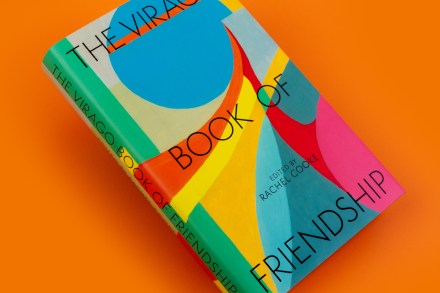
In this week’s Books podcast, I am joined by Rachel Cooke, who edits the new book The Virago Book of Friendship. Rachel unpacks the intense, often enigmatic dynamics of female friendships in a spry and very dip-in-and-out-able anthology of writing about female friendship in an exhilaratingly wide array of forms, from high culture to low. There are many gems to cackle over, including: an incomparably tender and exact description of Hannah Arendt by Mary McCarthy; a wonderful, worm-turning character assassination of the ghastly Susan Sontag by her former disciple, Terry Castle; and the revelation that Elizabeth Bishop and Marianne Moore were boon companions for two whole years before they stopped calling each other ‘Miss Bishop’ and ‘Miss Moore’.

How to know when to let friends go

London When an old friend says to you, “we must meet up for lunch sometime,” you can be sure of one thing: you will never meet for lunch. Why? Because your friendship is over. The clue is in the word “sometime.” It’s a rain check that never gets cashed. It’s what friends say to each other when they feel obliged to see a friend they don’t really want to see — but they don’t want to dump either. We all have friends like these: I call them the Undead friends, when the friendship is neither fully alive nor totally dead. You don’t delete them from your contact list — just your social life. This will lead to the odd spasm of guilt but don’t worry; we all do it. And it gets done to us too. There are people you think of as your great friends.

friends

Alan Clark’s wines were as remarkable as he was

From our UK edition

Où sont les bouteilles d’antan? For that matter, où sont les amis with whom one consumed them? These autumnally melancholic musings arose because a young friend asked me about Alan Clark. He had been reading the Diaries. Were they truthful? Was Alan really such a remarkable character? The answer was simple. An emphatic yes, on both counts. I suspect that I speak for most of his muckers when I declare that I have never met anyone who was more fun. The 1967 Yquem tasted like a Greek temple melted down in honey. Alan served it as a house wine If Alan was of the company, the conversation might well have a whiff of sulphur. But one could rely on spice and scintillation. Alan’s very walk presaged mischief.

Nick Elliott and a life worth drinking to

From our UK edition

The English language has immense resources, but the odd weakness. What, for instance, is the translation for ‘Auld lang syne’? We were discussing that profound topic while telling stories about absent friends, recalling the occasional bottle and thinking about Britain. Nick Elliott’s response to grim news was to open a bottle of Mouton Rothschild ’82 A fascinating fellow called Tim Spicer, who commanded a battalion of the Scots Guards, has written a book about an even more remarkable chap called Biffy Dunderdale. Biffy was the sort of man who helped to win our nation’s wars, including the (first) Cold War. In these pages a couple of weeks ago, Charles Moore brought a colleague of Biffy’s to memory.