French

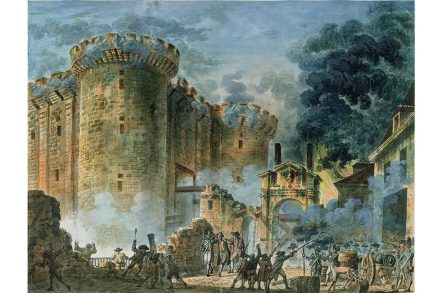
Could the French Revolution have been avoided?

In the middle of the 18th century, on the north side of the Palais Royal gardens in Paris, there stood a magnificent chestnut tree called the Tree of Cracow. In his presidential address to the American Historical Association in 2000, Robert Darnton explained that the name Cracow probably derived from the heated debates that took place in Paris during the War of the Polish Succession, but also from the French verb craquer: to tell dubious stories. News-mongers or nouvellistes de bouche, agents for foreign diplomats and curious members of the public gathered round the tree, which was at the heart of Paris’s news network, a nerve center for transmitting information, gossip and rumors.
Darnton

How Africa fell out of love with France

From our UK edition

On Wednesday last week, a new Gabonese military junta installed itself, having ousted President Ali Bongo, whose family have ruled the country since 1967. Just two days earlier, the French President Emmanuel Macron gave a speech to his ambassadors in which he spoke of an ‘epidemic of putschs’ in what was formerly France’s greatest sphere of post-colonial influence. Although most of these states have been independent for decades, Paris kept them firmly in the French orbit There have now been six coups d’état in francophone sub-Saharan Africa in three years – Mali, Chad, Guinea, Burkina Faso, Niger and now the small but wealthy nation of Gabon.

My French lesson has taken a most unexpected turn

From our UK edition

‘Alas, David can’t be here this afternoon,’ I told the French teacher as she let me into her light and spacious home. ‘He has an appointment to see a specialist about his ears.’ I tried to say this in French. Conversational exchanges that take place between her front door and the lesson table are usually conducted under a flag of truce and she restricted her expressions of gaping horror to a minimum. ‘His ears?’ she said. ‘Poor David! What is wrong with his ears?’ ‘I think he was blown up by a shell,’ I said. ‘And his eardrums were damaged in the explosion.’ Our French teacher lives a quiet and blameless country life of artistic and intellectual endeavours and gardening.

Paris’s banlieues are burning once again

From our UK edition

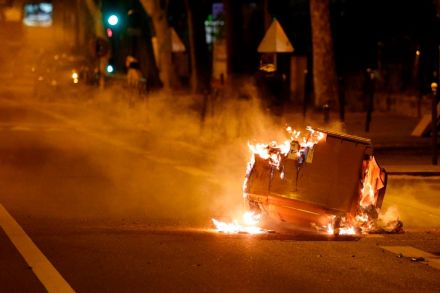
One of the persistent misconceptions of the riots that swept through France in the autumn of 2005 is that they were solely the result of the deaths of two youths as they ran from the police. The deaths of the teenagers on October 27 in Clichy-Montfermeil provoked unrest in the north-eastern Parisian suburb but it was what happened three days later that led to three weeks of nationwide riots and the declaration of a state of emergency by the then president of France, Jacques Chirac. According to Gilles Kepel in his 2015 book, Terror in France: genesis of the French Jihad, it was a stray tear gas grenade fired by police that landed close to the entrance of a mosque that lit the touch paper.