French history

Versailles’s role as a palace of science

From our UK edition

Versailles was a palace of science, as Anna Ferrari shows in this stimulating and innovative study, accompanying a dazzling exhibition of the same title at the Science Museum, London (until 21 April). Soldiers were subjected to electricity experiments in the Galerie des Glaces. The king watched the dissection of an elephant or a horse in the Menagerie. The latest globes and clocks, microscopes and barometers, miracles of precision and beauty, were, and in some cases still are, on display in the royal apartments. The gardens were exercises in trigonometry and hydraulics as well as planting. Louis XV had the largest and most varied plant collection in Europe.

The men of blood get their comeuppance in Revolutionary France

From our UK edition

Colin Jones’s hour-by-hour reconstruction of the fall of Maximilien Robespierre, the French revolutionary most associated with the Terror, is inspired by Louis-Sébastien Mercier, who believed that only by getting ‘up close’ to the ‘infinitely small’ details would it be possible to understand the truth about a Revolution that was stranger than fiction. Mercier (1740-1815) was an early science fiction novelist, a journalist, politician and Parisian. He was not an eyewitness to the fall of Robespierre because he was in prison in 1794, one of 73 moderate members of the governing Convention who had been arrested and held as ‘Robespierre’s hostages’.

France will always have a love-hate relationship with its heroes

From our UK edition

The French have a love-hate relationship with heroes. For the great 19th-century historian Jules Michelet, the French Revolution was supposed to have inaugurated the age of the people: ‘France cured of individuals,’ he wrote in the preface to his history. But that same Revolution created a pantheon for its grands hommes. Anyone who has spent time in France will be familiar with the names of those figures celebrated endlessly in street names: Hugo, Gambetta, Pasteur, Jaurès, Moulin and so on. Many French people might now be hard-pressed if asked who some of these heroes were. But the two names everyone knows — even if neither is actually in the Panthéon — are Napoleon and de Gaulle.

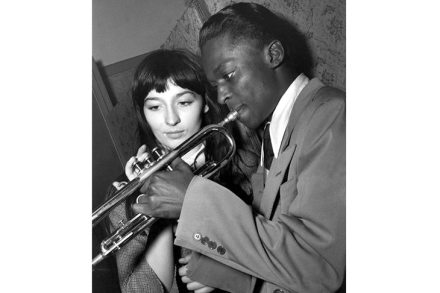
Vive la Left Bank libération!

We all have our favourite period of Parisian history, be it the Revolution, the Belle Époque or the swinging 1960s (the cool French version, with Jean-Paul Belmondo and Françoise Hardy). Agnès Poirier, the author of this kaleidoscopic cultural history, certainly has hers: the turbulent 1940s, which saw the French capital endure the hardships of Nazi occupation before throwing off this yoke and embracing freedom in every aspect — sexual, political and intellectual.Leading the way was that maligned couple, Jean-Paul Sartre, the philosopher, political activist and father of existentialism, and Simone de Beauvoir, the brilliant pioneer feminist, who was his life partner, if often errant lover.