Freedom of speech

Buckingham University’s shameful treatment of Professor Tooley

From our UK edition

One of many reasons I felt blessed, seven years ago, to be offered a professorship at the private University of Buckingham to teach modern British history was that Buckingham appeared to reject the doctrinal horrors that were, and still are, poisoning many other universities. I, blissfully, had never heard the term ‘woke’, which certainly did not apply at Buckingham. This did not mean we all went around being gratuitously offensive about minorities, women, people who change their gender or any other traditional targets of so-called white male privilege. What it did mean was that we had freedom of speech and of discourse, and proper academic liberty to advance anything we felt it important that our students, to be properly educated, should consider and reflect upon.
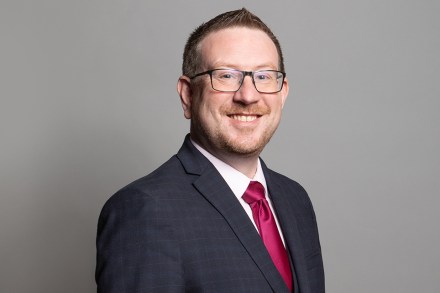
Should free speech campaigners hope Andrew Gwynne is prosecuted?

From our UK edition

David McKelvey, a former detective chief inspector in the Met Police, has called for the prosecution of Andrew Gwynne, the Labour MP forced to resign as a health minister last weekend for posting racist and sexist comments in a private WhatsApp group. ‘One rule for MPs, another for police officers?’ he asked on LinkedIn, pointing out that other officers have been prosecuted for sending less offensive messages. ‘The law must be applied fairly to all – no exceptions.’ The police have now recorded this as a ‘non-crime hate incident’ so as not to be seen playing favourites, but a better alternative would be not to penalise anyone for something said in a private message group, which, to be fair, seems to be what McKelvey has in mind.

How Ipso surrendered to the trans lobby

From our UK edition

Two months ago, the Independent Press Standards Organisation (Ipso) upheld a complaint against The Spectator for referring to Juno Dawson, a transgender author, as ‘a man who claims to be a woman’. It may have struck some as unfathomable. I was less surprised. As I read the news, it took me back six years to when I was lead author of a report for Ipso, examining how the press treats trans-related issues. I have been a management consultant for more than 30 years so am used to being asked by institutions as varied as the BBC and the Football Association to help shape strategy. For Ipso’s project, it effectively asked me to mark its homework. Was the press treating trans issues respectfully, and did this have anything to do with previous guidance on reporting on such matters?

What Trump’s executive orders will do

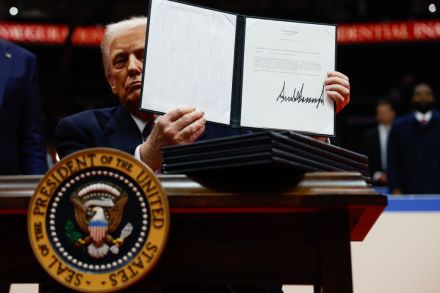
The newly sworn-in President Trump had a busy inaugural day. Between swearing into office and waving a saber around while dancing to “YMCA” at an inaugural ball, he also signed several executive orders and proclamations. After signing his cabinet and other nominations, President Trump’s first order of business was to proclaim that all flags should be flown at full staff for this and all future inauguration days. Following the inaugural parade, President Trump signed a bevy of additional executive documents as thousands of his supporters cheered.

Can I be cancelled twice?

From our UK edition

One of the biggest regrets of my life was saying yes when Jo Johnson asked if I wanted to be on the board of the Office for Students (OfS) in the autumn of 2017. It wasn’t a particularly prestigious position: the OfS was to be a new regulator of higher education in England and I would be one of 15 non-executive directors. But because it was a public appointment it would be made by the prime minister, which meant I was a political target. When it was announced on 1 January 2018, the offence archaeologists went to work, sifting through everything I’d said or written dating back 30 years in the hope of finding evidence that I wasn’t a suitable person to take up the role. The idea was to force me out, embarrass Theresa May and end my career into the bargain.

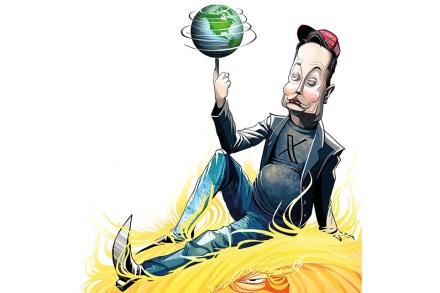
Why Elon Musk shouldn’t be kicked out of the Royal Society

From our UK edition

Bishop did not wish to be associated with ‘someone who appears to be modelling himself on a Bond villain’ In a notorious interview in the Sunday Times in 2007, the Nobel Prize-winning geneticist James Watson said, among other things, that aborting babies with gay genes was ‘common sense’ and that ‘all our social policies are based on the fact that their [blacks] intelligence is the same as ours [whites] – whereas all the testing says not really’. He also defended the explanation offered by Larry Summers of why there are fewer female professors in Stem subjects than male – there are more men at the right-hand tail of the IQ distribution curve.

Carry on Kafka: this is our Brave New World

From our UK edition

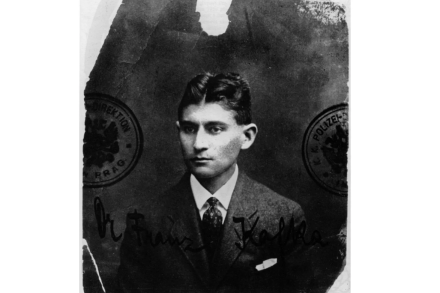
An ex-copper who blogs as Dominic Adler – not his real name – came up with a good phrase this week to describe where Britain is heading under this increasingly authoritarian regime: ‘Like North Korea, but run by David Brent.’ It echoed my own attempts to sum up the atmosphere in Keir Starmer’s Britain in a WhatsApp exchange with Allison Pearson. I described Essex Police, who recently dispatched two hapless officers to the journalist’s door to question her about a year-old tweet, as ‘a cross between the Keystone Cops and the Stasi – Carry On Kafka’.

The true meaning of free speech

From our UK edition

Right after Donald Trump’s landslide, I opined on YouTube that this turning point could sound the death knell for Woke World – an observation that decayed to hoary cliché within hours. I also supposed that Trump’s triumph might signal to the UK that all that diversity, equality and inclusion/systemic racism guff is totally yesterday – in the hopes that even if Brits don’t care about fairness, rationality and reason, they might at least be horrified by appearing passé.

Will Keir Starmer get me banned from football games?

From our UK edition

Last Saturday, I made the 400-mile round trip to Burnley with my 16-year-old son Charlie to see Queens Park Rangers play the Clarets. Quite a long way to go, given that Burnley was one of three teams relegated from the Premier League last season and are expected to go straight back up, while QPR are struggling to remain in the second tier. Nevertheless, we managed to hold them to a goalless draw, which the visiting fans celebrated as if we’d just won the FA Cup. ‘Worth the trip,’ declared Charlie as we embarked on the four-hour train ride home. The cabinet of killjoys can’t stand the fact that the beautiful game hasn’t been captured by the puritans I treasure these day trips with my youngest, crisscrossing the country to watch our beloved Rs, but there may not be many more.

A British First Amendment wouldn’t save free speech

From our UK edition

Does the United Kingdom need a First Amendment? That’s a question I’ve been thinking about a lot recently, given the government’s unrelenting assault on free speech. If Britons enjoyed the same constitutional protections as Americans, it would have been more difficult to prosecute anyone over the summer for social media posts ‘intending to stir up racial hatred’, the crime for which Lucy Connolly, the wife of a Conservative councillor, received two-and-a-half years last week. The solution is not to pass a new law, but to repeal those laws that limit our freedom of expression But I remain sceptical. For one thing, there’s no mechanism in our constitution for creating a law that couldn’t be repealed by the next parliament.

Labour’s backwards steps on free speech

From our UK edition

Free speech advocates like me need to stop talking about the meagre gains we made under the last government because the present one seems to be listening carefully, taking notes, then gleefully reversing each one. First it torpedoed the Higher Education (Freedom of Speech) Act. Then it threatened to put the ‘legal but harmful’ stuff back into the Online Safety Act. Now, Yvette Cooper has said trying to get the police to record fewer ‘non-crime hate incidents’ (NCHIs) was a dreadful mistake. A non-crime hate incident was recorded against a man for whistling the Bob the Builder tune To grasp just how potty this is, you need to understand what an NCHI is.

How to exploit a crisis

From our UK edition

The phrase ‘never let a good crisis go to waste’ is often attributed to Winston Churchill, but it’s something the left is better at than the right. Take the Center for Countering Digital Hate (CCDH), a lobby group that campaigns for more online censorship run by Imran Ahmed, a former adviser to Hilary Benn and Angela Eagle. Earlier this month, the CCDH held an ‘emergency’ meeting to discuss the role of social media in fuelling the public disorder that followed the murder of three girls in Southport, and on Tuesday it published the policy recommendations that emerged from that meeting.

The death of free speech in Britain

From our UK edition

In Michel Houellebecq’s satirical novel Soumission, the French elite submits to Islamic rule rather than accept a National Front government. Nine years after its publication, submission seems more imminent on this side of the English Channel. My American friends are surprised to learn there’s no equivalent to the First Amendment in Britain. They have forgotten a free press was one of the things their ancestors rebelled to establish in the US. Free speech is a much more recent thing in the UK. If it was born in the 1960s, it seems to be dying in the 2020s. If free speech in the UK was born in the 1960s, it seems to be dying in the 2020s After the recent riots, people were given prison sentences for posting words and images on social media.

How do you solve a problem like debanking?

From our UK edition

As I sat down to write this column, an old friend let me know he’d just been ‘debanked’. That is, he’d received a letter from his high-street bank notifying him it was closing his accounts. ‘Following a review, we’ve made the decision that you will not be able to bank with us any longer,’ it said, not even bothering to put the word ‘difficult’ before ‘decision’. It contained no detail about this ‘review’ or why, on completing it, the bank had decided to close his accounts. The only thing he can think of is that he used to be a high-ranking member of the Brexit party. He was told he had until 27 August to make alternative arrangements.

The crucial Supreme Court decisions set to be decided this week

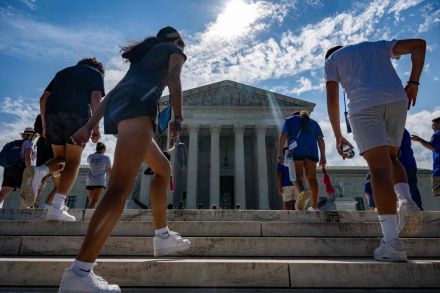
The Supreme Court is entering the home stretch of its session, with just days left before it goes into recess for the summer. Some of the most significant decisions have yet to be issued, teeing up a big week. Here is what some of those cases are. Moore v. Harper This case tackles whether a state’s supreme court can rule on gerrymandering cases. The plaintiffs are testing the independent state legislature theory, which argues that state legislatures have the prerogative in redistricting, and that state supreme courts cannot get involved in the process. North Carolina’s supreme court has since switched its original decision against the state legislature, meaning that the US Supreme Court might drop the case instead of issuing a decision. Students for Fair Admissions v.

supreme court

How Ireland lost its craic

From our UK edition

So, which country is putting health warnings and calorie counts on bottles of alcohol for the benefit of its citizens? Nope, not Canada or New Zealand. But you’re getting warm… It’s Ireland, the country that gave us Guinness, Jameson, Bushmills and, for those who like that kind of thing, Baileys. That’s right: a health warning just like for cigarettes. But instead of rotting lungs, presumably there’ll be a lovely picture of a liver with cirrhosis. What effect will it have on me? None, dear reader, none. I drink to forget this sort of thing. But that’s the way Ireland is going (actually has gone) for a generation: not so much the nanny state as the Miss Trunchbull state, one that would swing you round by your pigtails.

Much of the Covid consensus has been proved to be tripe

From our UK edition

Three years ago this week marked my first misgivings about the government’s Covid lockdown. Sure, I was late to that particular party – my wife, for example, had been carping viciously for the previous two months. But my rational assessment of lockdown was perhaps tilted by the gentle, bucolic magic of the thing itself. I think I have never enjoyed a more pleasant time. The weather was beautiful, and out in the Kent countryside, where I then lived, one could enjoy it to its full. Wildlife was less shy than usual, perhaps a consequence of the state-imposed quietude. Occasionally city dwellers would infest our country lanes and I had great pleasure in yelling at them to return to their filthy tenements, taking their vile diseases with them.

I’m on Andrew Doyle’s side – for now

From our UK edition

I’ve agreed to interview the author and journalist Andrew Doyle about his new book at the Conservative party conference – on stage, no less – so I thought I’d better read it. It’s about the inexorable rise of the social justice warriors, whom he regards as a danger to the survival of free speech and, by extension, the institutions and traditions that our liberal democracy depends on. My first reaction was one of irritation. The book is called The New Puritans: How the Religion of Social Justice Captured the Western World and it’s annoyingly similar to the title of a book I’ve been working on – Salem 2.0:the Return of the Religious Police to the Public Square.

The day I got heckled at Speakers’ Corner

From our UK edition

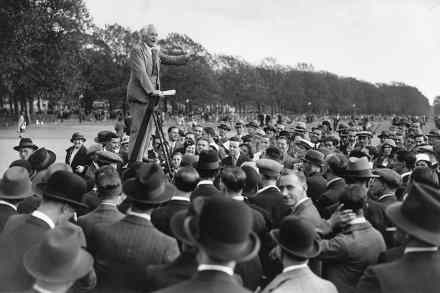
Monday was the 150th anniversary of Speakers’ Corner and, in the hope of drumming up some publicity for the Free Speech Union, I went along to give a speech. Rather embarrassingly, I didn’t actually know where it was. I had been there once before, but that was about 40 years ago, and Google Maps wasn’t much help. Perhaps that was deliberate on the part of the censorious tech giant. You can imagine a group of woke nerds sitting around in Silicon Valley laughing at the prospect of a clueless culture warrior setting up his soapbox in the area they’ve wrongly identified as Speakers’ Corner, letting rip about illegal migrants, then getting hauled away by the Metropolitan Police. Not that being in the right location offers you much protection these days.

Will my kitchen be designated a ‘safe space’?

From our UK edition

As the father of four children who will be entering higher education in the next few years, I’m worried that my home will shortly start to resemble a university campus. In other words, I’ll be forced to declare my preferred gender pronouns, the kitchen will be designated a ‘safe space’ and the collected works of J.K. Rowling will be burnt on the garden lawn. You may think I’m joking, but a new poll from the Higher Education Policy Institute lays bare just how thin-skinned today’s students are.