Free speech

The virtue-signaling behind the renaming of the Middlebury College chapel

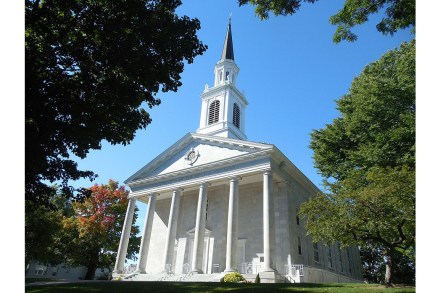
Early on the morning of September 27, 2021, Middlebury College president Laurie Patton had a stone bearing the name of the campus chapel removed from the building. It was done deftly. I don’t imagine she showed up with her own hammer and chisel, but the campus groundsmen executed her orders. Later that day, Patton and the chairman of the board of trustees sent out a message to the community announcing that they had de-named Mead Memorial Chapel, which henceforth would be known simply as Middlebury Chapel. The de-naming was a stealth operation. Outside of a small circle, no one knew it was coming.  Picture a small liberal arts college tucked away in the American hinterland. Picture on the crest of a hill a white marble church with an impressive spire flanked by academic halls.

middlebury college chapel

Elon is offering us a raw deal with X

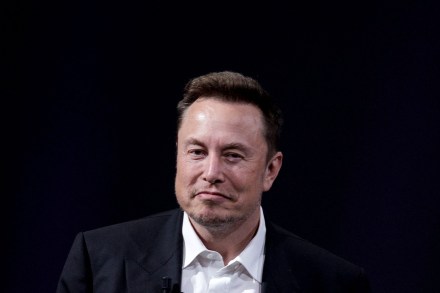
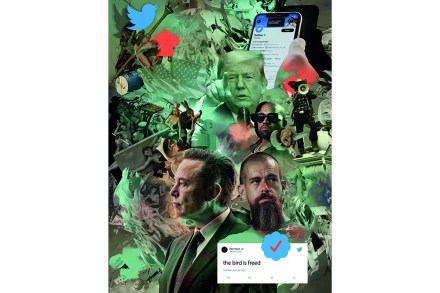
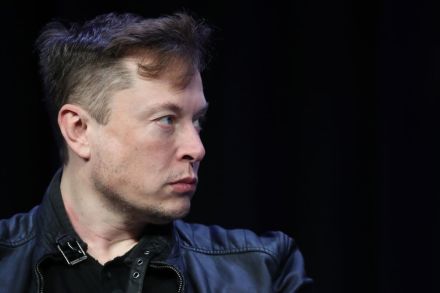
Elon Musk, the owner of X — once known as Twitter, may she rest in peace — is making Americans an offer that they must refuse. When he purchased the social media platform last year for a whopping $44 billion, he led us to believe he was doing it in order to save free speech, an ideal in regard to which he said was an absolutist. Today, what he is actually offering instead is a censorship regime slightly more friendly to the right than his predecessor. It’s a recipe for disaster. Back during the bad old Twitter days of Jack Dorsey, most of us had a fairly consistent idea of how the site should moderate its content.

elon musk

How to stop law students from blocking free speech

When a federal appellate judge speaks at a major law school, he should expect tough questions from a learned audience. He should not expect to be shouted down. When he tries to speak but is heckled, jeered and disrupted, he should expect a university administrator to step in, read the students the riot act and restore order. He shouldn’t expect that administrator to sympathize with the disruptive students and let the trouble continue, as the feckless bureaucrat at Stanford Law School did.   Her shameful behavior is hardly unique. It’s characteristic of mid-level bureaucrats hired to push “Diversity, Equity and Inclusion” at universities across the country. They show very little concern for free speech, alternative views or robust debate.

stanford law students

Congress’s Twitter hearings show Democrats are done with free speech

A long time ago in a galaxy far, far away, free speech was primarily defended by civil libertarians and the Democratic Party. This was in the 2000s, when a handful of civil libertarians on the right and many more on the left worried about how the Patriot Act would enhance the government's ability to monitor its own citizens. They also opposed the growing power of the intelligence community, which they thought could pressure companies into providing private information that the government could not legally grasp for itself. The past is a different country. Yesterday's hearing before the House Oversight Committee with three former Twitter executives illustrated as much. Democrats repeatedly made the case that the hearing was a distraction, unimportant, even conspiratorial.

Lady Chatterley’s Lover in an era of free speech

"Sexual intercourse began in nineteen sixty-three… between the end of the Chatterley ban and the Beatles’ first LP." So wrote Philip Larkin in his much-quoted poem "Annus Mirabilis." Sixty years later, while the Beatles’ Please Please Me is not entirely synonymous with matters sexual, there is still a fascination with DH Lawrence’s most famous book, Lady Chatterley’s Lover. It remains both a boundary-pushing erotic landmark and, now that the controversy behind it has long passed, a deeply affecting novel that is both romantic and Romantic in its reach.

How did free speech become a right-wing value?

In early May, I explored the left’s reaction to billionaire Elon Musk potentially buying Twitter and his vow to make it a free speech platform again. Since then, Musk and his vision have repeatedly been portrayed as “right-wing.” It’s the damndest thing. Canadian Conservative politician Andrew Scheer picked up on this strange phenomenon back in April, saying that that the corporate media framing free speech as a “right wing value” was just plain weird. As though to drive home the point, Twitch’s Zachary Ryan called Musk a right-winger on Monday. And over the weekend, entrepreneur Samir Tabar had a question for a whiny Robert Reich: https://twitter.com/SamirTabar/status/1601984560345907200 Answer: since, well, now. The evolution of this trend is not new.

free speech

What Jordan Peterson gets wrong about anonymous Twitter accounts

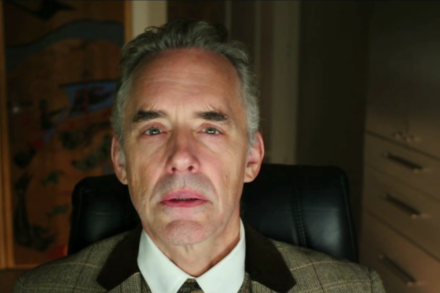
“The best we can hope for concerning the people at large is that they be properly armed.” So sayeth not Grendel69 on Twitter, but Alexander Hamilton, writing under the name Publius, the handle he adopted along with James Madison and John Jay when they were writing The Federalist Papers. But if Twitter had existed, well, Hamilton may well have been a shitposter, one who made Grendel69 look like a lightweight. Anonymity, pseudonymity, whatever you want to call it, is oft maligned, particularly in the digital square. The debate about it will likely always be with us, unless, somehow, the internet magically ceases to exist, forcing mankind up out of its sitting position. (As that wouldn’t be good for my income streams, I’m going to have to hope it keeps on keeping on.

jordan peterson

How Qatari money is undermining free speech at universities

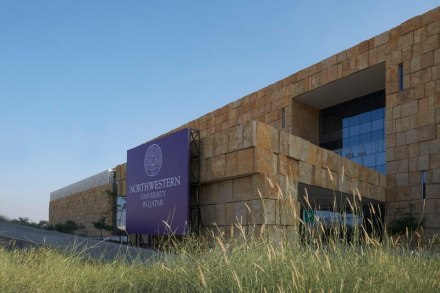
“It is often said that history will judge us not only for what we said and did in times of strife, but also for our silence.” So wrote Northwestern University Medill School of Journalism dean Charles Whitaker in 2018. The statement was released following a heated exchange between former president Donald Trump and CNN reporter Jim Acosta, which resulted in the White House revoking Acosta’s press pass. Whitaker believed it was important for an “institution as prominent as Medill” to defend the journalism profession against such an “attack.” Four years later, Northwestern has failed to practice what it preaches: it fell silent when Qatari security officials threatened to smash a Danish journalist’s camera during a live TV report on the FIFA World Cup.

Can Twitter still be saved?

A philosopher once famously said that Hell is other people. What the world has learned from Twitter is that Hell is other people’s opinions. It’s no wonder, then, that when Elon Musk came bounding into Twitter headquarters in late October — after changing his Twitter bio to “Chief Twit” — a popular response, on Twitter and off, was, “welcome to Hell.” When Musk, in an open letter to Twitter advertisers, wrote that he doesn’t want the site to become a “free-for-all hellscape,” he touched a debate concerning a much larger issue — balancing free speech against the need to keep hate, propaganda and manipulation out of public forums, particularly digital ones that can spread malicious content around the world instantly.

twitter

Elon Musk should make Twitter weird again

Before the internet, the town square was a weirder place. True believers — from those concerned about fluoride to those dedicated to stopping gay frogs — had to put in the work. There were cardboard boxes and Sharpies to procure in order to make signage. A milk crate wasn't necessary, but it did elevate the speaker above his audience. It was not a desk gig. People had to get up and hit the corner from morning until some point in the evening, blasting out their gospel to whoever passed by and, perhaps, stopped to listen. Those early content creators had angles. Some sang or played guitar. Others simply testified. Regardless, they were the righteous, willing to sacrifice time and effort for their art. Then Twitter happened.

Kill the Bill!

From our UK edition

The more you study what is going on with the Just Stop Oil protests and the Public Order Bill, the more weird and inconsistent our national attitude to protesters seems. Britain, according to those opposed to the Bill, is a police state. If you look at their response to the Just Stop Oil protests, however, we look like pushovers. It would be easy to come to the conclusion, watching protesters block roads and the police often just stand and watch, that Britain is in desperate need of more laws to deal with this kind of thing: to make it clear that yes, everyone has the right to protest but no, they do not have the right to prevent others from going about their lawful business.

Cancelled Kanye West buys cancelled free speech platform Parler

From our UK edition

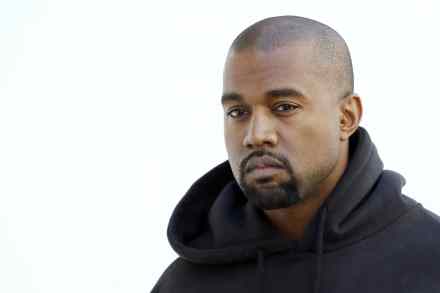
Hear Ye Hear Ye! The news today has broken that Kanye West – who calls himself Ye – has bought Parler, the Trumpist social media platform. The news was announced earlier by Parler CEO George Farmer, the son of Lord Farmer, the Conservative peer. ‘This deal will change the world and change the way the world thinks about free speech,’ said George. Farmer is also the husband of Candace Owens, the American MAGA celebrity, who appears to have been an important influence – is muse the right word? – in Ye’s conversion away from Hollywood La La Land and towards Trump-infused right-nationalist populism. Candace and Kanye both recently appeared together wearing ‘White Lives Matter’ T-shirts.

Elon Musk should kill Twitter for good

Nothing would be better than for Elon Musk to buy Twitter and then kill it. Take it offline. Delete it. Make it go away. What's the point anymore? Like some aged European monarchy, the service has become too inbred to say anything useful. It exists now as a giant push survey, claiming the appearance of action equals action. Even the cancellation of people, for which Twitter has become uniquely known, is like a magic spell that you have to believe in for it to work. Live outside the Twitter demographic and it does not matter. Listening to people talk, you'd think Twitter had the power to raise the dead, or, more often, the opposite. Twitter is the physical embodiment of what Glenn Greenwald describes as Democrats criminalizing opposition to their party and ideology.

Free expression after the Rushdie attack

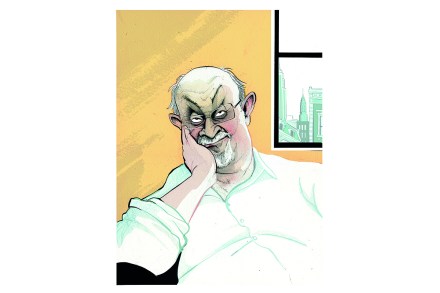
In an interview with Stern magazine at the end of July, Sir Salman Rushdie was asked about the current circumstances of his life. Given that this is a question that he has faced since 1989, Rushdie might have been expected to respond with boredom, even irritation — as, understandably, he has done in other public conversations, when the subject of the fatwa that he has been under for nearly three and a half decades has been raised by an inquisitive or prurient journalist — but he responded with reasonably good cheer. Describing his everyday existence as “very normal,” he even ventured a light-hearted remark, saying, “A fatwa is a serious thing. Luckily we didn’t have the internet back then. The Iranians had to send the fatwa to the mosques by fax.

Rushdie

Who’s to blame for our censorious students?

From our UK edition

Without freedom of speech, you do not have a university. More than any other value, it is freedom of speech that most defines the university, that makes it a special place in society set aside for debate and inquiry in which speech and thought should be freer than in practically any other workplace or institution. And yet an alarming proportion of students seem not to have got the memo. A new study by the Policy Institute at King’s College London confirms what has been clear for some time: that today’s students, far from being rebellious free-thinkers, are if anything more supportive of censorship than the general population. The numbers are pretty stark.

Project Veritas is being punished for practicing journalism

It used to be called the "New York Times Problem." It asks at what point does the First Amendment stop protecting journalists against the receipt of stolen property, particularly classified documents. “The Problem” stems originally from the Pentagon Papers, a classified history of the Vietnam War stolen by Daniel Ellsberg and handed over to the Times and later others. The government sought prison time for reporters and editors but failed. What once threatened the Times has now been turned directly against Project Veritas, Ashley Biden's diary, and perhaps Julian Assange as well.

Vanity plates and the fight for free speech

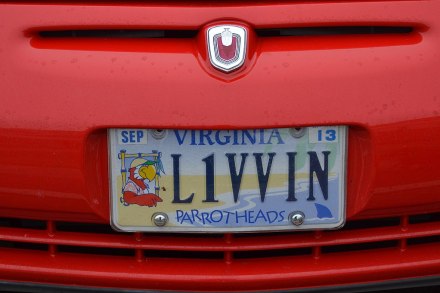
If politics makes strange bedfellows, defending free speech sends one down some equally odd paths. The First Amendment and laws protecting speech exist for every thing that can be said, but end up being tested at the margins of what society tolerates in the name of free speech. A recent case in Hawaii, involving a car license plate, is a perfect example. Like most states, Hawaii issues specialty/vanity license plates where the owner can chose his own letters or numbers. The only restrictions are that the letters/numbers not be "misleading" or "publicly objectionable." Otherwise pick your combination, pay the fee, and you have your unique license plate, such as LUV YOU. That was the plan of Edward Odquina, who runs a web site named www.fckblm.

Salman Rushdie overcame his fear

From our UK edition

After Ayatollah Khomeini ordered Muslims to kill him for publishing The Satanic Verses in 1989, Julian Barnes gave Salman Rushdie a shrewd piece of advice. However many attempts were made on his life and the lives of his translators and publishers, however many times Special Branch moved him from safe house to safe house, he must not allow the ‘Rushdie affair’ to turn him into an obsessive. When I interviewed him ten years ago he had learned to live without fear. No shaven-headed bodyguards accompanied him as he walked into a Notting Hill restaurant. His eyes did not scour the room for signs of danger. If the other diners knew who he was, they were too well-versed in the manners of the English upper-middle class to stare at a celebrity.

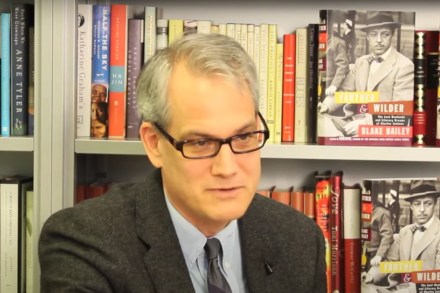
Blake Bailey deserves to be heard one more time

At the beginning of 2021, author Blake Bailey might have been forgiven for thinking that his literary career was not merely assured but stellar. He had gathered significant accolades for his writing, including a Guggenheim Fellowship and the National Books Critics Circle Award, and he was a Pulitzer Prize finalist. He had specialized in writing about heavy-drinking Great American Novelists, including the perennially underrated Richard Yates, John Cheever and The Lost Weekend’s Charles Jackson. His most recent subject was the elusive Philip Roth, a man whose literary brilliance was matched by his checkered reputation both on and off the page. Eighteen months later, matters have changed beyond recognition.

Who will stand for free speech?

The primary feeling is a sense of dread. The oily scent of torches set aflame is in your nostrils, and the glint of pitchforks in moonlight appears on the horizon. You have, either accidentally or intentionally, said something that aroused the anger of a mob. Those of your friends who enjoy a good scrum send you laughing messages; those who are born afraid of such things ask quietly if you are all right. Your name is trending nationally and, amid it all, you worry it will never end. This is an experience that too many Americans have had in the era of social media.

speech