Free speech

What Jordan Peterson gets wrong about anonymous Twitter accounts

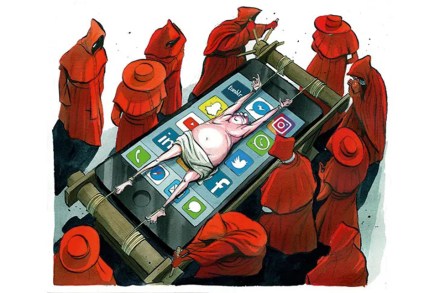
“The best we can hope for concerning the people at large is that they be properly armed.” So sayeth not Grendel69 on Twitter, but Alexander Hamilton, writing under the name Publius, the handle he adopted along with James Madison and John Jay when they were writing The Federalist Papers. But if Twitter had existed, well, Hamilton may well have been a shitposter, one who made Grendel69 look like a lightweight. Anonymity, pseudonymity, whatever you want to call it, is oft maligned, particularly in the digital square. The debate about it will likely always be with us, unless, somehow, the internet magically ceases to exist, forcing mankind up out of its sitting position. (As that wouldn’t be good for my income streams, I’m going to have to hope it keeps on keeping on.

jordan peterson

How Qatari money is undermining free speech at universities

“It is often said that history will judge us not only for what we said and did in times of strife, but also for our silence.” So wrote Northwestern University Medill School of Journalism dean Charles Whitaker in 2018. The statement was released following a heated exchange between former president Donald Trump and CNN reporter Jim Acosta, which resulted in the White House revoking Acosta’s press pass. Whitaker believed it was important for an “institution as prominent as Medill” to defend the journalism profession against such an “attack.” Four years later, Northwestern has failed to practice what it preaches: it fell silent when Qatari security officials threatened to smash a Danish journalist’s camera during a live TV report on the FIFA World Cup.

Can Twitter still be saved?

A philosopher once famously said that Hell is other people. What the world has learned from Twitter is that Hell is other people’s opinions. It’s no wonder, then, that when Elon Musk came bounding into Twitter headquarters in late October — after changing his Twitter bio to “Chief Twit” — a popular response, on Twitter and off, was, “welcome to Hell.” When Musk, in an open letter to Twitter advertisers, wrote that he doesn’t want the site to become a “free-for-all hellscape,” he touched a debate concerning a much larger issue — balancing free speech against the need to keep hate, propaganda and manipulation out of public forums, particularly digital ones that can spread malicious content around the world instantly.

twitter

Elon Musk should make Twitter weird again

Before the internet, the town square was a weirder place. True believers — from those concerned about fluoride to those dedicated to stopping gay frogs — had to put in the work. There were cardboard boxes and Sharpies to procure in order to make signage. A milk crate wasn't necessary, but it did elevate the speaker above his audience. It was not a desk gig. People had to get up and hit the corner from morning until some point in the evening, blasting out their gospel to whoever passed by and, perhaps, stopped to listen. Those early content creators had angles. Some sang or played guitar. Others simply testified. Regardless, they were the righteous, willing to sacrifice time and effort for their art. Then Twitter happened.

Elon Musk should kill Twitter for good

Nothing would be better than for Elon Musk to buy Twitter and then kill it. Take it offline. Delete it. Make it go away. What's the point anymore? Like some aged European monarchy, the service has become too inbred to say anything useful. It exists now as a giant push survey, claiming the appearance of action equals action. Even the cancellation of people, for which Twitter has become uniquely known, is like a magic spell that you have to believe in for it to work. Live outside the Twitter demographic and it does not matter. Listening to people talk, you'd think Twitter had the power to raise the dead, or, more often, the opposite. Twitter is the physical embodiment of what Glenn Greenwald describes as Democrats criminalizing opposition to their party and ideology.

Free expression after the Rushdie attack

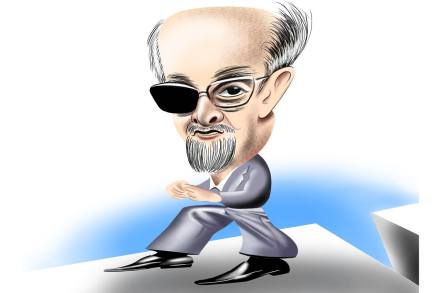
In an interview with Stern magazine at the end of July, Sir Salman Rushdie was asked about the current circumstances of his life. Given that this is a question that he has faced since 1989, Rushdie might have been expected to respond with boredom, even irritation — as, understandably, he has done in other public conversations, when the subject of the fatwa that he has been under for nearly three and a half decades has been raised by an inquisitive or prurient journalist — but he responded with reasonably good cheer. Describing his everyday existence as “very normal,” he even ventured a light-hearted remark, saying, “A fatwa is a serious thing. Luckily we didn’t have the internet back then. The Iranians had to send the fatwa to the mosques by fax.

Rushdie

Project Veritas is being punished for practicing journalism

It used to be called the "New York Times Problem." It asks at what point does the First Amendment stop protecting journalists against the receipt of stolen property, particularly classified documents. “The Problem” stems originally from the Pentagon Papers, a classified history of the Vietnam War stolen by Daniel Ellsberg and handed over to the Times and later others. The government sought prison time for reporters and editors but failed. What once threatened the Times has now been turned directly against Project Veritas, Ashley Biden's diary, and perhaps Julian Assange as well.

Vanity plates and the fight for free speech

If politics makes strange bedfellows, defending free speech sends one down some equally odd paths. The First Amendment and laws protecting speech exist for every thing that can be said, but end up being tested at the margins of what society tolerates in the name of free speech. A recent case in Hawaii, involving a car license plate, is a perfect example. Like most states, Hawaii issues specialty/vanity license plates where the owner can chose his own letters or numbers. The only restrictions are that the letters/numbers not be "misleading" or "publicly objectionable." Otherwise pick your combination, pay the fee, and you have your unique license plate, such as LUV YOU. That was the plan of Edward Odquina, who runs a web site named www.fckblm.

Blake Bailey deserves to be heard one more time

At the beginning of 2021, author Blake Bailey might have been forgiven for thinking that his literary career was not merely assured but stellar. He had gathered significant accolades for his writing, including a Guggenheim Fellowship and the National Books Critics Circle Award, and he was a Pulitzer Prize finalist. He had specialized in writing about heavy-drinking Great American Novelists, including the perennially underrated Richard Yates, John Cheever and The Lost Weekend’s Charles Jackson. His most recent subject was the elusive Philip Roth, a man whose literary brilliance was matched by his checkered reputation both on and off the page. Eighteen months later, matters have changed beyond recognition.

Who will stand for free speech?

The primary feeling is a sense of dread. The oily scent of torches set aflame is in your nostrils, and the glint of pitchforks in moonlight appears on the horizon. You have, either accidentally or intentionally, said something that aroused the anger of a mob. Those of your friends who enjoy a good scrum send you laughing messages; those who are born afraid of such things ask quietly if you are all right. Your name is trending nationally and, amid it all, you worry it will never end. This is an experience that too many Americans have had in the era of social media.

speech

Gavin Newsom does not want to pick a fight with Florida

“Freedom is under attack in your state,” exclaimed California Governor Gavin Newsom in a bizarre 30-second television ad that aired on Fox News in Florida markets over Fourth of July weekend. Unnamed “Republican leaders,” gasped a man who held his constituents under near-house arrest for two years, are “banning books, making it harder to vote, restricting speech in classrooms, even criminalizing women and doctors. I urge all of you to join the fight, or join us in California, where we still believe in freedom.” Newsom’s anti-Florida canards cost his 2022 reelection campaign a reported $105,000. They addressed an audience that will vote neither for nor against him.

Twitter gives Jordan Peterson the boot, Dave Rubin follows

Jordan Peterson went from being a psychologist advising troubled kids to an unlikely political figure as he fought against the Canadian government’s compelled speech law for pronouns. Cockburn watched with fascination as Peterson clashed repeatedly with the left-wing narrative, even going as far as to resign from his tenured position at the University of Toronto due to their rampant leftist ideology. On June 28, Twitter suspended him for this tweet (as recalled by his daughter): https://twitter.com/MikhailaFuller/status/1541946666567323649 Clearly referring to someone by their birth name is a sin for Twitter. Little did Cockburn know that Dave Rubin, the host of The Rubin Report, was to be next on the chopping block. Rubin sent this tweet before being suspended: https://twitter.

Kamala Harris’s zombie disinformation board

After giving up on the border crisis and Ukraine, Kamala Harris seems to have found an issue much more her speed: online name-calling. Last week, Harris announced the launch of the White House Task Force to Address Online Harassment and Abuse, which will be handled through President Biden’s Gender Policy Council. Exhausted yet? Interestingly enough, the task force will be co-chaired by the National Security Council. Members of the NSC include the secretary of state, Antony Blinken, the attorney general, Merrick Garland, the Health and Human Services secretary, Xavier Becerra, and the Homeland Security secretary, Alejandro Mayorkas.

scotus kamala

The Cato Institute fails to stand up to cancel culture

The recent controversy over prominent legal commentator Ilya Shapiro's employment at Georgetown University Law Center ended last week. In a Wall Street Journal column on a Friday, Shapiro declared that his cancel culture nightmare was over, vindicated after a four-month investigation into a troublesome tweet. On Monday, the WSJ ran the rare immediate follow-up column, where Shapiro announced his decision to quit the university rather than subject himself to an inevitable future cancelation. Shapiro's experience was astounding in how much it reveals about the insanity of the woke left brigades, and how much their heckler's veto is empowered by the administrators at universities like Georgetown.

Meet the man taking on the anti-free-speech left

For the anti-free-speech left, the most dangerous man in America today is Greg Lukianoff. The president of the Foundation for Individual Rights in Education for the past 16 years, the free-speech attorney has now decided to guide the organization, previously focused on free-speech battles within academia, into the broader territory of free-speech battles across the nation. FIRE has been rebranded as the Foundation for Individual Rights and Expression, and Lukianoff intends to take it into space once occupied by free-speech stalwarts like the ACLU. He has a massive new investment from supporters to the tune of $75 million.

The horror in Buffalo is not an excuse to censor

If classic horror resides in the banality of evil, modern horror resides in the banality of predictability: yet another deranged man, driven by hate, kills, and the left seizes the opportunity to try and restrict speech, claiming not metal music, not violent porn, not Alex Jones, but social media spurred the shooter from basement to killing ground. This risks the loss of speech rights out of fear. As the bodies lay on the ground in Buffalo, New York governor Kathy Hochul blamed social media and called for speech restrictions in order to prevent another tragedy. Hochul claimed free speech had gone too far when it allowed someone to shout fire in a crowded theater for the shooter to hear.

Netflix changes woke course after Chappelle attack

Cockburn has always said that when the going gets tough, the tough gets going…to a bar. But when the going gets tough for giant corporations — in this case, “tough” meaning $50 billion in lost subscriptions for Netflix — companies tend to get going in whatever direction will induce the mob to keep paying for their goods and services. Netflix has done just that by updating its “corporate culture memo” to let employees know they may have to work on material that triggers them. And letting them know if they don’t like it, they can leave. Over the course of the last several months, as he kept searching in a stupor for The Crown in the wee hours, Cockburn began to notice an increase in the amount of Netflix programming featuring in-your-face progressive messaging.

Why we need robust free speech laws

The biggest tragedy of the Russian invasion of Ukraine is, of course, the loss of thousands of Ukrainians, who have been killed because of Vladimir Putin’s insane and horrific actions. But alongside that horror are many other alarming developments. One of them is the near-total suppression of the free flow of information in both Russia and China. As you have likely read, Putin cast the war with Ukraine not as the unprovoked invasion it is but, laughably, as a “special military operation” for “de-Nazifying” the Ukrainian leadership. Russia swiftly passed a law greatly enabling Putin’s propaganda campaign.

speech

Elon Musk is the wrong kind of billionaire

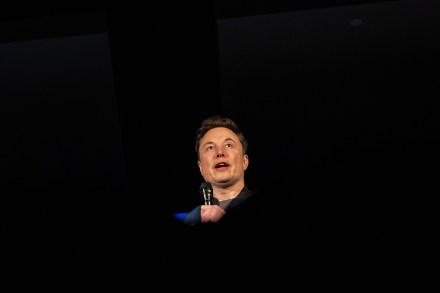
Oh, to have been a fly on the wall in the C-suite at Twitter on Thursday afternoon. The social media company’s San Francisco headquarters reportedly played host to an all-hands meeting in which concerned employees were given the chance to ask questions about billionaire Elon Musk’s offer to buy their company. Their panic is not entirely without merit — Musk has floated the idea of turning Twitter’s building into a homeless shelter. Yet it's worth noting that Twitter’s employees have been told they can work from home indefinitely, and their questions were delivered to a largely empty building via the messaging app Slack.

elon musk ketamine
new york times

Free speech folly at the New York Times

I suppose we should be grateful that the New York Times has finally come out in favor of free speech. After more than four years of hysterical denunciations of anyone who questioned the tactics, rhetoric or punishments employed by #MeToo, Black Lives Matter or transgender activists — some of which were inspired by the Times’s own reporting and editorials — America’s “paper of record” has apparently become woke to the problem of mob intimidation and its deleterious impact on what the mainstream media likes to refer to as “robust” democratic debate.