Francis fukuyama

Why human history is fated to end in apocalypse

Laramie, Wyoming In 1988 Francis Fukuyama argued that the end of history had been reached in the form of liberal democratic capitalism, the ne plus ultra of human civilization. Three decades later it seems more likely that the direction of history will be theological, as the world comes reluctantly to recognize that science, democracy, capitalism and technology are insufficient to the achievement of human happiness, satisfaction and fulfillment.
history

Transhumanism is the most dangerous idea in circulation today

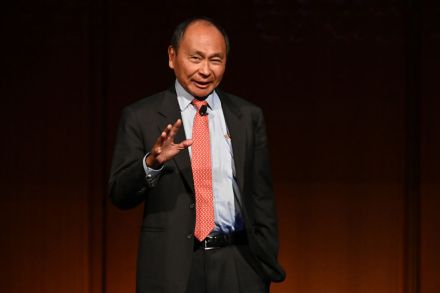
When asked at a 2004 Foreign Affairs symposium to identify the most dangerous of all contemporary ideas, Francis Fukuyama — no doubt to the editor’s surprise — did not cite the heretical view, held by many of his critics, that the end of history is not yet, nor indeed is anywhere in sight. Instead, he chose the concept called transhumanism for that honorable nomination. Whether or not transhumanism is the most dangerous of all current mental constructions, it is certainly among the silliest, demonstrating the degree of intellectual insanity to which the fear of mortality is capable of driving educated people who ought to know better.

transhumanism

Time for Europe to man up

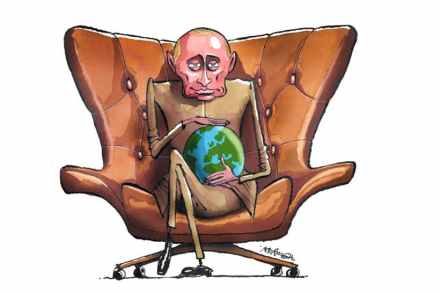
The End of History has ended. It officially ended with Vladimir Putin’s decision to invade Ukraine. Francis Fukuyama wrote The End of History in the early Nineties. It's a book that captures the optimistic zeitgeist of that decade — born of the fall of the Berlin Wall and the implosion of communism. The basic idea was that once communism faded away — the reality, not the ideal, which will forever exist in the minds of many intellectuals — the world would become a more liberal, democratic and commercial place. It was an argument with real legs. East Germany was digested by the West without a burp. The Baltic states prospered. Asia took off. A rising commercial tide lifted all boats.

sanctions putin russia davos oligarch

Francis Fukuyama does not read your tweets

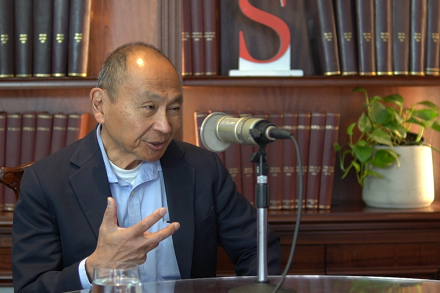
Francis Fukuyama never reads the comments. He is a benign presence on social media, whether it’s on Twitter, or Instagram. Now I know why. Unlike many public thinkers, Fukuyama is not that interested in joining the digital fray. He reckons that a third of comments on his posts ‘are going to be stupid references to The End of History — “this is not the end of history, is it” — so I’ve avoided the temptation to get into fights.’ I’ve called Dr Fukuyama — permanently assured of a place in the history of ideas since his essay “The End of History?” appeared in 1989 — to talk about his hobbies. Great minds need to rest. Socrates enjoyed dancing. Diogenes was a keen sunbather. Immanuel Kant was a dedicated pipe smoker.

francis fukuyama

I hate the Nineties

I’m a Nineties kid. You know what that means: Tamagotchis, Super Mario, Sega, primitive cell phones, slap bracelets, skateboarding, The Simpsons, Seinfeld, David Koresh, scooters, Britney Spears, the Backstreet Boys, the Spice Girls, the first bombing of the World Trade Center, the Nato bombing of Sarajevo, Pokémon!, Blink-182, Bill Clinton, Friends and the friends of Bill Clinton. What a decade! Only Nineties kids will understand it. And as even Nineties kids grow up, Nineties nostalgia is now big business. Everyone from the Spice Girls to Smashing Pumpkins has launched comeback tours on a rising tide of misty-eyed affection. McDonald’s brought back Tamagotchis and Furbys and other veteran Happy Meal toys. Friends is set to make a highly profitable return.

nineties