France

Why we must remember the lessons of the Anglo-Scottish Enlightenment

From our UK edition

The Adam Smith Institute kindly asked me to speak at their Christmas reception last night, and yesterday I was mulling what to say. When at The Scotsman ten years ago, I would sometimes visit the great man's grave in Edinburgh, and be surprised to see only Chinese tourists paying tribute. It was a pretty good sign of how political power would play out. Edinburgh is, with Prague and Stockholm, among the most beautiful cities in Europe; itself a monument to the Enlightenment. And how tragic that students – even Scottish ones – are taught about the E word only in the context of the French Enlightenment. The likes of Rousseau, Voltaire, Diderot wrote of grandiose ambitions and recasting society using state power.
How different will Sarkozy 2.0 be?

From our UK edition

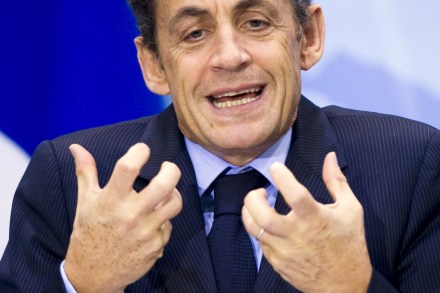
After months of rumours, plummeting approval ratings, and battles with anti-reform protesters, French President Nicolas Sarkozy reshuffled his Cabinet yesterday. With a new government in place, the worst of the reforms behind him and the G-20 chairmanship in the offing, President Sarkozy is hoping to rebuild his profile before the next presidential election. But will it work? The popular François Fillon continues as Prime Minister despite a strained relationship with the Élysée. But Defense Minister Hervé Morin and Foreign Minister Bernard Kouchner have been replaced by Alain Juppé, a former prime minister and protege of former President Jacques Chirac, and Michèle Alliot-Marie, a former justice minister in the last cabinet.

What sort of country do we want to be? A soft one

From our UK edition

Admiral Lord West’s intervention was most striking in its language. He promised that a ‘national humiliation on the scale of the loss of Singapore’ would ensue unless his advice was heeded. Writing in the Times (£), Sir Menzies Campbell notes West’s seething tone and concludes that his frustration was the product of a review of defence resources, not strategy. At no point, Campbell says, did the government ask ‘what sort of country do we want to be’ and plan accordingly. Campbell continues: ‘Is Britain ready now or likely to be ready to go to the aid, alone or with allies, of a nation that becomes the target of aggression, as we did in Sierra Leone and Kosovo?

In defence of UK-French defence cooperation

From our UK edition

The Entente Cordial Redux has generated a lot of commentary, most of it ill-informed, some of it ridiculous. Tory MP Bernard Jenkin, in particular, has singled himself out to be a perpetuator of stereotypes with his reference to the duplicitous nature of the French. But many historians, like the otherwise brilliant Orlando Figes, have not fared much better, talking about the Crimea War as if it had any relevance at all for modern warfare. It’s good fun to tease the French. That is what boozy lunches ought to be about. But it should not pass for serious commentary by MPs. Since the 1990s the French have worked very closely with UK forces, even when disagreements at the political level have been profound.

Entente très cordiale

From our UK edition

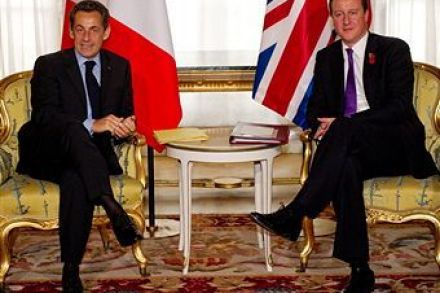
When it comes to pomp, Britain and France are still superpowers. The entente très cordiale has brought out all the plumage of 400 years of professional soldiering - bearskins, ostrich feathers, mink, gold leaf, thorough-bred horses, billowing capes and vibrant shades of scarlet and blue. Waterloo must have been a hell of a fashion show, before the guns inaugurated spectacle of a different kind.    As Liam Fox explained on the Today programme, this agreement enables two ailing but still ambitious powers to project force overseas beyond their specific territorial interests.

Cameron’s euro battle is just beginning

From our UK edition

David Cameron sold himself a hospital pass in Europe this week. His failure to secure a budget freeze has revealed that Britain's clout has been wildly exaggerated. The likely 2.9 percent budget increase is mildly inconvenient for Cameron politically, but it is immaterial in the grand scheme of the next round of budget discussions and the mounting wrangle about the Lisbon treaty. He will have to compromise, as he did this week. He made some ground, finding allies to resist an untrammelled treaty change - the Irish, the Dutch, the Danes, the Czechs and the Poles. The biggest prize will be Sarkozy, whose antipathy towards Merkel is arch - the ongoing diplomatic and military discussions between Britain and France must be about more than sharing aircraftless carriers.

Britannia ruled the waves

From our UK edition

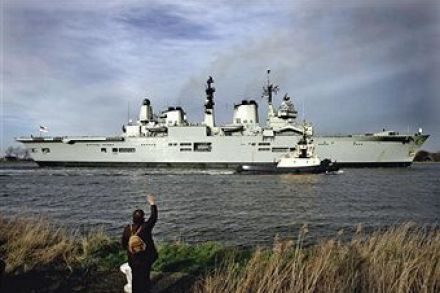
As Pete wrote this morning, the plan to share aircraft carriers with France is controversial. It seems that concerns over sovereignty, job losses and differing strategic interests reduce to the one issue that no government has addressed: the protectionist system of defence procurement, which hampers the operational effectiveness of our armed forces. Typically forthright, Douglas Carswell identifies the problem: ‘Seems like protectionist defence procurement isn’t quite giving us sovereign capability the way we were promised, eh? Had we ordered much of the new carriers to be built overseas, we could have had them at a fraction of the £5 billion cost.

A totemic austerity measure

From our UK edition

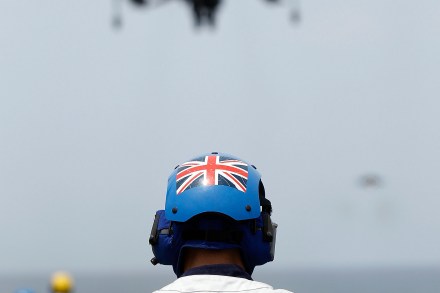
As austerity measures go, the plan to share aircraft carriers with France is totemic stuff. Not only could it save the Exchequer a heap of cash – by reducing the need for two replacement carriers – but it also says a lot about how our government wants to operate in the world: multilaterally, flexibly and, perhaps, with less emphasis on military force. Divvying up one's navy with another country does not suggest a strident foreign policy. Indeed, future operations would have to be planned and conducted with the aid of phonecalls to Paris. Of course, this will likely be a controversial move.

The French connection

From our UK edition

If ever there was a novel to which that old adage about not judging a book by its cover could be applied, it’s this one. If ever there was a novel to which that old adage about not judging a book by its cover could be applied, it’s this one. What you’d expect, picking up Lisa Hilton’s The House with Blue Shutters and seeing, on the front, a nondescript young woman contemplating a blue-shuttered house, is romantic fiction. Historical, claims the blurb. Indeed there’s both romance and history here in a novel that moves between German-occupied France of 1939 and today’s France of second homes and holiday gites. But overall it’s food and sex (sales-team pressure?) that dominate and detract from both romance and history.

L’homme qui dit non

From our UK edition

The study of history is a subversive calling. All countries make up a story that suits their idea of themselves. Authoritarians stamp out independent historical scholarship; extreme nationalists simply vilify those who try to tell the tale of what really happened. Charles de Gaulle stands at the heart of what France likes to think about itself; Winston Churchill plays a similar role on this side of the Channel. Even a Francophile like me concedes that there is a deal more fiction about the French story than the British. The distinguished historian Robert Gildea has helped to tear the covers of what he has called the ‘redeeming, unifying heroic story’ of France’s wartime years.

The Hollobone dimension

From our UK edition

As Paul Goodman notes, it is entirely possible that Philip Hollobone’s statements about the burka were taken out of context. As far as I can gather Hollobone has not yet dissociated himself, which is indicative of the contrary.   The French ban on the burkha has English tongues wagging, and Hollobone has looked to stimulate debate. Islamic groups, many of them extreme, will now decamp to Hollobone’s constituency office in Kettering and look to foment a media storm. But so what? This is a debate that must be had.  For example, it must be determined in law whether or not the burka is a religious item, and therefore inviolable under laws of freedom of religious expression. If not, then it would be interesting to hear Muslims, especially women, defend it.

Bastille Day

From our UK edition

Never mind the Revolution and all that, celebrate Bastille Day and raise a glass to our French friends and relatives in the company of Serge Gainsbourg. Here's the second-greatest Frenchman of the twentieth century with Je suis venu te dire que je m'en vais...

The Crack-Up

From our UK edition

Lance Armstrong, shattered, is surrounded by the press after hauling himself to the finish line at Morzine on Sunday. Photo: Spencer Platt/Getty Images When a great champion cracks in the mountains it's like the moment when a once-mighty battleship is superceded by a new competitor and rendered hideously obsolete. All sports have their moments like this and it's always poignant even when you never cared for, or even disliked, the champion in question. As is often the case, cycling has an especially brutal way of showing this. It's final and, like a broken-backed battleship sinking, just a matter of minutes. One minute you're there, the next you're not.

The Road to Hell is Paved with Cobblestones

From our UK edition

I'm not going to write about the Tour de France every day - just as I won't about the cricket season as soon as anything interesting or significant happens - but this was a great day in the Tour. Commenting on this post, Ronnie was right to suggest that a stage that involved a few kilometers over the cobblestones posed a risk that someone's Tour might end today. He was right: Frank Schleck is done. But that, brutally, is a small price for a superb race and, anyway, could have happened absent the pave too. There was a time and not so long ago that the racing in the first week was, well, a little dull. That's not been the case this year. Incentives matter in cycling as in anything else and now most of the contenders for the GC must attack when we (they) reach the mountains.

The Ethics of Cycle-Sadism

From our UK edition

Fabian Cancellara is one hell of a bike rider, but Sartacus blundered today. That's him on the left and in the Yellow Jersey reminding the peloton that they wouldn't race one another on the approach to the finish of Stage Two yesterday. This is what had happened: it was cold and wet and on the descent of the Stockeu some 30km from Spa there were multiple crashes. Armstrong and Contador both fell. So, most dramatically, did both Schleck Brothers. Conditions were, apparently, made still worse by petrol spilled from a motorbike that had itself fallen. The race was blown apart.

The audacity of hope

From our UK edition

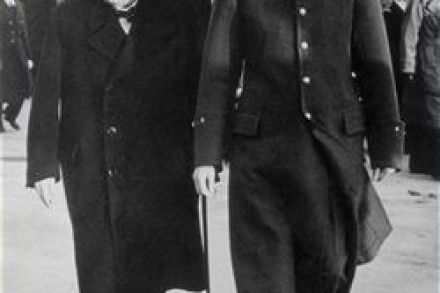
70 years ago today, Winston Churchill and Charles de Gaulle delivered two of the most important speeches of the 20th Century. Against the odds and common sense, both urged their respective nations to fight on against the tyranny of Nazi Germany. Today is a reminder that France is one of Britain’s oldest and closest allies, a point that the Times expresses this morning. Their words merit revisiting. Here is Churchill’s timeless address: ‘However matters may go in France or with the French Government or with another French Government, we in this island and in the British Empire will never lose our sense of comradeship with the French people.

Trans-Atlantic  powwow

From our UK edition

I’m in Washington DC at a high-level seminar on trans-Atlantic relations with the “who is who” of Europe and the US, talking about issues of common concern. The Germans are here in force, as are the French, with high-ranking officials speaking about topics like Russia and Iran. Interestingly, the Brits are notable in their absence. It is probably a sign that the British government is still in transition mode, unable to explain any new policies, unready to stake out new positions. Or they may not be bothered with unofficial events such as these given the privileged access they have. But it is worth noticing nonetheless.

A Better Electoral System?

From our UK edition

As I say, FPTP is a defensible system and so is STV and so is AV: each brings something useful and each has its drawbacks. But why limit ourselves to these options? From a voters' point of view I think there's something to be said for adapting the French system. It's a majoritarian system that would sit comfortably with British traditions but, importantly, it also allows voters to make a more informed choice. It is also simple. If any candidate wins more than 50% of the vote in their constituency he or she is duly elected after the first round of voting. Something like half of all our constituencies fall into this category at present.

Scourge of the ancien régime

From our UK edition

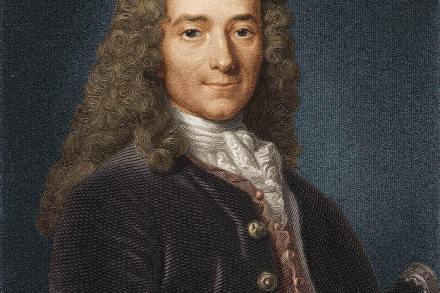
Voltaire’s was a long and amazing life. Voltaire’s was a long and amazing life. He was tragedian, satirist, mathematician, courtier, exile, jailbird, swindler, gardener, plutocrat, watchmaking entrepreneur, penal reform campaigner, celebrity, provocateur, useless loan-shark, serial feuder, coward, astronaut, niece-shagger, spy . . . Except ‘astronaut’, obviously. I made that up to check you were still paying attention. But he did shack up with his niece, the filthy old goat. It seems a shame, then, that for most of us nowadays that long and amazing life is compressed into a couple of quotes from Candide and a few apocryphal stories about his table talk. Ian Davidson’s biography is the corrective: here’s the great man in the round.

The people and the place

From our UK edition

Where to begin? Graham Robb, like all dedicated Francophiles, begins early, when his enlightened parents made him a present of a trip to Paris and sent him off with a map and a voucher for a free gift at the Galeries Lafayette. For a week, and then two weeks, and then six months, he did what all visitors do: he walked the length of the city, he bought books, he sat in cafés and listened to the conversations of strangers. This apprenticeship made him the historian and biographer he is today, and this book is a form of homage to Paris and to those who choose to see it as their home. To adapt Simone de Beauvoir’s dictum, one is not born a Parisian, one becomes one.