France

Much ado about Brussels, bailouts and budgets

From our UK edition

The news that the European Union has decreed that its Budget be increased by 4.9 percent in 2012 ties a knot in the stomach, as I ponder an Easter weekend spent in Margate rather than Majorca due to austerity. As Tim Montgomerie notes, the government is taking this opportunity to assert its euroscepticism. Stern communiqués are being worded; stark warnings are being issued. Behind the scenes, the government has joined with the Dutch, its closest ally on the Continent, to confront the avaricious Commission. Patrick Wintour reports that the French will also oppose the proposed Budget, and the Austrians, Danes, Swedes, Finns and Belgians are expected to lend their weight to the cause.
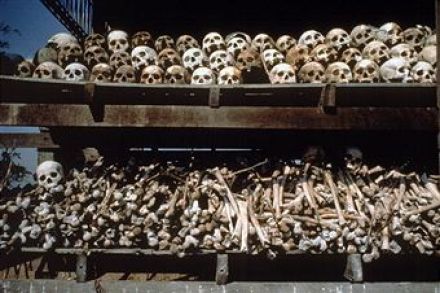
From the archives – the Khmers Rouge’s debt to 1950s France

From our UK edition

It is 13 years to the day since Pol Pot died in mysterious circumstances while in exile on Cambodia’s remote western border with Thailand. Where did Pot and his maniacal fellow travellers acquire their politics. There are a number of candidates from the megalomania of the 20th Century, but Michael Sheridan, the Sunday Times’ former Asia Editor, notes that France, or more exactly aspects of French culture at the end of the colonial era, played its part. He explained why to the Spectator. Pol Pot and Chardonnay, Michael Sheridan, 21 September 1996 Not long ago, the Americans found in their archives in Washington a long-forgotten film about Cambodia, made by the United States Information Service at the beginning of the 1960s.

Cameron can make common cause to solve Europe’s immigration concerns

From our UK edition

Vince, it seems, is Vince. But Britain is not alone in struggling to arrest immigration. A mass of displaced North Africans is descending on Malta and Italy. The United Nations estimate that more than 20,000 people have already landed this year and many more expected. Neither Malta nor Italy can cope alone. On Monday, Malta called for the EU to invoke a 2001 directive that grants migrants temporary protection in cases of ‘mass influx’. Italy also petitioned Brussels to spread the physical burden. The EU did not acquiesce in either case, which especially outraged the Italian government: both Berlusconi and immigration minister Maroni said that the European Union stands and falls together, and they threatened to withdraw.

Another one bites the dust | 12 April 2011

From our UK edition

The conflict in the Ivory Coast looks as though it is now coming to and end. Former president Laurent Gbagbo was arrested yesterday by French officials supporting President Alassane Ouattara, after weeks of violent fighting. Gbagbo lost re-election last November to Ouattara but refused to give up power. Gbagbo, who was in office for more than a decade, will now be investigated for possible war crimes and crimes against humanity. This is a momentous event. The continent's post-independence "big men" had, over decades, become accustomed to permanent power. If they lost an election, they simply threatened (or encouraged) violence until a power-sharing deal was cobbled together which allowed them to stay in office. For examples see Kenya and Zimbabwe.

Can Nato cope in Libya?

From our UK edition

Just because Nicolas Sarkozy believes something does not make it untrue. The French president was adamant that Nato shouldn't take over the Libya campaign. He preferred to run an ad hoc coalition of the willing. Britain, however, was keen for the alliance to take control of a mission that seemed too loosely-organised. Once the United States decided to fade into the background of the military operation, the impetus for a switch to Nato grew. A few weeks into the transfer, people are beginning to wonder whether President Sarkozy was right in the first place. According to yesterday's Sunday Times, Nato is doing what it did in Bosnia: blocking the rebels from arming themselves.

Libya has shown the government the virtue of a multilateral approach

From our UK edition

The Libya intervention has already turned the international kaleidoscope, showing new and remarkable patterns. It has seen China acquiesce to a no-fly zone, and the West in alliance with the Arab League. Nobody thought that was likely 6 months ago. It has also changed reputations. Nicolas Sarkozy may win re-election on the back of the war. William Hague, who had a bad revolution, is having a good war.   The government has become more multilateralist, as opposed to the kind of bilateralism it espoused when it took office. Nearly a year ago, it sent a clear message to the FCO — bilateral ties would matter, multilateral ties less so.

Merkel is running out of patience with the eurozone

From our UK edition

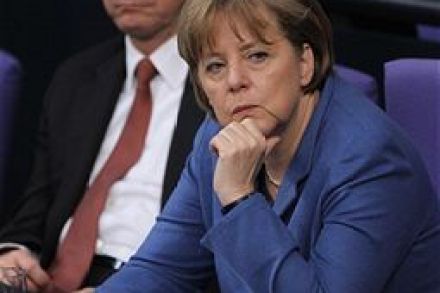
Like an unseasonal Atlantic gale, the Portuguese sovereign debt crisis has blown in to ruin the latest EU summit. This meeting was intended to mark the beginning of the end of the eurozone crisis. Instead, the ponderous European Union has been overtaken by events, with grave consequences. Already speculation about contagion is rife: Spain, Malta* and Italy are now being spoken of in hushed and exasperated tones. The Economist’s Charlemagne correspondent reports that several countries are now wary of the monetary pact that Germany is demanding for delving deeper into its pockets, because they do not want to be accused of surrendering sovereignty.

Libya: next steps

From our UK edition

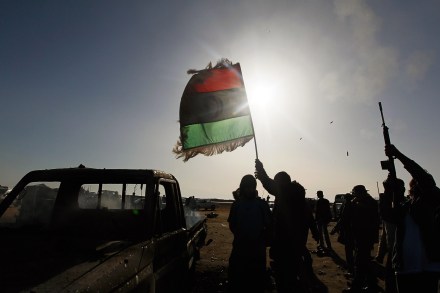
The Libya intervention goes on, with as many question marks hanging over the operation as airplanes in the sky. What is the aim? Who will run it? Can the United States, Britain and France keep allies such as Turkey on board? Behind the scenes, officials are said to be looking at various options, including if and how to support the rebels. But the hand-wringing is now even audible across St James Park. Realistically, the UK should in the first instance work towards establishing a stalemate between loyalists and rebels. From such a stalemate a political process can then begin, which, though it may take many years and continue during the fighting, can help create the foundations for a new Libya.

Ending Cameron’s War

From our UK edition

The coalition is now in danger of coming unstuck — not because of failure, but because of its success. It needs to urgently decide how to run itself and what its aims are. Before it runs out of targets. Neither is easy to do. The US may want to handover control of the mission but there is not really anyone they can transfer authority to. NATO is being blocked from assuming control, the EU does not have the wherewithal — its naval mission off Somalia's coast is already run out of Permanent Joint Headquarters in north London — and the UK and France would struggle to run the mission, either jointly or individually.

War aims

From our UK edition

A few days into the no-fly zone and the initial aim of the intervention has been achieved: Colonel Ghaddafi no longer controls his own airspace and cannot use airpower for close-air support, intimidation or murder. But success has bred a new problem - what now? Should the coalition turn itself into the airborne wing of the resistance, providing support to a rebel advance on Tripoli? Or should it just continue patrolling the skies above Libya as the rebels fight on? If so, how should the coalition react when the rebels face military set-backs? Should they stand back or prevent Libyan forces from taking advantage of their tactical victories and just have DfiD deliver humanitarian assistance?

Sarkozy’s game

From our UK edition

I'm hearing more reports about the rather peculiar behaviour of Nicholas Sarkozy, and how he is playing the Libya campaign thus far. Obama wants to hand over leadership of this mission quick. He was never really into it, but the US Navy was overwhelmingly the best placed to do the first phase of the mission (ie, fire Tomahawks into 20 Libyan targets). The Tomahawk team constituted 11 US ships and submarines, plus one British submarine. Anything other than American leadership would have been a joke. Phase Two is to take out Gaddafi's surface-to-air missiles as soon as he dares to move them. Obama wants to hand over the baton to NATO, with its bases in southern Italy and other Mediterranean nations. But Sarko objects. He likes the idea of US, UK and France as a triumvirate.

The allies converge on Gaddafi

From our UK edition

George Osborne appeared on the Andrew Marr show this morning to introduce the Pledge of his Budget magic trick. But Marr and his viewers wanted talk about the show of military strength over Libya. Osborne reiterated that the government is committed to enforcing the UN Resolution and had no plans to deploy ground troops at this stage. He refused to rule out the use of British ground forces in the future. Privately, officials are trying to dispel the perception that the UN Resolution forbids the use of Special Forces commandos to assist the bombing campaign. The Resolution does not permit an occupation, but it would be very surprising if covert operations were not already being planned against Gaddafi's military installations and logistical infrastructure.

French planes take to the skies as Sarko talks tough

From our UK edition

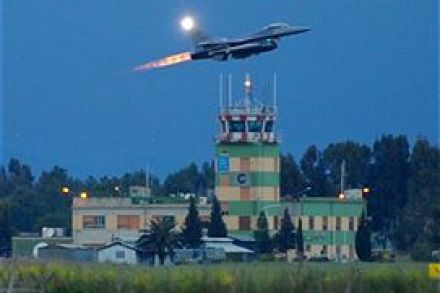
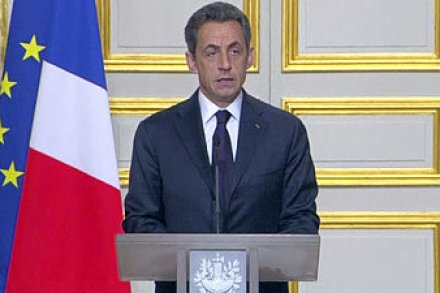
And so it starts. French News Channel BFM reports that French fighter jets are airborne over Libyan skies; al Jazeera corroborates the report, adding that these are reconnaissance missions. By the sounds of things, French military sources are briefing international agencies, adding to the sense that the domestically troubled President Sarkozy wants to capitalise on his sudden international prominence. Sarkozy has just been speaking outside the summit meeting in Paris, which he hosted as Chairman of the G20 and G8. His words were stern: "In Libya, a civilian population which is passive which requires nothing further than the right to choose itself its destiny finds itself in danger of life. We have a duty to respond to its angst-ridden call.

Does Sarko deserve more credit than Cameron?

From our UK edition

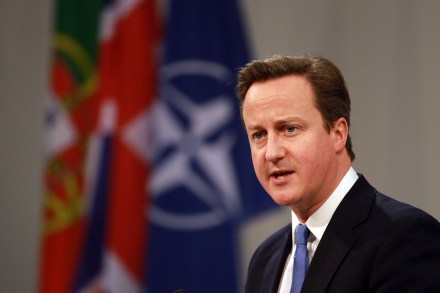
Just as the British press is venerating David Cameron in the aftermath of last night’s UN resolution, so too the French press is praising President Sarkozy. In fact, the whole administration is basking in his reflected glory. Le Figaro describes Sarkozy’s and Prime Minister François Fillon’s roles in obtaining the UN Resolution and preparing the French military for action; the Defence minister also receives a hearty appraisal. Even the Presidency’s determined adversaries have expressed more than grudging respect. The left-wing newspaper Libération applauds Foreign Minister (and grand old man of Gaullism) Alain Juppé’s success in bringing the fractious United Nations to resolution.

The UN decides to take “all necessary measures” against Gaddafi

From our UK edition

"There will be no mercy. Our troops will be coming to Benghazi tonight." Perhaps it was the murderous threat contained within Gaddafi's latest radio message that shocked the United Nations into action today — because shocked into action they have been. After sweating and toiling over the precise formulation of a resolution on Libya, the UN Security Council finally reached the voting stage this evening. And it has now voted 10-0 in favour of member states taking "all necessary measures … to protect civilian and populated areas, including Benghazi, while excluding an occupation force." Brazil, India, China, Russia and — staggeringly — Germany all abstained. What this means, in practice, is a no-fly zone — and more.

Massacre of the innocents

From our UK edition

‘La justice flétrit, la prison corrompt et la société a les criminels qu’elle mérite’ — Justice withers, prison corrupts, and society gets the criminals it deserves. ‘La justice flétrit, la prison corrompt et la société a les criminels qu’elle mérite’ — Justice withers, prison corrupts, and society gets the criminals it deserves. With that terrifying and depressing thought, the fin-de- siècle criminologist Jean-Alexandre-Eugène Lacassagne summed up his views at the end of his long career.

Sarko’s bloody Sunday

From our UK edition

President Nicolas Sarkozy has struck again, forcing the resignation of his dictator-friendly and gaffe-prone foreign minister, Michèle Alliot-Marie, in the hope of shoring up the French government after a terrible couple of weeks. She will be replaced by Defence Minister Alain Juppé, a heavyweight conservative who was prime minister in the 1990s. Speaking to the nation on Sunday, Sarkozy suggested re-launching the Mediterranean Union and called for a meeting of the European Council to discuss Europe's response to the Arab revolutions. Getting European leaders together is a good idea. The scramble by each European country to get their citizens out of Libya could probably have done with a little more coordination.

Reasons for optimism in the Middle East

From our UK edition

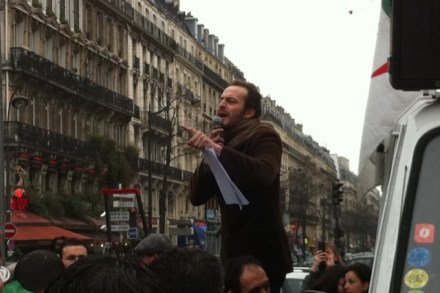
I began the week in Israel, where I watched Tzipi Livni make an extraordinary pitch for the premiership by representing herself as the candidate of moderation and peace. I ended it in Place de la Republique in Paris where secular Algerians had gathered to show solidarity with their countrymen demonstrating against "le pouvoir" in Algiers. Their slogan, "Laicité, Egalité, Liberté", is refreshing. Am I wrong to feel quietly optimistic on both fronts? As we reported in the Jewish Chronicle this week, Tzipi Livni also made a significant overture to the diaspora Jewish community by saying she welcomed a wider discussion about the future direction of Israel from outside the country itself.

The China arms embargo should be discussed – though not lifted

From our UK edition

Today's Times splashed on the spat between Britain and EU foreign policy "czar" Catherine Ashton over the embargo barring arms sales to China. The embargo was put in place after the Tianamen Square massacre and has remained in place, largely at US insistence, ever since. But is it the right policy? The policy has not prevented China from becoming a military power — its annual defense budget officially stands at $70 billion, although the Pentagon believes the real figure to be twice as high. China is developing carrier-killing missiles that even NATO does not have, and will soon sell weapons rather than seek to import them. There is, of course, a moral argument: the sanctions were put in place because of China's human rights violations.

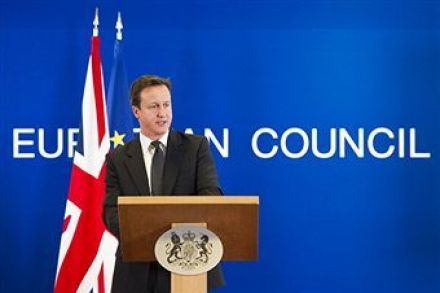
What Cameron should push for in Brussels

From our UK edition

As David Cameron stays in Brussels for his third European summit as PM, it’s becoming increasingly clear that the EU's approach to the eurozone crisis – put up short-term cash and pray – isn’t convincing anyone.   On Wednesday, Moody’s threatened to downgrade Spanish government bonds another notch, citing the fact that, between them, the country’s government and banks have to raise €290bn next year to keep the party going. And, across the eurozone, banks and governments face daunting refinancing targets in 2011, which begs the questions: at what cost? And what happens if they fail to meet them?