France

The Merkozy Plan fails to convince

From our UK edition

A day or so ago, the markets were rising in anticipation of what might be achieved at this Brussels summit. But this morning they're mostly either unmoved, or — as in the case of borrowing costs in Italy and Spain — shifting in unpropitious directions. No-one, it seems, has been won over by yet another night of political bargaineering in Brussels. And understandably so. None of the measures mooted this morning are particularly concrete; all have a sogginess about them. More cash will be transferred to the European Financial Stability Facility, but it's still some distance short of the €1 trillion that was, ahem, ‘announced’ at the end of October.

A defining moment

From our UK edition

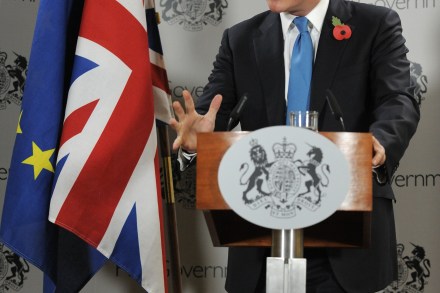
David Cameron’s use of the veto in the early hours of this morning changes the British political landscape. The first thing to stress is that if the euro collapses it will not be because of the British veto. The deal agreed between the 17 eurozone countries and six of those nations who still want to join it does not address the single currency’s fundamental problems.   What is, perhaps, most intriguing about what happened in the early hours of this morning is that Sarkozy and Merkel chose to put Cameron in this position. In truth, Cameron was not asking for that much. But Sarkozy and Merkel were not prepared to take even small steps to accommodate his concerns. They had clearly decided that they were happy to do a deal at the level of 17-plus rather than 27.

Cameron says ‘No’

From our UK edition

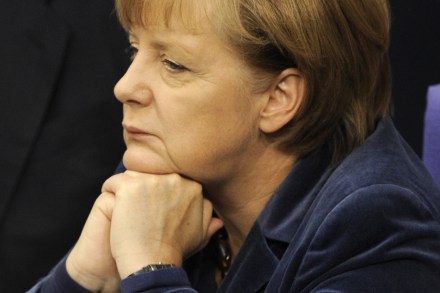
It looks like Britain could be heading for renegotiation with the EU sooner rather than later. The UK, Hungary, Czechs and Swedes last night stayed out of a 27-member EU Treaty. ‘I don’t want to put it in front of my parliament,’ said Cameron. But in an historic move, the deal is going ahead anyway, with 23 members: the Eurozone, plus the six states who want to join. ‘We will achieve the new fiscal union,’ said Angela Merkel. Nicholas Sarkozy is upbeat saying it has been an ‘historic summit’ which will change the EU ‘radically’.  If so, then Owen Paterson is right in his interview with James Forsyth in the new Spectator: Britain will have to reassess its relationship with this ‘radically’ different EU.

Cameron’s Europlan comes together

From our UK edition

The Tory party may not like it, but David Cameron is now finally following a sensible EU policy. As today's summit in Brussels starts, the Prime Minister appears to have decided what really matters to the UK, and realised that he needs to play nice with the Germans and French. At the top of the PM's priority list — a priority voiced by Michael Howard on the Today Programme earlier — is avoiding the collapse of the euro. The consequences of a collapse on Britain's economy are incalculable, but everyone knows they would be profound. Second comes the protection of the City. A Euroland tax on financial transactions would damage the City and thus Britain (as well as the EU) — avoiding it is key.

Yes, Virginia, History Matters: Eurozone Edition

From our UK edition

Broadly speaking, there are two ways of viewing the eurozone crisis: it's a problem of economics or a problem of politics. Neither explanation quite suffices, of course, since it is both but the emphasis you place on economics vs politics plays a part in how you'll view the situation and how likely you are to think there's any kind of solution that can satisfy the politics and the economics of the situation. Which is by way of suggesting that plenty of American commentators seem to think the problem is easy to solve and the main thing lacking in europe is the political will to do something about it. (Exhibit A: James Surowiecki of the New Yorker).

Club Rules, Brussels Edition

From our UK edition

Ben Brogan's latest post offers a revealing glimpse into the oddness of the eurosceptic mind. He begins: To the dismay of many of his colleagues preoccupied by the euro crisis, the Prime Minister has been adept at nurturing strong personal relationships with Angela Merkel and Nicolas Sarkozy. Instead of confrontation he has engaged constructively with them, to the extent that they listen to him and are willing to consider his attempts to press the British interest. The German chancellor was delighted to discover that Mr Cameron was not the swivel-eyed euro loon she had feared, but a charming and reasonable young man. The French president meanwhile bonded with mon ami Dave over Libya and – pace the odd shouty moment – likes doing business with him.

A tale of two cities | 2 December 2011

From our UK edition

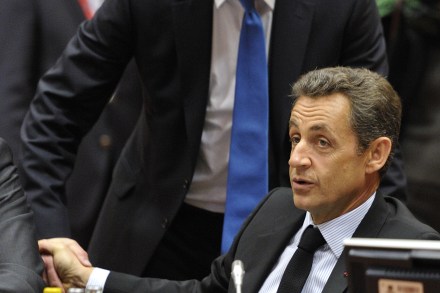
Nicolas Sarkozy is grudgingly admired by French socialists as a political fighter, capable of thriving even in the most desperate situation. David Cameron is coming to understand what they mean. It is the best of times and the worst of times between Paris and London. Two months ago, David Cameron and Nicolas Sarkozy assumed the victor’s garlands in Benghazi; today, they met at odds, if not yet in animosity, over the contested logic of ever closer union in Europe. Sarkozy appears to have got his wish: the 17 countries of the Eurozone will deepen their economic and political relations in an attempt to save the single currency — and with it, he hopes, France’s economic and political strength on the international stage.

Sarko’s renaissance

From our UK edition

When David Cameron sits down for lunch with Nicolas Sarkozy today, he is bound to ask his host how the presidential election is going. In response, President Sarkozy is likely to break into one his wide-faced smiles, and begin moving about energetically, as he tends to do when he is excited. Forget the polls that put Francois Hollande ahead in a two-way race. It is too early to tell what people really think and, crucially, it won't be a two-person race. It is a five-person, two-round election. And so far, Sarkozy is doing very well. Besides Sarkozy and Hollande, four other candidates could make a difference to the outcome: Marine Le Pen, François Bayrou, Eva Joly and Jean-Luc Mélenchon.

Tobin tactics

From our UK edition

The biggest bone of contention between the UK and its EU allies these days is the ‘Tobin tax’, the idea of levying a tax on financial transactions. To the UK this is folly. Unless it is levied globally, a tax will force business to move elsewhere. And there is a greater chance of Silvio Berlusconi being elected ECB chief than the Tobin tax being levied globally.   Based on the experiences of Sweden in the 1990s, the tax will achieve none of what its proponents believe it will — and at a considerable cost to Britain's and Europe's economy, as companies look to list elsewhere to avoid it. As Ryan Bourne from CPS points out, even the European Commission found that the tax may hurt the economy. The EC thought it could reduce Europe's GDP by up to 1.

How can Cameron protect our interests in Europe in the short term?

From our UK edition

Chatting to people in Brussels last week, I couldn't help feeling that David Cameron's EU problem is one of timing. The PM will probably be able to piece together a repatriation package that includes measures such as a withdrawal from the over-implemented Working Time Directive and a reduction in the EU budget. But none of this is likely to be enough for his party. Indeed, I suspect the budget won't be finalised until two minutes to midnight during the Lithuanian EU Presidency in 2013. Add to this the Tobin Tax, where there seems to be little leeway for the British government. Barosso, Merkel and Sarkozy are determined to introduce it, and even a Eurozone-only tax will harm the City.

Chagrin d’amour

From our UK edition

The horror of love: Nancy Mitford’s first fiancé was gay; her husband, Peter Rodd, was feckless, spendthrift and unsympathetic, and her great amour, Gaston Palewski, was endlessly unfaithful. She met him during the war in London and was in love with him for the rest of her life. Palewski was Charles de Gaulle’s right-hand man. He organised the French Resistance in London and commanded the Free French forces in East Africa. After the war, he was appointed De Gaulle’s chief of staff and he became known as the sinister éminence grise behind De Gaulle’s presidency. He and Nancy shared a love of France, beauty and jokes.

Britain: a European pariah?

From our UK edition

The British government has worked hard to counteract any perception that it is being marginalised in Europe. Before the election, the Tory party went around to different capitals to assuage any fears that may have existed. The message: despite the Conservative departure from the EPP, and their anti-Lisbon Treaty remonstrations, they would not be a problem. They would be businesslike. Once in power, David Cameron unleashed his charm, showcased his polyglot Deputy Prime Minister and sent William Hague out to make everyone feel that they had a partner not a pariah in London. Further, the energetic and amiable David Lidington replaced the combative Mark Francois as Europe Minister.

The new German Question

From our UK edition

The Eurocrisis has put Germany in a twofold position that it abhors. First, it has forced Germany into a much closer relationship with France than is comfortable. For German policymakers, the great thing about the post-enlargement EU, of 27 countries, was that they and France could not rule supreme — they needed to bring other states on board. Germany prefers it this way, as it dilutes France's dirigiste instincts. But recent events have reshaped Europe's decision-making system, recreating the pre-1973 model in which Paris and Berlin reigned. The second thing Berlin abhors is to dictate things to others. The catastrophes of the 20th Century forced Germany to remake itself. It is a million miles away from the helmet-wearing caricature.

The Italian domino effect

From our UK edition

For all the debate about Theresa May and border security, the big news has not been at Westminster today. Instead, people have been watching what is happening in Italy. For it is far from certain that Europe, or the Western world for that matter, has a bucket bigger enough to bail out a country that owes more than Greece, Ireland, Portugal and Spain do combined. As the New York Times reports, the European Central Bank is reluctant to step in and start buying Italian bonds because it fears that its previous bond buying efforts have simply enabled the Italians to avoid necessary reforms. It feels that only market pressure will make the Italians actually act. But this is a dangerous game to play because if Italy falls, France will be left teetering on the brink. BNP Paribas has 12.

The worst form of censorship

From our UK edition

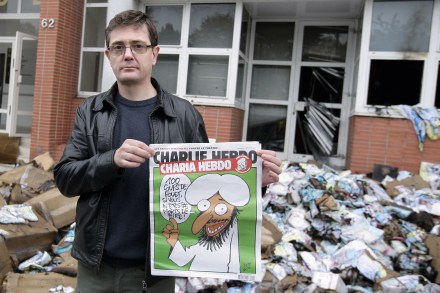
A week ago, the offices of the French satirical paper Charlie Hebdo were burned down. This attack came after it advertised the founder of Islam, Muhammad, as 'editor-in-chief' of the new issue. The move was a light-hearted response to the very serious matter of the election of an Islamist party (the Ennahda party) as the leading party in Tunisia (a result which, incidentally, appears not to have greatly bothered most European media). As the staff of Charlie Hebdo contemplated the ruins of their magazine, a much grander and richer magazine, Time, ran one of those pieces which have become familiar whenever there is an Islamist assault against free speech.

For Sarkozy, AAA stands for austerity

From our UK edition

Nicolas Sarkozy has served up his second austerity budget in as many months, in a bid to retain France's AAA credit rating. The president wants to cling on to those three precious letters at all costs. There are elections in six months' time and he isn’t doing well in the polls. Austerité Part Deux consists of tax increases and spending cuts totalling €7 billion, the government announced today. There will be increases in VAT and levies on large corporations, as well as curbs on increases in welfare spending. This savings programme follows the €11 billion one announced in August. Sarko's bid to get re-elected in 2012 is in disarray.

Cameron defends the IMF

From our UK edition

David Cameron's statement to the House of Commons on the Cannes summit was dominated by the question of increasing Britain's dues to the IMF. Cameron stressed that his message to the Eurozone countries was "sort yourselves out and then we will help". He also tried to offer reassurance that the IMF would not contribute to any eurozone-specific bailout fund. But after Ed Miliband's response, the Prime Minister tried to counter-attack. He began by saying of the Labour leader's speech, "I don't know who writes this rubbish" which drew one of Ed Balls' infamous calm down gestures. Cameron then offered an aggressive defence of the IMF, calling it an "organisation that rescued us from Labour in the 1970s".

The paradoxes of renegotiation

From our UK edition

David Rennie (aka The Economist's Bagehot) has an excellent column in this week's issue about the difficulties that Britain will face if she tries to repatriate powers from the EU. His main argument, having spoken to a number of senior German politicians and officials, is that if Britain holds up any treaty revisions in the hope of extracting concessions in return, then the other EU states will organise themselves without the UK. The Economist's former Brussels correspondent also makes the key point that the 10 countries that are outside of the euro are not natural allies for the UK – some, like Denmark, do not want to join the euro, but others such as Poland are keen.

Reuters: Papandreou to resign on Friday

From our UK edition

Reuters is reporting tonight that the Greek Prime Minister has agreed to resign on Friday. The news agency says that at a meeting Cabinet colleagues told George Papandreou that he had to resign for the good of the Socialist party and he agreed. It quotes one source saying, "He agreed to step down. It was very civilised, with no acrimony." Now, after Thursday’s experience, I suspect we’re all taking reports about what will, or will not, happen in Greece with a pinch of salt. But it does seem that the referendum is off, stymied in part by Merkel and Sarkozy, who have ridden roughshod over the idea of non-interference in another nation’s affairs. That is, I suppose, par for the course for the European project.

An assault on humour

From our UK edition

On Tuesday night the French satirical newspaper Charlie Hebdo was firebombed, presumably by Islamic terrorists, for naming the Prophet Mohammed its editor-in-chief. Nobody was hurt in the attack but the newspaper's offices have been destroyed. They still managed to see the light side, running a commentary saying "After Greece, save Charlie". The left-wing paper has never been as popular as its main rival Le Canard Enchaine but its outrageous cartoons and caricatures are a staple of French kiosk fronts. Naming Mohammed editor may be one of the more tame things the newspaper has done. But whether it is tasteless or not, the magazine's right to publish, insult and ridicule is fundamental to democracy. What's so amazing is how limited the reaction has been outside of France.