Foreign policy

America won’t be Europe’s policeman any more – but that’s good for Britain

From our UK edition

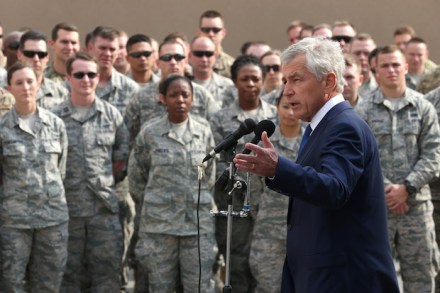
The US Army's cuts are good for Britain. They will force our European allies to think about their own defence and re-evaluate their policies. This will highlight the benefits of NATO’s guarantees and put the focus in the EU on what matters. For over twenty years European members of NATO have had a free ride. They've enjoyed the protection of a shield on land and a fleet at sea wherever needed, and have prospered as a result. Insurance without premiums has been one hell of a gift. It has also led to what Sir Humphrey would call 'courageous' assumptions. Just think what hasn't happened. The Baltic States haven't been invaded, Poland hasn't been cowed like Ukraine or Belarus, Japan hasn't feared China, oil hasn't hit $300 a barrel and piracy has had little impact on world trade.

Tory Europhobia cripples Britain’s attitude to the Ukrainian crisis

From our UK edition

Colin Freeman, the Telegraph's fine chief foreign correspondent, made a remarkable claim the other day that merits wider attention. What, he asked, was Britain's view on the crisis in Ukraine? The answer was revealing for many reasons, not the least of which being the extent to which eurosceptic myopia has, according to Freeman, caused Britain to misjudge the dramatic events unfolding in Kiev and elsewhere. According to Freeman: The depth of Euro-scepticism in Britain meant it cared little either way when Ukraine was gearing up last year to sign an EU trade agreement that would have brought it out of the Russian orbit. In Downing Street, the view was that Europe’s outer borders were already quite extended enough.

Assad will go – the question is how much blood will be spilled

From our UK edition

As we approach next week’s Geneva II Conference, the desire of the majority of Syrians, the moderate majority, for a just and sustainable resolution to the conflict in Syria must be addressed. At Sunday’s meeting of the ‘Friends of Syria’ Foreign Secretary William Hague, Secretary of State John Kerry, Foreign Minister Laurent Fabius and representatives from the Gulf States were of one voice in supporting President Jarba and the Syrian Opposition Coalition and were in full agreement that Assad has no future in Syria. Even privately the Russians and Iranians are increasingly coming to the realisation that it is a question of ‘when’ not ‘if’ Assad goes. The question is how much blood, innocent Syrian blood must be spilled between now and then.

In London, John Kerry Promotes World’s Smallest Syrian Whirlwind

From our UK edition

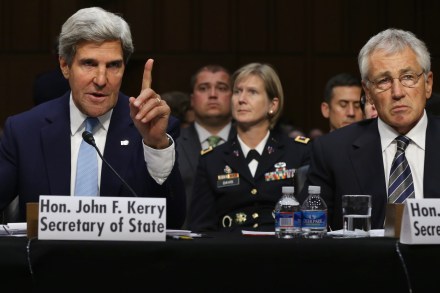
There's little need for people opposed to launching any kind of attack on Syria to expend much energy doing so when those tasked with making the case for reminding Bashar al-Assad that using chemical weapons is not something the international community can or will ignore are making such a bloody hash of the job. Here, for instance, is John Kerry, the US Secretary of State, reminding us all that the Americans really don't want to be taking action at all. They've been pushed into doing so, the result of both the Syrian regime's use of chemical weapons (why assume Assad's people are clever enough not to use them?) and by President Barack Obama's rhetoric about red lines and so on. But this is not where this American president would really like to be.

On Syria, parliament has voted to have no policy at all.

From our UK edition

A muddle and a cock-up. For all the talk of parliament reasserting itself, last night's vote on Syria showed a parliament that voted, twice, to oppose actions it actually supports. David Cameron has been humiliated but this was hardly a banner day for Ed Miliband either. The House of Commons has, for now, cut off its nose to spite its face. Perhaps surgery can repair the damage. Perhaps it can't. Because the longer and more deeply one contemplates yesterday's events the more evident it seems that there were no winners. The government motion was defeated. So was Labour's amendment. Since these motions were, in essence and in most practical respects, identical one wonders what on earth has happened.

David Cameron’s wars: How the PM learned to love precision bombing

From our UK edition

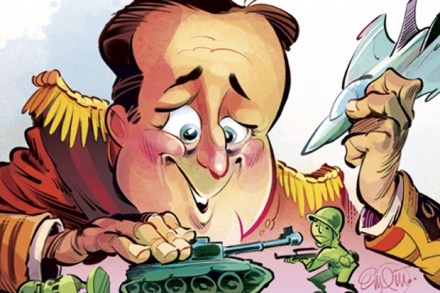
What is the one consolation for an MP who has beaten all their colleagues to the top job? It can hardly be the luxury of having your life, circle and income open to alternate snorts of envy and derision. Nor can it be the quagmire into which nearly all attempts to solve the nation’s domestic problems now fall.  Only one thing allows prime ministers of a country such as Britain to feel they have power. That is exercising it. And nothing exercises power more than deciding which wars to fight. In opposition, David Cameron did not much like the idea of war, and derided his colleagues for their admiration of Tony Blair. Yet in office — as Syria is revealing — he is treading a very similar path.

Syria is not Iraq (but at least the Iraq War had a clear objective)

From our UK edition

A decade ago, I was sure that going to war in Iraq was the right thing to do. I persisted in that belief for a long time too, well beyond the point at which most supporters of the decision to remove Saddam Hussein from power had recanted their past enthusiasm. The link between 9/11 and Iraq was quite apparent. Not because (despite what some mistaken people insisted) Saddam had any involvement in the atrocity but because removing tyrants and dictators seemed the best way of spreading the pacifying forces of commerce and democracy that might, in time, render Islamist extremism and terrorism obsolete. Why Iraq? Because it was there and because it could be done. Besides, there was unfinished business. Not just from 1991 but from 1998 and Operation Desert Fox as well.

Audio: Cameron, Clegg and Miliband on Syria and what their statements tell us

From our UK edition

David Cameron, Nick Clegg and Ed Miliband this afternoon gave statements on Britain's response to the use of chemical weapons in Syria. There were important similarities between the statements which are worth examining. Here is what we learned: 1. The action must be legal. Miliband told the cameras after the meeting that 'when I saw the Prime Minister this afternoon I said to him that we the Labour party would consider supporting international action, but only on the basis that it was legal'. Meanwhile Clegg and Cameron both insisted that the measures being considered were legal. Clegg said: 'Any steps we will take will have to be legal. This Government, this Coalition Government, of course is not going to act outside the remit of international law'. 2. The action must be proportionate.

Pressure grows for recall of Parliament on Syria

From our UK edition

David Cameron and his colleagues have made fairly carefully-worded pledges on whether or not Parliament should be consulted if the government starts planning for a military intervention in Syria. They could feasibly stick to the precise wording of those pledges this week without recalling MPs for a debate, but this will be a very difficult position to maintain as pressure is growing on all sides for a recall. Labour's Shadow Foreign Secretary Douglas Alexander said this evening: 'If, in reality, the Prime Minister is now considering military options involving UK personnel then of course I would expect him to seek a recall of Parliament and to come to the House of Commons and make his case in advance of a decision being made.' It's not just the opposition pushing for a debate, though.

War from the ground up and the limits of modern government?

From our UK edition

Emile Simpson's War from the Ground Up, hailed by no less an authority than Michael Howard (the historian, not the politician) as a Clausewitz-for-our-times, is on my "to read" list. So I was interested to discover that he's the latest subject of the Financial Times's reliably excellent "Lunch with the FT" feature. The whole article merits attention but among the good bits is this: As a young soldier in the Prussian army, Clausewitz fought at a time when the whole conception of conflict was being revolutionised. In the late 18th century, war was not unlimited: the great powers would try to defeat the enemy on the battlefield to gain an advantage but they rarely knocked out other states.

What did President Eisenhower say about the ‘military industrial complex’?

From our UK edition

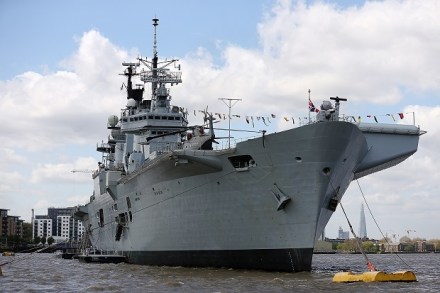
The ‘routine’ deployment of HMS Illustrious and two bustling frigates to Gibraltar, en route to the Gulf of Aden, has excited the morning papers. And the evacuation of the American consulate in Lahore gets lots of attention, following the closure of consulates and embassies across the Middle East last weekend. Neither story is the most interesting defence news item today. The Telegraph’s Con Coughlin reports that a huge defence contract could see the establishment of a permanent British military presence in the Gulf.

As an Anglican ex-bishop, I can tell you: Iran’s new president could be our best hope for peace

From our UK edition

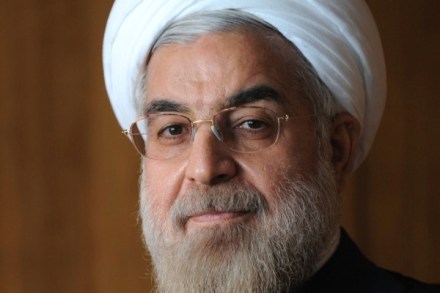
The installation of Hassan Rouhani as President of Iran next month heralds a new chapter for the country. It is clear that he was elected not only because it was felt — both at the highest levels and by the people — that he was best placed to negotiate with the West on Iran’s nuclear programme but also because he was the candidate most likely to appeal to reform-hungry Iranians. Rouhani is a protégé of the former president Muhammed Khatami, with whom I have had the chance to work. When he was President, I spent a whole day with him meeting political, civil society and religious leaders. Visiting him in Iran, I was always struck by his learning and his humility.

Does the EU really need 32 diplomats in Mozambique? And 44 in Barbados?

From our UK edition

The Prime Minister recently professed himself shocked at waste in the European Union. In particular, he was incensed by an EU-funded colouring book portraying the daily lives of ‘Mr and Mrs MEP’. It is appalling, certainly, but far from unusual. The propaganda that comes out of Brussels has long been full of such idiocies. Some may remember Captain Euro, a cartoon superhero who won sporting events for the honour of the single currency. But if the Prime Minister was looking for truly conspicuous examples of waste, he might turn his attention to the EU’s diplomatic service.

Foreign Policy Begins at Home, by Richard N. Haass – review

From our UK edition

A year or so after the ‘liberation’ of Iraq, an unnamed senior Bush administration official (later revealed to be Karl Rove) boasted: ‘We are an empire now, and when we act, we create our own reality.’ Yet a decade later, America’s power and influence has diminished considerably and the American people are suffering from foreign policy fatigue. The greenback is weak, the debt mountain is of Himalayan proportions, the credit rating is downgraded and economic growth is exceptionally sluggish for a nation that is four years out of a recession. The Chinese own more and more of the US debt and they show no inclination to heed Washington’s demands to revalue the yuan or end their cyber-espionage or prevent North Korea from using nuclear weapons.

Why can’t we be honest about Syria?

From our UK edition

Wouldn’t it be nice just once in a while to have a war in the -Middle East that wasn’t predicated on outright duplicitous nonsense? Just occasionally? There are, after all, any number of sincere reasons one could advance for intervention now in Syria. (If one thought that was a good idea, which as it happens one doesn’t.) One could say, for example, that Bashar Assad is a nasty murderous bastard, and that now he’s gained the upper hand he’s almost certain to indulge in some even nastier, more murderous murdering than he’s been enjoying hitherto. Pretty good, that. Pretty hard to argue against.

Just Give War A Chance: Obama’s Realpolitik Approach to the Syrian Civil War.

From our UK edition

Boris Johnson makes a strong case in today's Telegraph that even if the west wanted to intervene in the Syrian civil war the point at which is was plausible to do so has long since passed. The benefits of intervention no longer outweigh the risks. Meanwhile, Paul Goodman reiterates that there's no obvious British national interest in intervening. It is difficult to disagree with either analysis. Across the Atlantic, meanwhile, Andrew Sullivan is appalled by the Obama administration's decision to offer a modest quantity of modest weaponry to the Syrian opposition. This isn’t just unwise; it’s close to insane, he suggests. Don't be fooled into thinking this will shorten the conflict or save lives, he argues.

We need to talk about Syria

From our UK edition

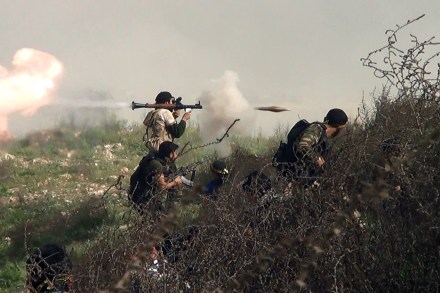
There can be little doubt that Britain is edging towards intervening in Syria. President Bashar Assad’s bloody ruthlessness seems to be paying off: his forces are retaking former rebel strongholds (the strategic town of Qusair was reclaimed this week) and the more he believes he can win, the less likely he is to negotiate. From a distance, there seems to be a case for the West to move quickly to help the rebels, and create a more level playing field. The aim would not be to prolong the conflict, but to make a negotiated peace settlement more likely. The Prime Minister made the case in the Commons this week.

Syria: What has changed to make western intervention a necessary or realistic policy?

From our UK edition

Peter Oborne is back in his David-Cameron-is-not-Disraeli-he's-mad mode this week. He accuses the Prime Minister of losing the plot over Syria. As always, the ghosts of Iraq stalk this debate even though the two problems are scarcely comparable. For that matter, I'm not sure it is fair on Cameron to suggest that, after Libya, the Prime Minister has become war-crazy. Yet I was also struck by something the estimable Tim Shipman reports today: Mr Hammond was recently present when backbenchers suggested that the Tory leadership could do with ‘a small war’ to distract attention from party discontent over Europe and gay marriage. ‘It had better be a very small war,’ the Defence Secretary said. Needless to say, this is a very silly way of talking. Even in jest.

Why Russia’s diplomats should learn swimming-pool etiquette

From our UK edition

The first couple of evenings there was just me and a middle-aged couple swimming decorously up and down. On the third day it changed. There were three more people, spread out at the shallow end. You would not have thought that an extra three people in a decent-sized pool could have caused such irritation and havoc. They contrived to occupy an inordinate amount of space and move around in a way that caused maximum disruption. Sometimes they swam widths; sometimes diagonals. They would stop and change direction without warning. Sometimes they floated with their toes under the rail, or disappeared under water and surfaced far too close for comfort. And when they swam, they swam splashily, in a clumsy, improvised way. The two other length-swimmers generally left before I did.

The Falklands victory

From our UK edition

A little rejoicing is now in order, but only a little. We may rejoice that the Falklands war did not end in a bloodbath at Port Stanley, that the Argentinians did not stage a last doomed defence of the islands’ capital. We may rejoice at the performance of our armed forces who have conducted themselves with great skill and courage and with as much humanity as is possible in war. We may rejoice that they achieved their objectives, for to have lost a war against the Argentinians would have been an unthinkable disaster. We may rejoice that the conflict has accelerated the decline of the British Labour party.