Foreign policy

ECR’s record so far

From our UK edition

The decision by David Cameron to pull the Tories out of the EPP and form the ECR was a victory of principle and party politics over pragmatism. While many Tory grassroots howled with joy, it is worth examining the practical consequences on Tory influence in the European Parliament – not to reverse the decision, but validate or disprove the oft-made charge that the decision has made the Tories impotent.   Let us eschew any discussion about the views of key members of the ECR on Jews; let us also not dwell on whether the Tories have cut themselves off from other centre-right leaders. The first point is a matter of opinion and the second is uncontestable. Let us instead focus on how the ECR has done its work in the legislature.

A welcome return of defence diplomacy

From our UK edition

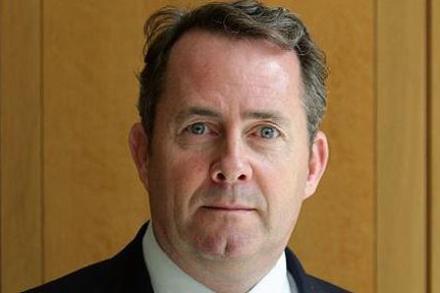
Shadow Defence Secretary Liam Fox has given an interview to the Sunday Express, where he talks about overcoming a sense of "colonial guilt" bestowed by revisionist historians and the need for a new government to forge defence links with commonwealth nations, such as Australia and New Zealand, but he also cited India and Saudi Arabia. They have a “strong appetite” for closer defence links with the UK, he argues.   Looking at variable defence relationships with countries like India, and non-NATO partners like Australia makes good sense. Nicolas Sarkozy has done the same – and even invited Indian troops to march down the Champs-Élysées last year on Bastille Day.

RIP EDA?

From our UK edition

If you listen to the Tory front bench, you’d be excused for believing that Rue des Drapiers, 17-23, Ixelles in Belgium houses a place of unadulterated anti-British evil. What lies at this address? The European Defence Agency (EDA), which the Tory party has pledged to pull Britain out of should they win power. Does this institution really aim to curtail Britain’s procurement of its own military hardware, and suborn future purchases to a common European plan? The truth is different and a lot more boring. The EDA does not procure anything for EU governments. It does not force the military to do anything. It exists to develop European defence capabilities in crisis management and to enhance European armaments cooperation.

Hague’s modern Realism

From our UK edition

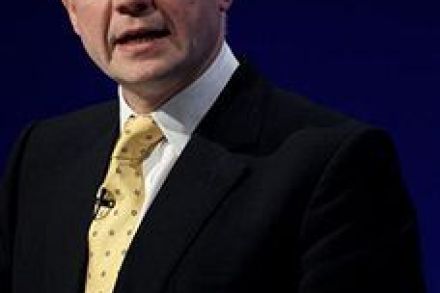
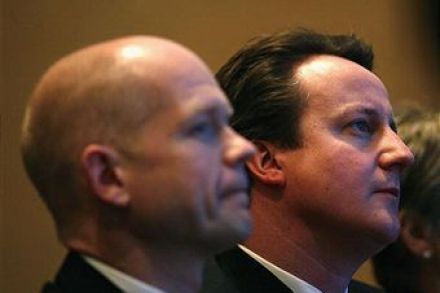
In a splurge of activity, William Hague gave both an interview to the FT and another foreign policy speech at RUSI outlining the views of a Conservative government. It was time for an update on Tory thinking, not least because David Cameron’s description of his policy as “liberal conservatism” and his unwillingness to march into a “massive euro bust-up” has had little effect. That is because a struggle over how to engage with the world continues to run beneath the party leader’s message of party unity.

Hague and Cameron are vindicated for leaving the EPP

From our UK edition

Daniel Hannan breaks the, sadly, not very surprising news that MEPs have voted overwhelmingly in favour of an EU Tobin tax. The margin: 536 to 80. Only the European Conservatives and Reformist group and a handful of radicals opposed the motion. The EPP, which describes itself as ‘centrist’, voted uniformly in favour. Cameron was right to withdraw from a grouping whose interests are at odds not only with British Conservatives but with Britain itself: a tax on all financial transactions would castrate the City. What does this division mean for Britain? On the face of it not a lot: anyone of the member governments could veto it. However, many European governments, including our own, seem alarmingly pro the measures.

Clegg: Heir to Thatcher?

From our UK edition

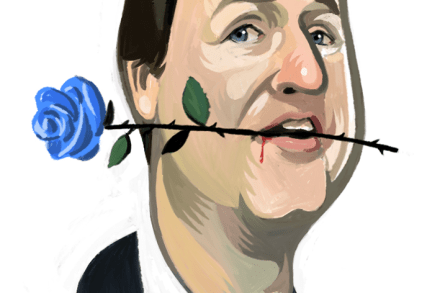
Nick Clegg has a blue rose in his mouth in tomorrow's Spectator, serenading readers - and showing his hidden Tory side. I have to say, he puts his heart into it. Not only does the Lib Dem leader say he'll end the structural deficit with 100 percent spending cuts (not the 20 percent tax rises, 80 percent cuts combo that the Tories advocate), but he even heaps praise in Lady Thatcher. More, he describes her as something of an inspiration: just as she took on vested interests in the 1980s, so he will take on the banks now.   Personally, I can't quite see the equivalence - and Clegg as the Heir to Thatcher is an image that I just can't conjure in my mind. But you can't blame him for trying.

Why we should give the Elgin Marbles back to Greece

From our UK edition

While we’re talking about countries on the brink, it’s worth taking a look at Greece – which has probably passed beyond it.  The government has published its package of austerity measures – aiming to reduce its deficit to 8.7 percent of GDP by the end of 2010 – and the markets are deciding what they think. But, in the meantime, the country faces strikes; the Euro is taking a pummeling; there are fears that problems may spread to countries like Portugal and Spain; and Greek foreign policy – particularly with regard to Macedonia and the Balkans – is stalling.  Nobody is through the woods yet. All this mean that George Papandreou's problems are also the EU's problem.

NATO – with or without the US?

From our UK edition

Over on Foreign Policy magazine, Andrew J Bacevich and I are going at each other. Topic: the nature of the transatlantic relationship. In the slipstream of US Defence Secretary Robert Gates’ lament about Europeans’ pacifist leanings, Professor Bacevich wrote a delightfully provocative piece arguing the US should leave NATO: "If NATO has a future, it will find that future back where the alliance began: in Europe. NATO's founding mission of guaranteeing the security of European democracies has lost none of its relevance. Although the Soviet threat has vanished, Russia remains. And Russia, even if no longer a military superpower, does not exactly qualify as a status quo country.

Wanted: The Hague Doctrine

From our UK edition

Out of the conference hall, and back on to the campaign trail, it would nice to see the Tories talking about the things which make them ready for government.  In particular, William Hague should make a foreign policy speech setting out what ideas he has, and which would merit him being referred to as the likely “greatest foreign secretary in a generation” by David Cameron. Hague’s past foreign policy speeches have been solid, but unspectacular. He ticks off the likely issues, talks about global trends and looks knowledgeable about the crises that could emerge. But there is no overaching concept, such David Miliband’s idea of Britain as a "global hub". There is no Hague Doctrine.

Let us help plucky Moldova

From our UK edition

Now that the post-Cold War era has ended it is hard to find small, inspirational states who seek to cement a new-found independence and yearn for what the West has to offer. Georgia looked like such a state until Russian aggression and Tblisi's behaviour put an end to the country's westward journey. Ukraine is too big, and too bolshy to count. Belarus is happy in Moscow's embrace.  But one country still fits the bill - Moldova. Sandwiched between Ukraine and Romania, Europe’s absolute poorest country is undergoing a new political spring after the recent elections. A new, Western-minded, youthful coalition government has replaced the old-style communists.

Defence debate? No thanks, we are British

From our UK edition

A few days ago, BBC Newsnight ran in effect the first live TV debate between the three parties when Secretary of State for Defence, Bob Ainsworth, Shadow Defence Secretary, Liam Fox, and Liberal Democrat defence spokesperson Nick Harvey shared a platform at the Imperial War museum. The programme was meant to focus on the main issues facing the future of British defence and security. In the event, it defaulted to a discussion about Afghanistan. Despite Jeremy Paxman’s prodding, many of the strategic questions were shirked as an audience of generals and airmen fought each other over which service had played a bigger role in the Afghan theatre, and the issue of veteran’s care took centre-stage. Liam Fox came out best, but you would expect that given who he was surrounded by.

Balkan business

From our UK edition

Catherine Ashton is visiting the Western Balkans this week on her first foreign trip as the EU's top diplomat. Though she has come in for criticism for not going somewhere more foreign, like the Middle East, her visit to the region is, in fact, timely and should be welcomed. The region has a few hurdles to clear on its journey away from the misery of the past and towards a more stable future. What can Ashton do to help that process along?  Well, her job is best described with historian Richard Neustadt's moniker "Persuader-in-Chief". She can cajole member-states, put issues on the EU's agenda and suggest ideas. That is probably it.

Bare Argentine aggression

From our UK edition

The Falklands are sovereign British territory and must be defended. The Times reports that Argentina’s President Kirchner has issued a decree (how quaintly autocratic) that all ships sailing in waters claimed by Argentina will require a permit. Presumably, that includes Desire Petroleum’s rig, which is en route to drill for an oil field comparable to the North Sea field. Over at Conservative Home, Daniel Hamilton points out that the decree contravenes international law and that Britain has a right to explore for oil unimpeded. So what are the Argentines up to? Nile Gardner explains: 'If the floundering, corrupt and increasingly unpopular government in Argentina is foolish enough to choose a confrontation, it must be prepared to face the consequences.

Because of Blair, Britain will now be shaped by the world

From our UK edition

It's striking how Tony Blair, the most successful election winner in Labour party history, is now so despised in the country that gave him three landslides. This matters politically, because he has - I fear - poisoned the cause of liberal interventionism. I look at this in my News of the World column today. Blair's Chicago speech of 1999 laid out what I regarded as a bold and coherent foreign policy case. It was time to stop letting genocides happen because they take place within the borders of sovereign states protected by the UN Security Council. I agreed with him when he said that, if the Rwandan genocide happened again, we would have a moral duty to act there. But if it happens again, what are the chances of Britain joining a multi-national coalition? Pretty close to zero.

Cutting drugs

From our UK edition

On Wednesday, Baroness Kinnock told the Lords that a number of Foreign Office departments had been hit been hit by an estimated £110 million budget shortfall, and that an anti-drug program in Kabul has been cut.  Coming after British dismay at President Karzai's desire to put Afghanistan's former (and widely-discredited) Interior Minister, Zarar Ahmad Moqbel, in charge of the country's anti-drug effort, the cuts are bound to cause concern. Afghanistan is the world's leading supplier of opiates, trafficked as opium, morphine and heroin. Over 90 percent of the heroin on the UK's streets originates from Afghanistan. Though cuts to counterterrorism programs are probably ill-advised, there is less reason to worry about the impact on any anti-drug efforts.

Ultimately, Brown is responsible for these anti-terror cuts

From our UK edition

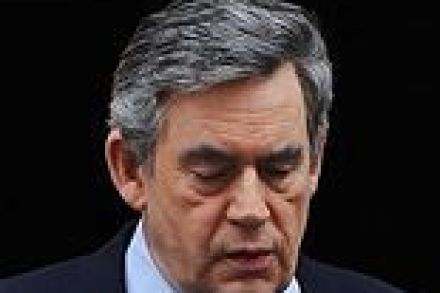
Seriousness comes naturally to Gordon Brown and yesterday he gave a speech detailing how Britain is defending itself by striking at the heart of the ‘crucible of terror’. What Brown has in seriousness of delivery, he lacks in realism. Britain has not fought for such a sustained period since the high-water mark of empire; but the ambitions of two prime ministers, and to be fair the severity of the threat that Britain faces, have outstripped resources; Britain is now completely over-extended. Hours after Brown’s speech, Baroness Kinnock divulged that anti-terror measures run by the Foreign Office have been cut – anti-narcotics campaigns in Afghanistan and de-radicalisation programmes in Pakistan.

“Conservative” silence on the British Council may undermine their value-promoting credentials

From our UK edition

The Conservative party’s security proposals have sparked a bit of debate, with many on the right concerned that democracy-promotion is getting short shrift. A lot of the attention has focused on Pauline Neville-Jones’ role in a future government, rather than anything the documents say. Though she is likely to take over Lord West’s job, rather than become the Prime Minister Cameron’s adviser -– in their security blueprint, the role of National Security Adviser is described as being taken up by “an official” –- many fear Dame Neville-Jones’ old-school, realist instincts will unduly influence Tory policy.

The growing threat of a military coup in Iraq

From our UK edition

Predictably, insurgency in Iraq has intensified as the March elections near; its scale and frequency was not predicted. Alastair Campbell beamed as a benevolent Uncle when talking about Iraq on Tuesday but Coalition diplomats fear for the democracy’s future.  British ambassador to Baghdad, John Jenkins, told the Chilcot inquiry: “Iraq faces a real possibility of a military coup...Although I think where we are at the moment is much better than where we thought it was going be back in  2004-05 you only need look at the history of Iraq to understand that a realistic threat still exists.

Diplomacy in action

From our UK edition

It's obviously excellent news that the five British sailors incarcerated by Iran on Monday night have been released without incident. Exacerbating already strained diplomatic tensions would have been an enormous temptation to the Iranian regime and David Miliband is right to commend their "professional" conduct in this matter. Miliband said:  "The Iranian authorities gave us every indication that they wanted to deal with this in a straightforward, consular way. It was never a political matter and I welcome the fact they have dealt with it in this professional way." The Foreign Secretary added, "it proves that diplomacy can work".

Iraq Inquiry Digest

From our UK edition

The Chilcot Inquiry is already proving a hundred times more interesting than anyone expected. My only worry is that people already view 2003 as ancient history. There is a tendency to think we already know what we only suspected. I was an agnostic on the intervention. I hoped in would work, but worried that it would be a disaster. I still think it is too early to tell whether it was.  What is certainly the case is that most British journalists failed to hold the government to account at the time. Even at the height of excitement about the Hutton Inquiry, much was missed by those being paid to cover the hearings.