Food

Titbits and Crumbs | 25 June 2011

From our UK edition

Rising Star Austere times breed entrepreneurship. Artisan Ben Keane was made redundant before training as a patissier and starting up his own product range trading as Yeast Bakery in East London. The Yeast line is small but perfectly formed (limited to just plain, almond and chocolate croissants). Made with Shipton Mill flour and French AOC Poitou-Charentes butter, these are the best pastries you’ll taste this side of the Channel: yeastbakery.com Scandilicious The craze for all things Scandinavian continues — the National Gallery is even running an exhibition, ‘Forests, Rocks, Torrents: Norwegian and Swiss Landscapes from the Lunde Collection’  (22 June until 18 September).

Digestif | 25 June 2011

From our UK edition

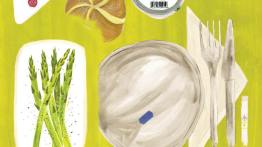
Hard-working, mercurial and good at playing mean – reformed hell-raiser Dominic West eats asparagus into the small hours with Imogen Lycett Green After nearly two decades hitting headlines as a womanising bachelor of the most hell-raising kind, Dominic West married the mother of three of his four children last year. Has family life brought tranquillity with it? ‘You must be joking,’ he screams, throwing his head back. ‘I am swamped by kids. The theatre is where the order is, the calm, the structure. Things begin on time. Family life is chaos. I have never been happier in my life but when it’s time to go to the theatre, I run out the door.

Summer recipes

From our UK edition

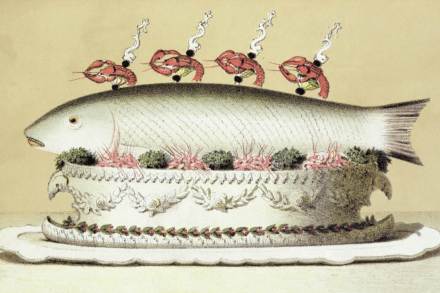
Scottish Lobster with mussels by Jeff Bland I’ve been lobster fishing off the Hebridean island of Tiree and it’s fantastic to see the creatures from the moment they come out of the water — they are incredibly beautiful, shiny and black. I truly believe that Scottish lobsters are the best in the world due to the extremely low temperatures, and with them being so delicious, you can enhance the flavours in the kitchen with some simple ingredients. Serves 2. 1 kg Scottish lobster 500g mussels (I use Loch Fyne) 250g leeks 250g wild or cultivated mushrooms 10 Ayrshire potatoes 1 glass white wine ¼ l fish stock 100g butter 50g chopped shallots Remove the coral from the head of the lobster. Cook lobster in boiling salted water for eight minutes, then remove from shell.

Feverish Fairy

From our UK edition

No prizes for guessing who wrote this, or what the drink is: ‘There was very little left of it [in his hipflask] and one cup of it took the place of the evening papers, of all the old evenings in the cafés, of all the chestnut trees that would be in bloom now in this month, of the great slow horses of the outer boulevards, of bookshops, and kiosks, and of galleries, and of the Parc Montsouris, of the Stade Buffalo, and of the Butte Chaumont, of Foyet’s old hotel, and of being able to relax and read in the evening, of all the old things he had enjoyed and forgotten and that came back to him when he tasted that opaque, bitter, tongue numbing, brain warming, stomach warming, idea changing liquid alchemy.

Vastly entertaining

From our UK edition

It may not be quite true that the next best thing to eating good food is reading about it, but undeniably food writing has its considerable pleasures. You’ve got it all there: sex and sensuality (the link between the appetites hardly needs spelling out), social history, the loving acquaintance with ingredients . . . and recipes. The Penguin Great Food series — a selection of 20 delightful, lightweight (we’re talking wrist-strain, not subject), prettily jacketed works by the finest food writers — is a feat. Just selecting 20 authors from the 17th century to now is difficult in itself. Do you go for good prose (Alice B.

Bookends: The voice of the lobster

From our UK edition

In existence for over 250 millions years, lobsters come in two distinct varieties, ‘clawed and clawless’. Human predators tend to the flawed and clueless as they overfish and — since lobsters must be cooked live — kill them heartlessly. In existence for over 250 millions years, lobsters come in two distinct varieties, ‘clawed and clawless’. Human predators tend to the flawed and clueless as they overfish and — since lobsters must be cooked live — kill them heartlessly. Part of ‘the Edible Series’, dedicated to the global history of one type of ingredient, Lobster by Elisabeth Townsend (Reaktion Books, £9.

Heavenly simplicity

From our UK edition

Borgo Egnazia in Puglia opened last year and immediately gained a reputation as one of Europe’s most spectacular holiday resorts, not least thanks to its cookery school under the tutelage of the resort’s executive chef, Mario Musoni. Until recently Musoni had his own Michelin-starred restaurant outside Milan. When I asked why he didn’t seem unhappy to be uprooted from his hometown relatively late in life, he grinned and replied: ‘This is where the best food is. Milan’s vegetables come from down here. Puglia is the garden of Italy.’ Indeed, Borgo Egnazia is surrounded by orchards, olive groves and vegetables thrusting up from rich soil.

Pie in the Sky

From our UK edition

Airline food does not enjoy the best of reputations, but with a new breed of on-board cooking and menu selection systems now emerging, its future could be a journey back to basics – with boiled egg and soldiers. Dan Jellinek reports Airline food has long had a poor reputation — odd-tasting, odd-sized and arriving at odd times. In recent years, however, innovations in preparation and ingredients have seen huge improvements, not only towards the front of planes, but in the cheap seats where most of us travel as well. To understand the challenges faced by airlines in serving any halfway decent food at all to passengers, you have to grasp the logistics.

The Cure | 9 April 2011

From our UK edition

On the continent, the creators of cured meats can draw on a tradition imbued in the genes (in the case of Parma ham, for example) since the time of Hannibal. Can a much newer generation of British charcutiers possibly hope to compete, boosted by the surge of interest in hand-made food with clear, local provenance and with a potent mix of bloody-minded determination and passion? Of course, there has long been a tradition of British hams — think Cumbrian or Carmarthen — but somehow they’ve never quite enjoyed the recognition and kudos of their European counterparts. But now at last we’re seeing British coppa (air-dried pork collar) and culatello (taken, as Antonio Carluccio once put it, from the plumpest part of the arse) jostling for position.

Hidden gem

From our UK edition

Britain is a country that loves its imports: its BMWs, its Egyptian cotton, its Russian vodka and its hardworking Polish builders. And with our history of imperialism and exploration, our palates have developed a taste for a smorgasbord of flavours. We delight in the Kama Sutra pleasures of Indian food in Brick Lane, Birmingham or even in the wilds of Scotland in places such as Lossiemouth. We have Cantonese food; Szechuan food; Vietnamese food; Japanese noodle bars; Thai restaurants; Greek restaurants and now Polish restaurants as well. Over the past 15 years or so, a British food revolution has also taken place, with the consequence that we are forever in the quest for the Holy Grail of new flavours or seasonings or food experiences.

Streets ahead?

From our UK edition

The citizens of Stockbridge in Hampshire must be surprised and delighted that their high street was voted Best Foodie Street in Britain in Google’s inaugural Street View Awards. Perhaps not overly surprised, however, judging by a sheepish comment from Google’s press office to the effect that local gastro-guerrillas ‘went to a lot of effort to get interest up and increase their numbers’. As if to dispel any doubts on the matter, the chairman of Stockbridge Parish Council, in her victory address in the Andover Advertiser offered, ‘congratulations to everyone involved in raising people’s awareness of this competition’.

Keeping it real | 9 April 2011

From our UK edition

Italian food is about simplicity and seasonality, and in Sicily spring brings the fragrant lemon harvest – eagerly awaited in one corner of Devon. Hattie Ellis takes a trip to the mother country with a pioneer of real lemonade Do you remember when lemonade used to be just that harshly fizzy clear stuff you bought in big plastic bottles? Now you can find a fragrant, sweetly-sharp drink that’s the soft yellow of a summer’s evening. Often called Sicilian lemonade, it is similar to what you’d make at home. Add a slosh of gin, vodka or rum and it’s something else again. One of the best Sicilian lemonades is made by Luscombe Drinks in Devon, the pioneer of the trend, starting back in 1997.

Blonde Bombshell

From our UK edition

The Czech town of Plzeň is the birthplace of the world’s first golden lager, and both are elegant, spicy and hugely enjoyable. Adrian Tierney-Jones visits brewing Disneyland Lunchtime at Na Parkánu, a restaurant attached to the Museum of Brewing in Plzeň (or Pilsen). A glass of Pilsner Urquell, served unfiltered and unpasteurised from a tank beneath the bar: graceful and golden, elegant, spicy, toasty with a bitter finish. On my plate: a massive joint of pork knee, skin glistening with fat, wispy strands of steam carrying the mouth-watering aroma of the cooked meat upwards; the waitress then plonks down the accompanying bowl of horseradish, mustard and spicy cabbage. I also have a helping of ‘hairy’ dumplings (see recipe).

Sugar daddy

From our UK edition

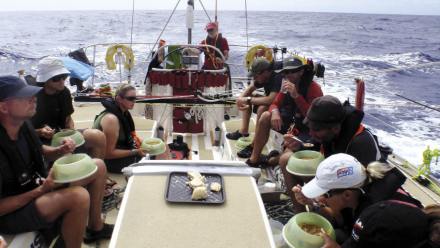
Rum is a relatively young drink – 15th century – and still under-appreciated, but at its best can match any whisky or brandy for complexity and sophistication. Peter Grogan enters the darkness A long time ago a knuckle-dragging ancestor of mine left a gourd-ful of palm sugar out in the rain. Trolling along, the right little speck of yeast eventually came to rest in it, causing the sugar to spontaneously ferment. The result probably didn’t taste too good but it had something that helped the day pass in a pleasant blur. Fast-forward 10,000 years — at a guess — and that same something can apparently be had from mixing some mashed-up tinned fruit with water, bread (for the yeast), sugar and a dollop of ketchup (to improve the taste) in a zip-loc bag.

Time is of the essence

From our UK edition

We move through silent streets walled by shuttered houses and closed stores. I know that the French leave en masse in August, but in Cognac the ritual seems also to extend to wintertime. Even the landscape seems somnambulant. Skeletal vines whose cordons point crabbed fingers towards where the sun should be line the roadsides. Yet there is life. Something is stirring in the region’s black, mould-covered, thick-walled chais. At the bottom of a set of worn stone steps in Remy-Martin’s Domaine de Grollet is a collection of large and clearly ancient casks. It is here where the blend of Cognacs which comprise the house’s iconic prestige blend Louis XIII spends the final four years of its life. A sample is drawn, glasses are filled.

Bookends: The last laugh

From our UK edition

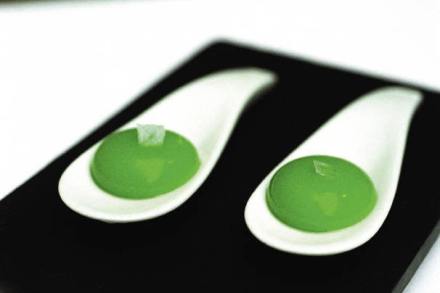
In July, the world’s most famous restaurant, elBulli, closes, to reopen in 2014 as a ‘creative centre’. Rough luck on the million-odd people who try for one of 8,000 reservations a year. It’s also a blow for the eponymous young cooks of Lisa Abend’s The Sorcerer’s Apprentices (Simon & Schuster, £18.99), the 45 stagiaires who labour in Ferran Adria’s kitchen for a season in the hope of sharing in the magic. Ferran, you see, is no mere cook. With him, ‘hot turns into cold, sweet into savoury, solid into liquid or air’. In July, the world’s most famous restaurant, elBulli, closes, to reopen in 2014 as a ‘creative centre’.

Labour’s inflation pitch

From our UK edition

Curiouser and curiouser. We in Coffee House have been saying for some time now that – whatever Mervyn King thinks – Britain has the worst inflation in the Western World apart from Greece. An OECD report out today shows we’ve got it worse than most eastern countries too. Korea, Turkey and Estonia are the only eastern nations with higher inflation: But what strikes me most about today is that food prices are soaring here, to an extent far worse than the rest of the world. This is what voters notice most: putting food on the table is very expensive. As Micawber might put it: annual food price inflation 6.3 per cent, annual wage inflation 2.5 per cent, result: misery. And plenty of it.

A war of nutrition

From our UK edition

The long summer that led up to the last days of peace in Europe in 1939 — the vigil of the Nazi assault on Poland on 1 September and the ensuing Phoney War — gave little hint of the storm to come. The long summer that led up to the last days of peace in Europe in 1939 — the vigil of the Nazi assault on Poland on 1 September and the ensuing Phoney War — gave little hint of the storm to come. As German troops engulfed Poland, however, the Nazi science of massacre was put to the test. Within two months of Hitler’s invasion, an estimated 5,000 Jews were murdered behind the Polish lines. Millions were subsequently starved to death. Food is the central focus of this grimly absorbing enquiry into the second world war.