Film

Moral maze

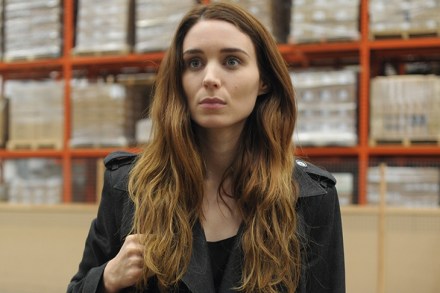
Una is a psychological drama about a woman who was abused by a man when she was 12, and who confronts him 15 years later, and it’s a hoot. I’m toying with you. Of course it isn’t. It’s disquieting. It’s disturbing. It’s difficult. It’s 90 minutes of uncomfortably shifting in your chair and wishing you were at the latest heist caper that doesn’t make sense. But it is also compelling, up to a point, and your responses will be so complicated that you won’t know where to start unpicking them. Or how. The film is based on the play Blackbird by the Scottish playwright David Harrower, which has won multiple awards and starred Jeff Daniels and Michelle Williams on Broadway.
Losing the plot | 24 August 2017

From our UK edition

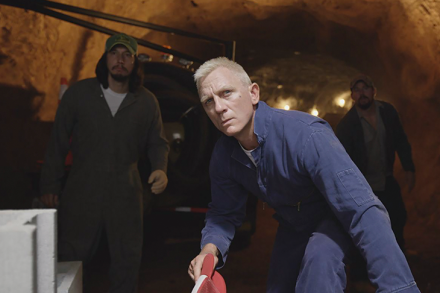
Steven Soderbergh’s Logan Lucky is a heist caper that, to be fair, does what it says on the can. There is a heist. It is a caper. It also features an all-star cast and is said to be ‘the perfect summer entertainment’, which may or may not wash, depending on whether you believe the enjoyment of films is seasonally variable, or an average film is an average film, whatever the weather. It’s USP is that it’s ‘a red-necked Oceans’ or ‘a hillbilly Oceans’ so, in other words, it’s a riff on Oceans. Soderbergh directed the Ocean’s franchise, so it is hardly a stretch for him. Or us, for that matter.

In praise of Netflix

From our UK edition

All this week I have been trying, with considerable success, to avoid being bludgeoned by TV programmes telling me in various sensitive and imaginative ways just how brilliant, heroic and historically maligned homosexual men are. I achieved this by sticking to Netflix. One of the great things about Netflix (whose annual subscription costs just half the BBC licence fee, by the way) is that though it’s probably run by lefties it doesn’t try to ram its politics down your throat. Maybe this is one reason why its 100 million-plus subscribers are so much less resentful than BBC viewers: they’re being offered choice, variety, entertainment — not worthiness, race, gender quotas and compulsory indoctrination.

Tricky, and slightly sicky

From our UK edition

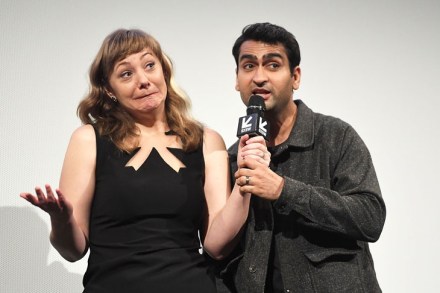
The Big Sick is a rom-com that’s smarter than most rom-coms, which isn’t saying much, admittedly. It stars a Muslim man from a Pakistani background as the romantic lead, which has to be all to the good, and one character does pinpoint exactly what’s wrong with the internet: ‘You go online and they hate Forrest Gump… best fucking movie ever!’ (So true.) But at two hours it is overlong — Christopher Nolan had evacuated Dunkirk in that time, let’s remember — and it does leave a bad taste in the mouth. (Big sick, bad taste. Although, in fact, it’s not that kind of sick. This film may have the worst title of all time.

Ivory towers

From our UK edition

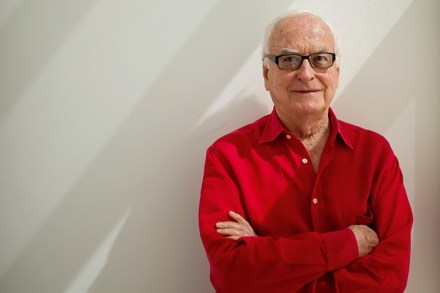
Great novels rarely make great movies, but for half a century one director has been showing all the others how it’s done. James Ivory has worked his magic on all sorts of authors, from Kazuo Ishiguro to Henry James, and this week the finest of all his adaptations returns to the big screen. ‘A film that’s almost two and a half hours long, non-stop talking, set in the Edwardian era — who would have thought that would be such a huge success?’ says Ivory, on the phone from his home in upstate New York. Yet somehow, this taciturn director turned a wordy novel by E.M. Forster into a gripping drama. How did he do it? By creating the ideal setting, meticulous in every detail, then stepping back and giving his creative colleagues room to breathe.

Visual, visceral, confusing

From our UK edition

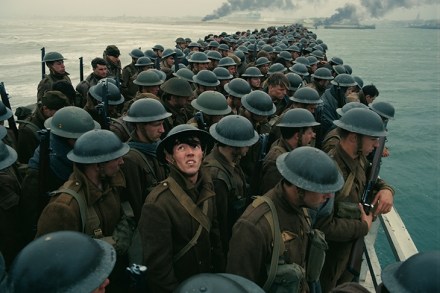
Christopher Nolan’s Dunkirk has already been described as ‘a masterpiece’ and ‘a glorious, breathtakingly vivid triumph’, but we need to be cautious. Look at all the fuss about Baby Driver and what an average film that turned out to be. This certainly isn’t your regular war film — no one, for example, says ‘it’s quiet’ and is then told: ‘yes, too damned quiet…’ — but in wanting to deliver a visceral, visual experience, without the hindrance of exposition or back stories, the narrative is often confusing and doesn’t add up to much emotionally.

Do not be afraid

From our UK edition

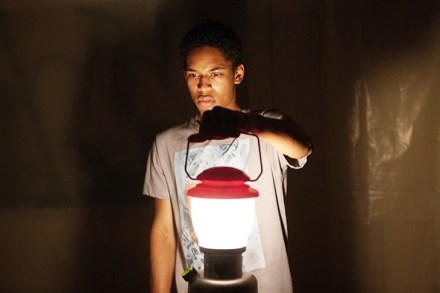
It Comes at Night is a horror film and I can’t say horror is my favourite genre. In fact, as far as I can see, I haven’t reviewed a horror film since 2009 (Paranormal Activity; scared the bejeezus out of me). But I’d read that this was clever, engrossing and original, so why not? My bejeezus can take it once every eight years, surely. So we were braced, my bejeezus and I, but rather unnecessarily, as it turned out. This is not especially scary (thankfully, but even so) and, what is more, the storytelling is so spare that I never understood what ‘it’ was and whether it did come at night or at any other time. Mid-afternoon, say. The film is written and directed by Trey Edward Shults, whose 2016 breakthrough film, Krisha, was terrific (look it up).

Match made in heaven | 6 July 2017

From our UK edition

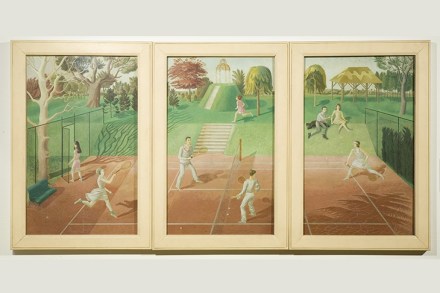
Tennis is best played with a wooden racket on a shady lawn somewhere close to Dorking. There is no need for trainers, an umpire, or a scoreboard. No need for rules at all. After Wimbledon, the tea-and-jam, grass-stained, Sunday-afternoon scenario from A Room with a View is the only one to emulate. In 1908, when E.M. Forster published his novel, lawn tennis was not yet 50 years old. Although the origins of the game reach back to the 12th century, the version played by Miss Honeychurch and Reverend Beebe and most of us today was said to have been pioneered on a croquet lawn in Edgbaston in 1859.

Ken Loach’s Brexit warning falls flat

From our UK edition

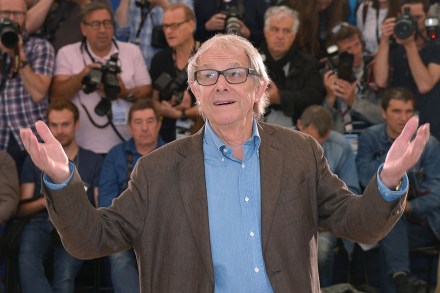
Ken Loach is no fan of Brexit. The veteran filmmaker and Corbynista luvvie warned last year that the referendum was a 'dangerous, dangerous moment' for the country. Now, Loach is dishing out even more doom and gloom, saying that leaving the EU could mean bad news for the British film industry. Loach said that a messy Brexit deal might lead to directors thinking they would 'not bother' making films in Britain. Loach also said that if freedom of movement stops, life could get trickier for moviemakers. Mr S thinks that someone should tell Loach's friend: Jeremy Corbyn. After all, the Labour leader has promised that freedom of movement will end after Brexit if he becomes PM.

Car trouble

From our UK edition

Edgar Wright’s Baby Driver is an action, heist, car-chase film that is said to reinvent the action, heist, car-chase film. But as you can’t have an action, heist, car-chase film without action, heists and car chases, you may wish to ask yourself: how much do I like action, heist, car-chase films in the first instance? And that’s the bottom line, I suppose. This action, heist, car-chase film is also about the soundtrack, as the story is told through the… ears? of Baby (Ansel Elgort), a getaway driver who doesn’t just enjoy music, but needs it. He rarely takes his earbuds out. He can’t perform unless he’s listening to Blur, Beck, the Beach Boys, T. Rex, the Commodores.

Brief encounter | 22 June 2017

From our UK edition

How do you follow a film like Shoah? The nine-hour Holocaust documentary, released in 1985 after 11 years of work and 350 hours of interviews — with survivors and perpetrators, saviours and collaborators, historians and bystanders — is considered one of the greatest films ever made. For decades, director Claude Lanzmann kept returning to the subject, raking over the same material, finding it impossible, maybe indecent, to move on. Of the five documentaries he has made since Shoah, four were substantial footnotes to the original, extended — and often extraordinary — out-takes from the acres of unused footage. But Lanzmann did have an answer to the question of what to do next — even though it sounded like a joke.

Non-magnetic north

From our UK edition

Oh, Hampstead, what did you do to deserve Hampstead? Bet you wish the film-makers had pressed on down Fitzjohn’s Avenue and made Swiss Cottage, say. On the other hand, maybe you did have it coming, especially as I once overheard one mother say to another in the Coffee Cup: ‘James? He had so much homework we had to send him to boarding school.’ That always makes me feel better, given I’ll never be able to afford to live there. This plainly wants to do for Hampstead what Notting Hill did for Notting Hill and Manhattan did for Manhattan and Munich… nope, we’ll stop there. But it’s the sort of ‘love letter’ that should have been scrunched up, thrown in the bin and never mentioned again.

1944 and all that

From our UK edition

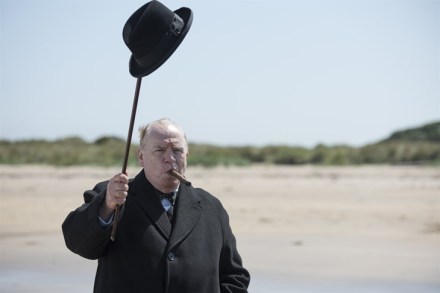
The star of this film is the music, composed by Lorne Balfe. I really liked it, which was just as well, because it plays for about half the 98 minutes, while a superannuated Churchill, played by Brian Cox, moons about on beaches, deeply penitent for his catastrophic authorisation of the Gallipoli disaster in which a quarter of a million Allied troops lost their lives on the beaches of Turkey. It is the summer of 1944, and an apparently almost pacifist Churchill is timidly begging Eisenhower and Montgomery not to go ahead with the Normandy landings. He dreads the loss of life, you see. Not being a Churchill scholar, indeed being, I must admit, Churchill-allergic, I have no idea if this is true or false.

When will I ever learn?

From our UK edition

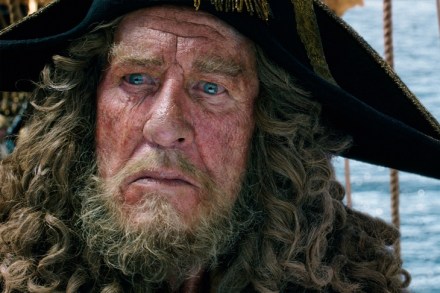
Oh, Pirates of the Caribbean, I have given you every chance down the years. Every chance. I am always hopeful. This may be the one that has a proper story I can follow, I have told myself. This may be the one in which Johnny Depp even bothers to act, I have told myself. This may be the one that doesn’t make me wish I’d stayed home where I could be doing something more interesting and fulfilling, like sorting laundry or cleaning out the fridge. When will I ever learn? When? Pirates, you’re on film five now, and I don’t understand. Well, I do and I don’t. You’re one of those blockbuster franchises that certain audiences will wish to see regardless, as perplexing as that is. But does this mean you don’t even have to try to make it any good?

Impeccable filmmaking from Michael Haneke: Happy End reviewed

From our UK edition

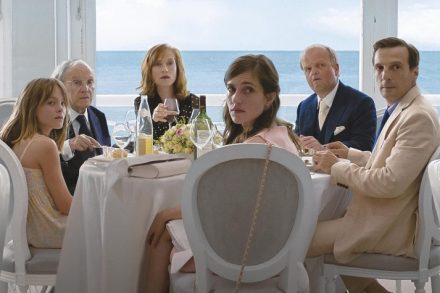
The title is ironic. The end is not happy for Michael Haneke's bourgeois French family, whose hamper of festering secrets the Austrian director unpacks with glee. His twelfth feature, which is vying for an unprecedented third Palme d’Or at this year’s Cannes Film Festival, features an acting masterclass from French veteran Jean-Louis Trintignant as Georges Laurent, a dotty patriarch who has lost the will to live. For added piquancy Haneke has set his latest tale in the northern French city of Calais where po-faced immigrants stroll silently about the streets - their lack of menace no doubt intended as a counterpoint to the dastardly doings of the Laurent family.

Amusing, waspish take-down of Jean-Luc Godard: Redoubtable reviewed

From our UK edition

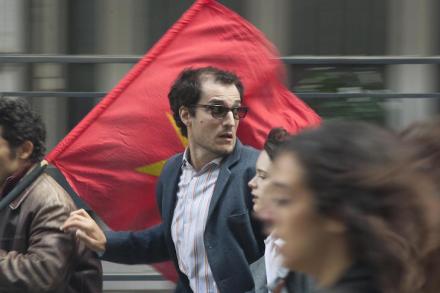
Jean-Luc Godard’s famous dictum was: 'all you need for a movie is a girl and a gun'. In Redoubtable, French director Michel Hazanavicius’s jaunty biopic of Godard, set during the student insurrection of 1968, which premièred yesterday at Cannes Film Festival, there is plenty of the first and none of the latter. The girl is Anne Wiazemsky, Godard’s teenage bride and one-time muse, who wrote an elegant memoir of their time together, Un an après, which is the basis for Hazanavicius’s film. Wiazemsky’s role is taken by French-English actress Stacy Martin who reveals almost as much flesh here as she did in Lars von Trier’s Nymphomaniac.

Coffee, mist and brilliance: Sky Atlantic’s new series of Twin Peaks reviewed

From our UK edition

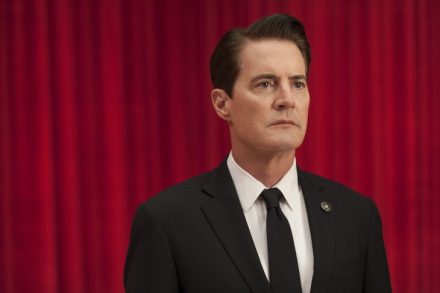
So much coffee. Just like in the original, the characters in the new series of Twin Peaks get through so much coffee. Major characters huddle around it in diners. Background characters raise mugs to their lips. Entire scenes revolve around the stuff. There’s just so much coffee. And, I’m proud to say, I played my part too. I knocked off an entire cafetière so that I’d be awake for the two-part opening to the series, which aired at 2am this morning on Sky Atlantic. And I finished another cafetière to write this post. This is not an occasion I was going to miss. Not only is the return of Twin Peaks, after an absence of 26 years, a big deal in itself; it’s also happening at just the right time.

League of nations

From our UK edition

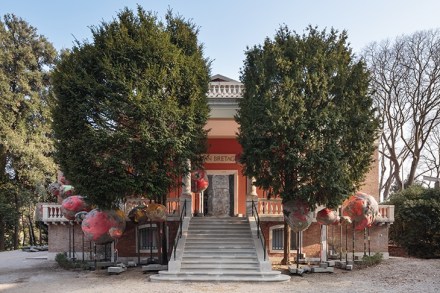
‘Are you enjoying the Biennale?’ is a question one is often asked while patrolling the winding paths of the Giardini and the endless rooms of the Arsenale. It is not easy to answer. The whole affair is so huge, so diverse and yet — in many ways — so monotonous. Like the EU, an organisation with which it has something in common, La Biennale di Venezia believes in the principle of subsidiarity. Therefore individual nations are allowed to do what they like within their own pavilions. However, there are also strong homogenising forces at work — so much of what is on view in the national pavilions and elsewhere tends to fall into certain approved categories: notably video art, photography (often rather dull) and messy installation.

No laughing matter | 18 May 2017

From our UK edition

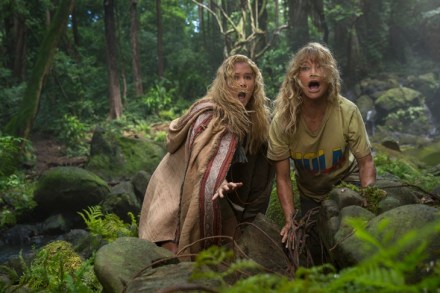
We love Amy Schumer. Fact. And we love Goldie Hawn. Fact. But can we love Snatched? Not so much, if at all. Perhaps the addition of ‘if at all’ is unnecessary, and rather mean. But it’s done now. There are a couple of decent jokes, it’s true, but they are 1) all in the trailer and 2) happen within the first ten minutes, after which there is every chance you will 1) lose the will to live and 2) wish you’d opted for Guy Ritchie’s King Arthur. But, as we are so often warned, do be careful what you wish for. From what I’ve heard, King Arthur may not only make you lose the will to live but may also make you regret ever having lived. (Too much again? Done now.

Farming today

From our UK edition

There are bigger entities landing at your local multiplex this week. An ancient indestructible franchise is re-re-(re-)booted in Alien: Covenant. In Jawbone, it’s seconds out for yet another boxing movie. Miss Sloane is that non-staple of the repertoire, a glossy feminist thriller about public relations. Something there for almost everyone. But there’s also a low-budget British film called The Levelling, which has a very Brexit-y theme — the travails of the farming industry — so let’s pull on our wellies and have a gander. The title alludes to the Somerset Levels, in the news in 2014 when rivers rose to drown the nether parts of southern England. ‘Save our village, dredge the river,’ says a forlorn sign in an inert wintry landscape.