Film

What a rabbit hole this film takes you down

Madfabulous is a biopic of Henry Paget, the fifth Marquess of Anglesey, who was probably mad and definitely fabulous. His prodigalities in jewels and clothing were enormous. He perfumed his automobile so it belched violets. He was partial to wearing women’s clothing. He set up his own theatre company to showcase his ‘butterfly dance’. Needless to say, he burned through his family’s fortune in a few short years. How could all this not be wonderful on screen? Who doesn’t wish for an automobile belching violets? Alas, the film leans towards the pedestrian but, still, it will send you down a most satisfying rabbit hole. Look him up. The spit of Frank Zappa, right? And this is the late 1800s we are talking about. Respect.

Derek Jacobi on playing Lucian Freud

Lucian Freud almost had a second career in the cinema. He acted as an extra in a couple of films during the early 1940s; the only one in which he made the final cut was a farce starring the ukulele-playing comedian George Formby in which his 19-year-old face can be seen peering out of the background in one scene. Years later, Lucian claimed, John Huston asked him if he’d like to play the part of his grandfather Sigmund in a biographical screen drama from 1962 entitled Freud: The Secret Passion (which had, at one point, a script by Jean-Paul Sartre). Eventually Montgomery Clift was cast instead, which was just as well because Freud was definitely an observer rather than a performer.

What have they done to The Devil Wears Prada?

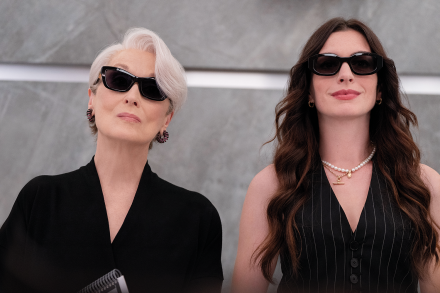
The Devil Wears Prada (2006) is one of those films which, if chanced upon when flicking television channels, I will always stick with for a bit. It has zing. It has bite. It has memorable lines that I can remember without having to look them up. (‘Are we going to a hideous skirt convention?’) But mostly it has Meryl Streep as Miranda Priestly, the wonderfully toxic editor-in-chief of Runway fashion magazine. She is still terrific. But while the landscape has moved on, the characters have remained the same and halfway through I started to drift. Another blow is that it’s become more sentimental and less satirical. In other words – and I hate to be the one to say it – it’s not as good as the original. Where are we, 20 years on?

Terrifically atmospheric: Rose of Nevada reviewed

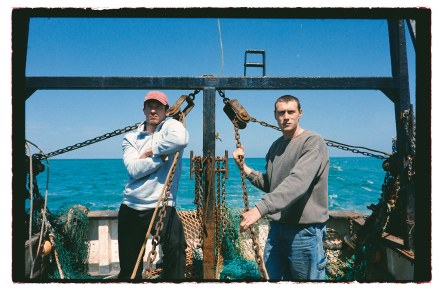
Rose of Nevada is the third film in Mark Jenkin’s Cornish trilogy and if you have seen the first two (Bait, Enys Men) you will have booked your cinema ticket already. Rooted in characters shaped by the histories and tensions of Cornwall’s fishing folk, Jenkin’s film-making is uniquely tactile, textured and sensory. It has been said you can’t watch one of his features without feeling the rust on your hands and the salt in your hair. I would even add that it may be a while before you find your land-legs again.

Glenrothan is painfully bad

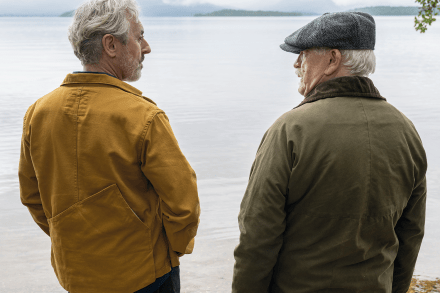
Glenrothan is Brian Cox’s directorial debut and I wish there were a nicer way of putting it but, Brian: please, please, don’t give up the day job. The screenplay, meanwhile, is by David Ashton, whose only previous film credit seems to be Freddie as F.R.O.7  (1992), a James Bond spoof starring a six foot animated frog voiced by Ben Kingsley. (‘Toadally awful’ is the first comment on IMDb.) The only thing that might actually make you laugh is the foreshadowing The film stars Cox and Alex Cumming as estranged brothers Sandy and Donal and here’s what you need to know about the pair: 40 years ago Donal left Sandy and the family business (a whisky distillery in Glenrothan) for America and hasn’t been in touch since.

A hypnotic new adaptation of The Stranger

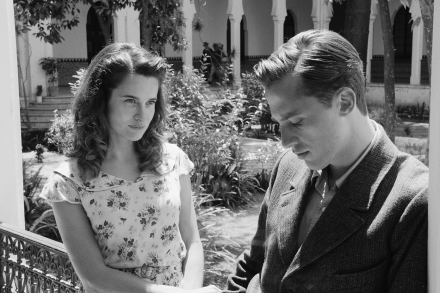
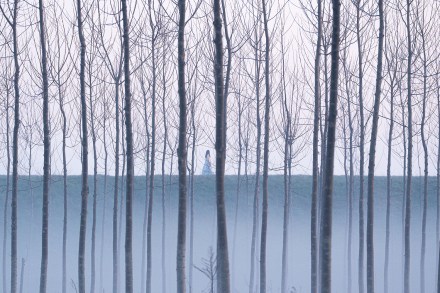
François Ozon’s The Stranger is an adaptation of Albert Camus’ 1942 novel about a clerk who – spoiler alert* – senselessly murders an Arab in broad daylight on a hot Algerian beach. Why did he do it? ‘It was because of the sun’ is all he can suggest. Existential ennui: that’s what’s at play here, which isn’t generally a great draw at the cinema. It would come way down on most people’s lists. But miraculously, Ozon has managed to make a film about boredom without making a boring film. If nothing else, the radiant black and white aesthetic will grab you from the off and then never let go. Visually, it’s divine. The novel – which was published as The Outsider in this country – opens with the line: ‘Mother died today. Or maybe yesterday; I can’t be sure.

The Drama makes no sense

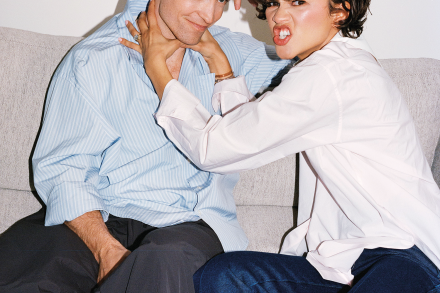
The Drama is the latest from Norwegian writer-director Kristoffer Borgli whose films (Sick of Myself, Dream Scenario) always cause a stir, and this is no exception. It stars Hollywood big-hitters Robert Pattinson and Zendaya as a happily engaged couple whose forthcoming wedding may not go ahead after one discovers a disturbing truth about the other. What is this disturbing truth? It would be a spoiler to tell you – even though the details are splashed all over the internet and have already created a backlash. (Don’t look it up. Or do. I’m not your boss.) It is intended to shock but it may not be as shocking as it thinks it is – or even very convincing.

For those of a nervous disposition, is Sinners worth it?

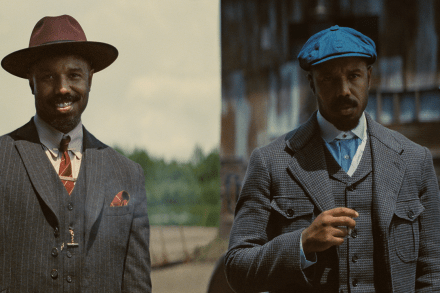
Ryan Coogler’s Sinners won four Oscars and was nominated for 16 and I’d yet to see it. Sometimes the labels associated with a film can be off-putting and, for me, ‘horror’ and ‘vampires’ have the same effect as, say, ‘experimental’ or ‘like a poem’ or ‘directed by Michael Bay’. It’s now landed on the streamers and it seemed like an omission that needed correcting, so I spent around ten hours with it. It’s only 135 minutes but should you hit pause every time it gets scary that’s how it might roll. Please don’t sell me a vampire film when it’s a zombie one, even if I don’t like either The film is a genre-mashing beast, told with gusto from the off – and you get nearly an hour of pause-free time, even if you know what’s coming down the track.

Toni Servillo’s face cannot bore: La Grazia reviewed

Paolo Sorrentino’s La Grazia is about an ageing Italian president who is coming to the end of his seven-year term, and must reflect on decisions made, decisions yet to be made and the moral complexities of life. Unusually for Sorrentino, who has a liking for the showy – Hand of God, The Great Beauty, Il Divo and, for television, The New Pope – this is sober, melancholic and elegiac, and possibly the better for it. Plus, it stars Toni Servillo, which is always a win. I’ve just checked his back-catalogue and can confirm: always, always, always a win.

The Peaky Blinders film is surprisingly literate

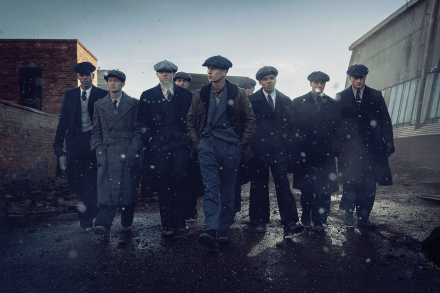
Peaky Blinders: The Immortal Man is the film that fans of the television show have long been waiting for, so I must watch what I say. The story follows a group of exceptionally violent Birmingham gangsters operating between the wars and if you see it at the cinema you’ll hear a message before the opening credits. It’s Cillian Murphy imploring audiences not to give away any spoilers and ruin it for everyone else ‘by order of the Peaky Blinders!’. There will be no spoilers here today. I have no wish to get my face slashed. There will be no spoilers here today.

Fascinating: EPiC – Elvis Presley in Concert reviewed

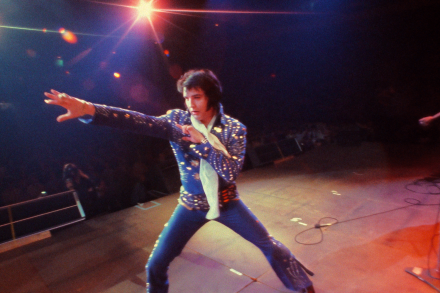
EPiC: Elvis Presley In Concert is a concert documentary that grew out of the 65 boxes of unseen Las Vegas performances discovered by Baz Luhrmann while researching his 2022 biopic Elvis. As I have little interest in ‘the King’ I approached with a heavy heart. But now? I’m abundantly interested. In fact, I’ve shifted from indifference to thinking that if I could see one musical artist live at their peak it would have to be him. He’s that electrifying. A warning, however: it’s a 12A. ‘Elvis picks up a bra thrown on to the stage during a concert performance and puts it on his head,’ notes the BBFC. I wish I’d had the chance to throw a bra that he’d put on his head. Hopefully, it would have been one of my nicer ones that day. They are of varying quality.

Doesn’t put a foot wrong: The Secret Agent reviewed

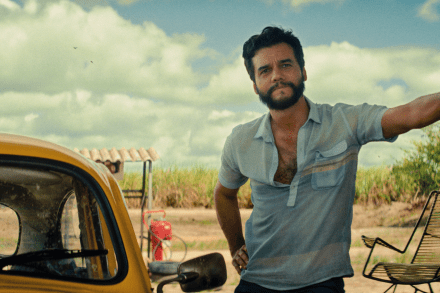
Kleber Mendonca Filho’s The Secret Agent, which is about an academic on the run during Brazil’s brutal military dictatorship, won two Golden Globes, and has been nominated for four Oscars, and it’s truly special even if it is languorous and sprawling. It is one of those long films (two hours and 40 minutes) populated by so many characters you may well find yourself praying: ‘Please let me keep track of who’s who.’ Do hang on in there. It will all come right and be so worth it. The house is run by Dona Sebastiana, who may now be my favourite film character ever The film is set in 1977 which, an intertitle tells us, with some understatement, was a period of ‘great mischief’. It has an opening scene that will likely become iconic as it’s so brilliantly tense.

Gripping: Melania reviewed

The documentary Melania, which follows the first lady in the 20 days leading up to her husband’s 2025 presidential inauguration, has already been savaged by critics. It is ‘shallow’ and ‘a shameless infomercial’ and ‘designer taxidermy’, and according to Variety, ‘if they showed this on a plane people would still walk out’. It is, it’s true, a film that could have been authored by Hello! magazine, but isn’t there some value in seeing how someone wants to be seen? There’s also no shame in being in it for the rich lifestyle porn – on that count it delivers handsomely. I was hanging on to every detail, from what will be served at the inauguration dinner (golden eggs and caviar) to the width of the ribbon on her hat. (Should it be narrowed? Will it be?

The streaming model is broken

‘Do you want to stream something?’ my girlfriend asked me. It was 5 p.m. on a Saturday and I’d had a horrendous week. I’d caught one of those mutant viruses that you learn about in nursery rhymes or at the London Dungeon. The cough was the worst part. It was the sort of cough that evacuates a Tube carriage. It was the sort of cough you hear in a western before the protagonist says: ‘Old Billy Boy got consumption. There ain’t a darn thing we can do ’bout it. Doc says he got weeks. Poor bastard. He ain’t never gon’ make it to Montana.’ In short, I was feeling out of sorts. And as such, I was ready for some mind-numbing television. ‘We can watch something,’ I said. ‘What do you fancy?

Do the British appreciate Ralph Fiennes enough?

If you had been fortunate enough to see the first night of Tchaikovsky’s opera Eugene Onegin at the Opéra National de Paris last week, then it might have been with a slight jolt of surprise that you saw a familiar face take to the stage as the cast took their bows.  Ralph Fiennes, the award-winning actor, was not appearing in the opera – although he took on the role of Onegin in a 1999 film that his sister Martha directed – but instead he made his operatic directorial debut with the production. The reviews so far have been mixed rather than laudatory.

Inside the world of Wes Anderson

If you make your way to the Design Museum, which occupies the horned modernist structure that was once home to the Commonwealth Institute in Kensington, you are in for a surprise. And not just because it’s one of those buildings that is far more inspiring on the inside than its rather Stalinist exterior would have you imagine. No, the biggest surprise is that our national temple to design has decided to dedicate its ground floor to Wes Anderson, the American filmmaker (‘auteur’ is the word film types like to whisper) behind such idiosyncratic gems as The Royal Tenenbaums (2001) or, probably his biggest hit, The Grand Budapest Hotel (2014), which starred Ralph Fiennes, Adrian Brody, Saoirse Ronan and Willem Dafoe, among many others.

Beautiful if hagiographic portrait of Godard

Richard Linklater’s Nouvelle Vague dramatises the (chaotic) making of Breathless (1960), Jean-Luc Godard’s French New Wave classic. It’s a film about a film, told mostly in the manner of that film, with the same kind of liveliness. Godard is as impossible to comprehend by the end as he was at the beginning  It isn’t necessary to watch Breathless first by the way, although why not? It’s widely available on streaming platforms and, while it remains one of the most influential movies of all time, it’s just 90 minutes long. Christopher Nolan take note. You too, James Cameron. (His latest Avatar is three hours and 20 minutes, for heaven’s sake.) Linklater certainly recreates the look, feel and sound.

The cruelty of H is for Hawk

H is for Hawk is an adaptation of the bestselling memoir by Helen Macdonald who, following the sudden death of her beloved father, channels her grief through the training of a goshawk, Mabel. The film stars Claire Foy, who is superb, as is the nature photography, but is it right, keeping a wild animal captive, and depriving it of its natural behaviours because it helps you in some way? What’s in it for this gorgeous bird, I kept wondering. The cruelty is never addressed. This is solely about human need. We’re not even told who plays Mabel, so I can’t say what she has been in before or whether she has won any awards. (I would hope so; she is magnificent.

What drama gets right and wrong about science

A few days after Tom Stoppard’s death last month, Michael Baum, a distinguished surgeon, wrote a letter to the Times. He explained how Stoppard’s discussion of chaos theory in Arcadia had inspired him to discover a new and far more effective chemotherapy to treat breast cancer. ‘Stoppard never learnt how many lives he saved by writing Arcadia,’ wrote Baum. I’ve long been fascinated by the relationship between science and drama. I knew Tom Stoppard and when I was professor of history and philosophy of science at UCL, we had several illuminating conversations about art, science and theatre, which he recalled in a 1994 article entitled ‘Playing with Science’ for the journal Engineering and Science. ‘Science and art are nowadays beyond being like each other.

Take a trip to the bone temple

28 Years Later, Danny Boyle’s ace return to the 28 Days later series, was one of last year’s most pleasant cinematic surprises. Combining serious thrills with creeping suspense and a light dusting of social commentary, it also ended with one hell of a cliffhanger, as its protagonist, Alfie Williams’s young Spike, found himself in the hands of a gang of psychotic Jimmy Savile-styled desperadoes, led by Jack O’Connell’s sinister Lord Jimmy Crystal. Audiences were keen to see how Candyman and Hedda director Nia DaCosta could pick up the pieces in the next installment, The Bone Temple – once again scripted by Alex Garland – and how the narrative threads sewn into the first picture might continue.