Fight for the right

Liberalism gave us this hard new right

The future of conservatism will look like Friedrich Nietzsche meets Beavis and Butt-Head if things continue the way they have been going. As bad as this might sound for the right, it portends much worse for the left. Liberal pieties will not stand a chance against that threat. And liberals have only themselves to blame for what the right is becoming. Conservatism draws its strength from four forces — Christianity; heartland patriotism; the philosophy of Edmund Burke, Adam Smith, and the Founding Fathers; and revulsion against the left. Each of these provides a popular or intellectual base, or both, for the right.


right

We must stand up for private rights

By disposition, conservatives distrust government. They are for “limited government” and worry about the coercive power of the state intruding upon individual liberty. But these days, some conservatives tell us that, when they finally get their hands on the levers of power, they will be energetic in exercising them to achieve their (presumably conservative) ends. Is that a contradiction or indication of hypocrisy? Maybe. Or maybe it is just a sign of how deeply anti-conservative sentiment has burrowed into the tissues of our society. No doubt I would prefer the policies promulgated by a conservative administration to the policies we are saddled with now. But my low opinion of human nature inclines me to distrust government power no matter who is in charge.

rights

Free markets deliver real American greatness

Since its postwar rise, the American conservative movement has staked its reputation on defending the free market as an abiding principle. Conservatives pointed to the liftoff in the American economy caused by the Reagan tax revolution and the deregulation of heavily controlled parts of the economy. Less government and less regulation were better for the American economy. The left disagreed with this fundamental axiom of conservative wisdom. Now, surprisingly, many on the right have joined them. Something obviously changed in the post-Cold War period. China’s entry to the World Trade Organization in 2001 resulted in the so-called China Shock, or the loss of 15 to 20 percent of manufacturing jobs in America.

free market

What people get wrong about fusionism

To suggest that the American conservative philosophy of fusionism was a mistake is often to betray one’s confusion about the term. Misconceptions notwithstanding, “fusionism” was never meant to refer to an alliance of convenience between disparate groups (religious traditionalists and economic libertarians, say). Instead it was a nickname, bestowed by L. Brent Bozell, Jr., for the philosophical synthesis advanced by his friend and intellectual adversary Frank Meyer in the 1950s and 1960s. Meyer’s synthesis had a few parts. Normatively, he said that both Judeo-Christian virtue and freedom from coercion (whether carried out by a bandit or by an agent of the state) are goods to be cherished and protected.

frank meyer fusionism

The conservative legal movement sputters

In the four decades since the founding of the Federalist Society in 1982, the conservative legal movement has made great strides in recasting the federal and state judiciaries in its image. The Society is enormously popular on leading law-school campuses and has sent many of its leading lights into the federal judiciary. Numerous sitting Republican senators, some of them former Supreme Court clerks, came up through the Society’s ranks. Perhaps most remarkable, given the Society’s humble origins, five justices, the majority of the sitting Supreme Court, would identify as some sort of constitutional “originalist.

conservative legal movement

Conservatives need to forget about Hungary

In his novel The Prime Minister, the fifth in the Palliser series, Anthony Trollope has Plantagenet Palliser, the Duke of Omnium, enunciate his political credo. The Duke explains to Phineas Finn, who recently defended him in the House of Commons from the charge that he tried to purchase a seat for one of his supporters, that the belief that “political virtue is all on one side is both mischievous and absurd. We allow ourselves to talk in that way because indignation, scorn, and sometimes, I fear, vituperation, are the fuel with which the necessary heat of debate is maintained.” Finn responds, “There are some men who are very fond of poking the fire.” Just so.

hungary

When ‘white’ becomes an epithet

Since the 1980s, conservatives have warned about the academic left’s “deconstruction” of Western culture. The fetishization of race and sex was shrinking our inheritance to a cartoonish morality play, they alleged. Academic identity politics would not stay put; its foundational conceits would migrate into the world at large. Such warnings had no effect. Corporations, law firms, banks, tech companies, publishers, museums, orchestras and theater troupes now routinely denounce the alleged racial oppression that is said to be endemic to the United States in particular, and to the West more broadly. Conservatives have responded in generalized terms: “The left is dividing us! It is betraying the ideal of judging people by the content of their character!

conservatives whiteness

Say no to the populist war party

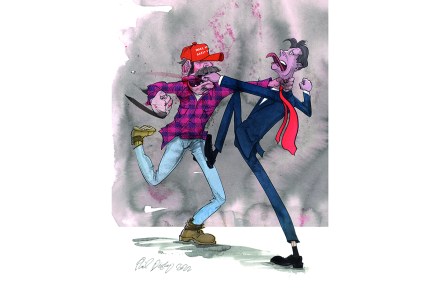
Addressing the question of whether now is the time for counterrevolution rather than conservation, I will take “counterrevolution” to mean the idea that all-out political and cultural war is what the moment requires, not the alleged conservative gradualism or restraint that those crying out for such war detest. (There are a variety of factions that march under different banners — nationalists, populists, integralists, MAGA. And while there are meaningful differences between these troupes, the shadows of their banners overlap like the shaded part of a Venn diagram this idea of counterrevolutionary war. For brevity’s sake I’ll call them the “war party.”) I think this framing is part of the problem. I am all in favor of counterrevolutionary war where necessary.

The trouble with the right’s hands-off economic approach

On the American right today, economics trumps all else. While conservatism has always been bedeviled by the tension between economic science and traditional, family-focused values, the last four decades have witnessed a decided shift toward embracing economics as the sole indicator of a successful society. Those who create wealth, in theory and in practice, are accorded the closest thing to nobility an egalitarian society will tolerate. And indeed the American free market remains the most powerful lever the world has to erase class, poverty, and privilege in the equal pursuit of opportunity.

trump economy economic new york stock exchange wall street

The flawed idealism that united the right

Modern American conservatism is composed of three distinct traditions: libertarian economics, foreign-policy hawkism and social traditionalism. This “fusion” was born of a contingent historical moment, the Cold War, when the Soviet threat forced different social classes and their ideological spokesmen to band together in common cause. There was no eternal principle demanding that these groups tie their destinies together — a fact that became apparent with Donald Trump’s rise, which divided the three camps along various axes of alliance and enmity. Fusionism is dead. Well and truly dead.

conservatism fusionism

The American right shouldn’t look up to Putin

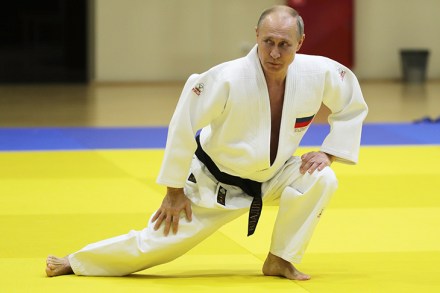
A fracture of the international right may seem minor given everything that is going on right now. But it is worth loitering over. Because in recent years an interesting divide has grown among conservatives on both sides of the Atlantic. On one side are the Cold War warriors and their successors, who have continued to view Vladimir Putin’s Russia as a strategic threat. Meanwhile, a new generation has arrived at a different view. While the West has deranged itself with assaults on its own history, on biology and much more, an assortment of conservatives has come to see Putin as some kind of counterweight. A bulwark — even an admirable corrective — to the madness of our own societies.

putin judo