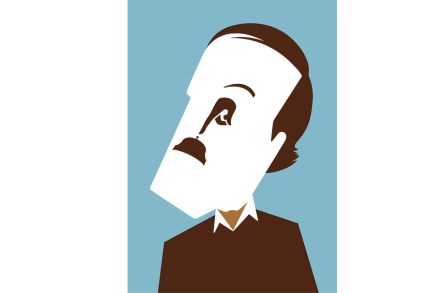
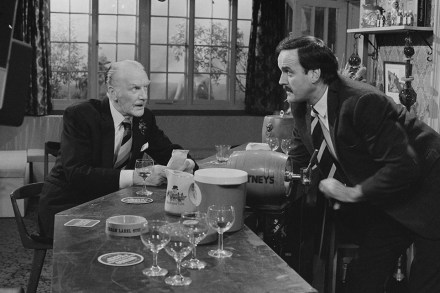
Fawlty Towers

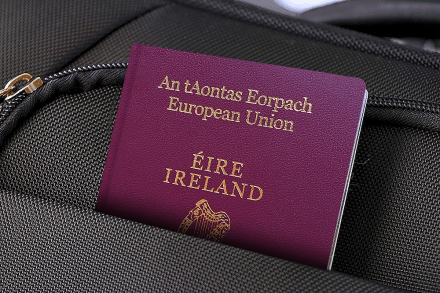
Once we Brexiteers get our Irish passports, we can go anywhere

“There’s a flat rat under the mat!” I shrieked, and wondered whether that was the sort of jaunty phrase that could be used for elocution lessons. I had lifted this mat by the main staircase to hoover the floor beneath it and there it was, a perfectly flat rat in the shape of a cartoon dead beast beneath this mat. I began laughing uncontrollably, because if you’ve ever seen a flat rat under a mat you will know that it is intrinsically funny, whatever your views on rats. You will laugh even if you don’t like rodents, or indeed if you like them way too much. Even if you are a member of the Rat Preservation Society, when you see one flattened paper-thin, stuck to your floorboards, I challenge you not to burst out laughing, while jumping up and down.
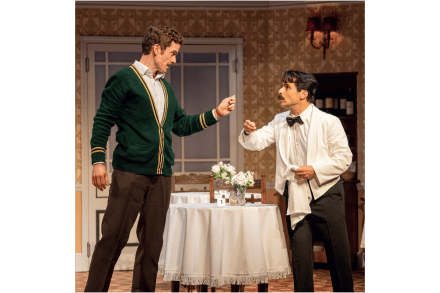
Fawlty Towers – The Play is the best museum piece you’ll ever see

From our UK edition

Fawlty Towers at the Apollo may be the best museum piece you’ll ever see. A full-length play has been carved out of three episodes: ‘The Hotel Inspectors’, ‘The Germans’, and ‘Communication Problems’ in which the deaf guest, Mrs Richards, made a nuisance of herself by refusing to switch on her hearing aid in case the batteries ran out. For anyone who saw the sitcom in the 1970s, this is a pleasantly weird show. It’s like returning to a seaside funfair after half a century and finding all the rides unchanged and the staff more or less as you remember them. If Beckett had written family comedies he might have created something as amusing as this Paul Nicholas makes an even better Major than the Major. And his rich, fruity voice is an unexpected treat.

‘Comedy is much more important than I thought’: John Cleese on the press, his new talk show and the power of Fawlty Towers

From our UK edition

John Cleese enjoys tough questions. He’s currently touring America with An Evening with the Late John Cleese, and a substantial part of the show is thrown open to the audience. He tells me that when someone asks a particularly rude question – such as ‘Why can’t you stay married?’ – it simply adds to the fun. Another one of his favourites is ‘What’s the worst film you ever made?’ I ask him the same question. ‘Well, there are a lot of contenders,’ John says. Apparently his ‘sabre-toothed daughter’ Camilla might have the answer, because she often introduces him to the stage as ‘the star of The Pink Panther 2’. When I tell John that I haven’t had the pleasure of seeing it, he offers me some succinct advice: ‘Don’t.

Should vintage comedy be judged by today’s standards?

From our UK edition

The British sense of humour is a source of power, soft and otherwise. The anthropologist Kate Fox observed that our national motto should be ‘Oh, come off it’, and a patriotic raised eyebrow has been cited as our chief defence against demagogues. We see ourselves through a comic lens, a nation of Delboys and Mainwarings, Brents and Leadbetters, Gavins and Staceys. But despite comedy being as central to British culture as music, books on it have few equivalents to Jon Savage’s England’s Dreaming (on punk), Rob Young’s Electric Eden (folk rock) or Simon Reynolds’s Energy Flash (rave). A nice fat volume about our national comic self-image by an astute music writer is exactly what the funny business needs.