Family

The making of a poet: Wilfred Owen’s ‘autobiography’ in letters

From our UK edition

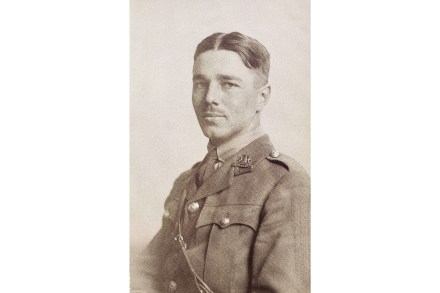
Here is the opening of a sonnet written by Wilfred Owen in the spring of 1911: ‘Three colours have I known the Deep to wear;/ ’Tis well today that Purple grandeurs gloom.’ Owen was 18 and had just been on a pilgrimage to Teignmouth in Devon, where his hero John Keats had once stayed. The kindest thing to say about this poem is that it is heavy with the influence of Keats. Six years later, in a seaside hotel requisitioned by the army and waiting to be sent back to the Western Front, he begins a poem like this: ‘Sit on the bed. I’m blind, and three parts shell.’ This looks so simple. The monosyllables carry the meter without fuss; ‘shell’ here means both munitions and protection.

Is 2023 a bad year for forest fires in Europe?

From our UK edition

Boss pay Julia Hoggett, chief executive of the London Stock Exchange, complained that FTSE 100 bosses aren’t paid enough, and suggested that the gap between UK bosses and US bosses needs to be closed if the London market is to prosper. How much are FTSE 100 bosses paid? – The median earnings in 2021 for a FTSE 100 boss was £3.41m and the mean £4.26m. Three were paid less than £1m, 57 between £1m and £4m, 35 between £4m and £10m and three more than £10m. Two changed jobs during the year and so aren’t included in the figures – But the best-paid FTSE chief executive wasn’t even in the FTSE 100. That was Frederic Vecchioli, CEO of FTSE 250 company Safestore, who earned £17.06m. The next best-paying companies were: Endeavour Mining (FTSE100) £16.

What my father’s Alzheimer’s taught me

From our UK edition

When I tell friends, ‘You never hear people talking about the upside of Alzheimer’s’, they look at me like I’ve said something about Hitler being nice to animals. In general, a mention of dementia will ruin any conversation. People freeze up at the thought. It’s true that having a relative with dementia is hard and the bad far outweighs the good, but that is no reason to ignore the positives completely. In fact, the tiny benefits can help you deal with all the downsides.  I’ve had a lot of time to look for the positives. Growing up, my grandparents had Alzheimer’s so I was aware of the condition, but I hadn’t thought that it could happen to my parents.

The childless have a stake in the future too

My niece was seven or eight years old when she called to invite me to a school event. “It’s Mother-and-Daughter Day at my school!” she exclaimed, adding that I had to be there because she and her twin sister wanted to show me their classroom and meet their friends.  I thanked her for including me but added that I’m not her mommy; I’m her auntie.  “But you’re like a mommy,” my niece said, with a tilt in her voice as if I didn’t understand what was immensely obvious to her. “Auntie! You have to come,” she pleaded. I was there with bells on.  I’m fortunate that my nephew and nieces have always lived nearby, and that my sister-in-law and brother have generously embraced my participation in their children’s lives whenever possible.

childless

The case against surrogacy

Last July, Albert and Anthony Saniger filed a lawsuit against a high-end California fertility clinic after their dreams of having a second boy were destroyed when their surrogate gave birth to a baby daughter. After already choosing male names and Gmail accounts for their future son, the couple had explicitly made clear that no female embryos were to be transferred into the body of their surrogate, who had experienced two failed cycles of in vitro fertilization before a successful pregnancy in 2020. To add to the trauma of being forced to live with a healthy baby girl instead of a male, the Sanigers were now forced to spend “staggering” amounts of money raising the two boys they wanted and a girl, all bought via costly fertility clinic services.

surrogacy
roadside

Road-trip picnics are a casualty of our interstate system

Signs announcing roadside picnic tables once peppered America’s secondary roads and highways. Or so we call those byways now. Before the limited-access interstate system arrived in the 1960s, these roads were primary. America then was laced with a tangle of serviceable two-lane, hard-surfaced highways. Look at an old oil-company roadmap, if you can find one, to get the idea. Some roads were federal, some state, but all were emphatically open-access: get on anywhere, pull over wherever you like. They led through cities and towns, not around them; they traversed the countryside more than they cut through it. They required two-hands-on-the-wheel alertness in drivers, who got to know and respect the lay of the landscape.

George Washington’s lesson for Ukraine

From our UK edition

The Australian morning TV host called me darlin’. We’d never met, but she opened with: ‘Good to have you on, darlin’. Be with you in a moment.’ Then the picture went black. When the live show returned to my Zoom screen, I was just another viewer, watching the three hosts seated on a couch half a world away chatting about the charity walk one of them had done over the weekend and the toll this had taken on his feet, which led – in a surprise twist – to a brief discussion of the strange internet hunger for images of feet. Somehow, the fetish conversation segued into a video montage with images of Hillary Clinton and Donald Trump and me from FBI days.

Confessions of a mid-life rollercoaster addict

From our UK edition

My heart is racing, my breath ragged and my stomach threatening to send back the burger I ate for lunch. But as the safety harness I’m wearing is released and I lower my shaking legs to the ground there’s only one question on my mind: when can I experience it again? My name is Antonia and I am a 44-year-old rollercoaster addict. I am hooked on rides that command queues of over an hour yet are over in seconds; that hurl me upside down, haemorrhage my bank balance and have spurious science-fiction names. In less than two years I have been to England’s twin temples of hair-raising attractions – Alton Towers in Staffordshire and Thorpe Park in Surrey – six times, battering my senses until I drive home in a stunned but satisfied stupor.

It’s time to ban young children from restaurants

From our UK edition

When you have small children just getting them out of the door can be traumatic. Finding and applying each shoe can be enough to provoke a tantrum – and not just in the parent. And no, they can’t bring their Power Rangers swords, because we are going out to lunch and everyone knows that plastic swords and restaurants don’t mix.  Eventually you will arrive at the restaurant, although it will 20 minutes later than the booking. As you push the buggy inside, the establishment falls quiet like the Slaughtered Lamb in An American Werewolf in London. There’s a scrape of chairs – a pause – then the chatter resumes. But in that moment everyone is thinking the same thing: please don’t sit next to us.

Caught between conflicting desires – for liberty and belonging

From our UK edition

A friend recently moved back to the UK after living in China for ten years. Being English, he was always going to be an outsider in China, but what surprises him now is how foreign he feels in England too. He asked me whether this feeling ever ended. I told him that I suspect people like us will never fully belong anywhere again. The novelist and filmmaker Xiaolu Guo articulates this sense of alienation exquisitely, knowing exactly what it’s like: ‘Part of me is always in exile.’ She left China in her late twenties when she was already a published author. In Radical, she tries to come to terms with being an outsider, using language as metaphor (she says she’s pursuing ‘an etymology of myself’).

Carrie Johnson and the truth about children’s parties

From our UK edition

The email was apologetic in its tone, if apocalyptic in its content. The entertainer I’d booked for my daughter’s fifth birthday party was no longer available – she’d been invited to perform as an extra on Strictly Come Dancing, an opportunity too good to miss. I swallowed my surprise (aren’t these appearances negotiated months in advance?) but couldn’t quell the mounting panic that anyone who has struggled to source a children’s entertainer at short notice without remortgaging their house will recognise.  With no expert in charge, a kids’ party is simply a mass socially-sanctioned sugar-fuelled breakdown – and that’s just for the parents.

Why British women are turning to Danish sperm donors

From our UK edition

‘Hello, my current occupation is police officer,’ says Dex in a thick Danish accent. ‘It seems very adventurous and exciting to do, and to make a difference for the people I meet out in the world.’ Dex is just over 13 stone, around six feet tall, has very fair skin and blue eyes. His favourite animal is the dog. Dex is also a Danish sperm donor, and I’m listening to the beginning of an 11-minute voice-recording on his profile. On the website of the European Sperm Bank, which bills itself as ‘Europe’s leading sperm bank’ and is based in Copenhagen, there are hundreds of profiles like Dex’s available to British women. Create a free profile and, in under a minute, you can scroll through smiling baby pictures of Danish men as if looking for a new party frock.

Why Britain needs more marriage

From our UK edition

Hungary is something of a bête noire in the international community. Viktor Orban and his government have had much-deserved condemnation over their treatment of certain minority groups, as well as undermining judicial independence and what many see as an attack on the freedom of the media.  But Orban’s administration has been getting something right, and it would be a shame if the country’s pariah status means its greatest achievement goes overlooked. Hungary has become a marriage super-power. According to the Marriage Foundation, which rightly promotes legal matrimony as the bedrock of a healthy society, Hungary’s marriage rate has exploded over the last decade, rising by 92 per cent. The country moved from 28th in Europe to number one in the Foundation’s league table.

Nick Cannon and the remaking of the American family

Nick Cannon is the ultimate baby daddy. How could he not be? The Masked Singer and Wild ’n’ Out host is rich, handsome and has somehow gotten six very hot women pregnant, resulting in twelve — count them, twelve — children. He talks about each of them with nothing but respect and, as far as Cockburn is aware, the women have nothing bad to say about him.  Cannon has transcended the outmoded notion of the nuclear family — and is setting out an alternative high standard for the modern American father. I mean, he made two babies with Mariah Carey at her peak. He is also, in tandem with Elon Musk, solving the problem of plunging Western fertility rates. So Cockburn was surprised to find out that the forty-two-year-old rapper doesn’t pay child support.

nick cannon

Confessions of the mommy groupchat

As I approach my daughter’s first birthday this month, I’m reflecting on what it’s been like to become a mom so late in the game — and the thousands of lessons I’ve learned. A lot of people have carried me through pregnancy and the first year: my husband, for one, has been a rock. His mother and stepfather. My aunt and uncle. They’ve all shown up for us in ways we didn’t even know we would need, with home-cooked meals when I was in the newborn bubble, with baby care so we could work or sleep or unwind. However, nothing has carried me quite like the groupchat a friend started in my first trimester. This friend had her second child on the way and realized three of us were pregnant all within months of one another, so she started the chat.

grumpy

The purgatory of soft play

From our UK edition

Are you familiar with the child-focused phenomenon generally known as soft play? Often located in the windowless recesses of garden centres with an innocent-sounding name like ‘Snakes and Ladders’, these are compounds dedicated to the frenetic, ergonomic joy of children – assault courses for mites, with slides, chutes, ball baths and various dangling hazards all swathed in gaudy soft foam-wrapped plastic. On paper, soft play sounds like fun: what could be more enjoyable than watching your tiny ones zipping gleefully down slides in an ultra-safe environment, one where there’s even compulsory armbands for accompanying adults and locked doors to keep out perverts?

A new book and a newborn

One of the most famous lines from the classic 2002 romcom Sweet Home Alabama has leading lady Reese Witherspoon incredulously asking a redneck hometown friend, “You brought a baby... to a bar?” I encounter that incredulity frequently, every time I cart my kids to work events, including those at bars. But a book tour? This was a new one. A book tour with a baby is hard, but babies (and kids) are worth all the hardships. As Scrubs’s wise Dr. Kelso once explained, “Nothing that’s worth having in life comes easy.” That’s a mantra in our home as we wade through the hard times, and it’s a lesson we impart to our kids as we endeavor to raise them into happy warriors and resilient and caring adults.

book

Everything Everywhere All at Once might not be complex enough

The New York Times has called Everything Everywhere All at Once “a swirl of genre anarchy.” It simultaneously works as a tender story of acceptance, an exploration of the pressures of not living up to parental expectations, an existential study on whether or not anything matters, a reminder to be kinder to others, and a love story about reigniting the spark in a marriage that has seemingly run its course. It’s a family drama, a sci-fi mess of multiple universes, a superhero battle to save the world, comedy, and action movie. As Vox's Alex Abad-Santos said, “No amount of description — alternate timelines, jumps, existential crises, moms, hot dog fingers, butt plugs, etc. — could ever accurately describe what’s happening at any given moment during this maximalist fantasia.

Everything Everywhere

What’s in a name?

Someone, I think it was Martin Amis, once said that you can judge a novelist by how much effort he puts into his characters’ names. If that’s true, a political independent who grew up in the 1990s with the name “Matt Purple” may be a sign of some cosmic writerly laziness. Yes, that is my real name. The one you see in the byline there. I’m always amazed at how many people assume it’s a nom de plume, as though if I could have any last name I wanted I’d choose an Easter color. I actually did write an essay under a pseudonym once: “Matt Thomas,” Thomas being my middle name. Given that it was instantly posted to the top of a prominent website and discussed on a national radio show, I sometimes wonder whether I’m the victim of nomenclature discrimination.

name
seed

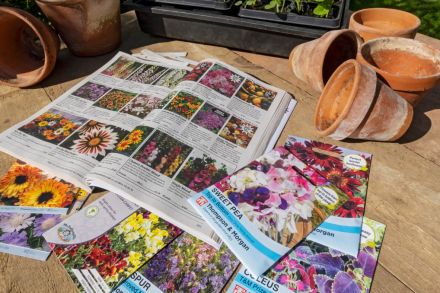
Seed catalogs and their rejuvenating power

Winter’s bleakest days have set in. “The holidays” are a distant memory. Rose-colored resolutions to wake up earlier, eat healthier and exercise have gone the way of Dry January — all a wash, as you quickly discovered the only antidote for your Seasonal Affective Disorder was something equally cold and dark. You glimpse the N/A beers in the back of the fridge the same way you spy the sun — in passing, and with a feeling of faded hopefulness. As you lug bags of empty bottles to your sidewalk, you glance up at the brightish blob lending a hazy glow to the grayscale landscape. You deposit your clanging bag of glass and cans beside your Christmas tree’s corpse and shuffle back inside to refill the fridge and cover up reminders of your dalliance with the sober-curious.