Extremism

Am I an extremist?

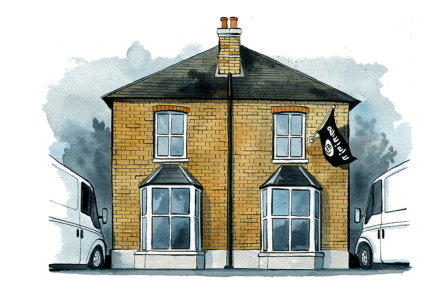
The Communities Secretary Steve Reed recently rose in the House of Commons to unveil “Protecting What Matters,” the British government’s new “action plan” to “strengthen social cohesion” and “tackle division.” According to the accompanying press release: “Millions of families, friends and neighbors will feel a stronger sense of community, unity and national pride thanks to renewed efforts to stamp out extremism, hate and division announced today.” I was not among those millions. Conspicuous by omission in the announcement was any mention of Islamist extremism.

extremist

How the terrorists of the 1970s held the world to ransom

From our UK edition

At the end of the 1970s, the Illustrated London News printed a special edition to commemorate the decade. What did it focus on? Music, from David Bowie to Bob Marley? Some of the best films Hollywood has ever produced, from The Godfather on? Political crises, such as Watergate and the end of the war in Vietnam? No, there was only one headline: ‘The 1970s: The Years of Terrorism.’ We forget – and perhaps we want to – quite how brutal and random that time could be, with plane hijackings, the Munich Olympics atrocity and bombs going off from the Tower of London to Washington to Singapore, where the Japanese Red Army caused mayhem. In a superb and monumental book, Jason Burke details the principal movements that flourished and to a surprising extent nurtured each other.

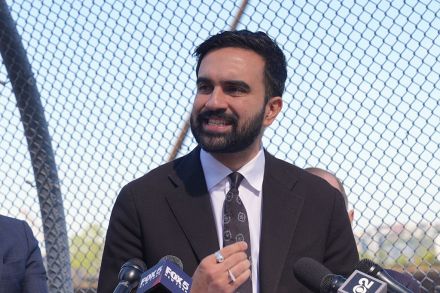
Mamdani declares war on excellence

New York Assemblyman Zohran Mamdani has a bold plan for the city’s schools: phase out the Gifted and Talented program in elementary education. His rationale is that these programs create disparities and feed inequality. It’s a familiar progressive argument. If some students are excelling, others must be suffering. If a child is recognized as gifted, it’s unfair to those who aren’t. The logic is as simple as it is destructive: equality means sameness, even if sameness means mediocrity. There is nothing wrong with recognizing giftedness. In fact, it’s common sense. If a child demonstrates unusual ability in math, science, writing, or the arts, you nurture it. You don’t bury it under a misguided notion of “equity.” Excellence, like athletic talent, must be cultivated.

Zohran Mamdani

My plan for Prevent

From our UK edition

In the autumn of 1940, British cities were being bombed every night by large aeroplanes whose provenance was apparently of some considerable doubt. While the public almost unanimously believed the conflagrations to have been caused by the Luftwaffe, the authorities – right up to the government – refused to speculate. Indeed, when certain members of the public raised their voices and said ‘This is all down to Hitler and Goering and the bloody Germans!’, they received visits from the police who either prosecuted them for disturbing the peace or put their names on a list of possible extremists. The nights grew darker. The number of towns and cities subjected to these nightly bombardments widened.

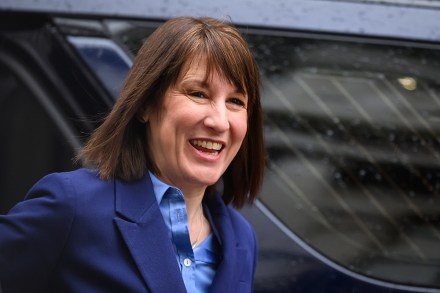
My money-saving tips for Rachel Reeves

From our UK edition

It is always upsetting to watch a woman enmired in distress and so I thought I might ride on my trusty charger to the assistance of Rachel Reeves, the Chancellor, with a few suggestions as to where she might make spending cuts. Rachel needs these cuts because she can’t raise taxes and the British economy is lying flat on its back in an alleyway with wee dribbling down its leg. Growth is what we need, plus some serious savings to the Exchequer. Clearly, most civil servants should be sacked – bringing a bounteous gift to the nation’s coffers My first suggestion would be to cut the rate of benefits by 25 per cent across the board.

The desperate desire to belong: England is Mine, by Nicolas Padamsee, reviewed

From our UK edition

As Nicolas Padamsee’s thrilling debut novel England is Mine hurtles towards its climax, its principal character, David, readies himself for an important mission. A teenage victim of bullying, he has been slowly drawn into a world of online extremism. After making a purchase through the dark web, he is determined to become a hero in the underground network in which he is now enmeshed. In the same borough of East London, David’s one-time tormentor Hassan is about to leave the house. Having drifted away from his pot-smoking childhood friends, Hassan volunteers at his local mosque and is on the brink of signing an Esports contract that will turn his passion for the Fifa video game franchise into a profession.

Caught in a Venus flytrap: Red Pyramid, by Vladimir Sorokin, reviewed

From our UK edition

Interest in Vladimir Sorokin’s works in translation tends to focus on their extremism and dystopia – trademarks of his fantastically-rendered observations of the Soviet Union and contemporary Russia under an infinite bureaucracy. Less emphasis is placed on the empathy that elevates the stories from violence and a pre-occupation with bodily fluids to a discomforting sense of familiarity. In his introduction to Red Pyramid, Will Self writesthat Sorokin’s detractors accuse him of peddling pornography. But its relevance is without question. If reality is said to be stranger than fiction, Sorokin’s fiction goes further, to make the point that the pornographic, as he writes it, is a way of bearing witness to the past and present.

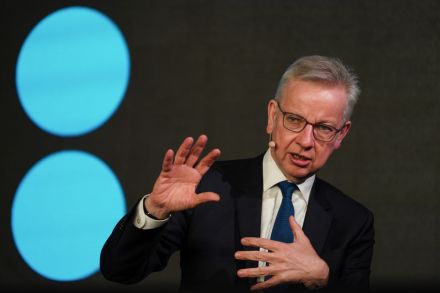
Will Gove’s extremism definition worsen Tory divides?

From our UK edition

11 min listen

Michael Gove has unveiled the government’s new legal definition of extremism, which will decide whether organisations can receive government money. Conservative MPs, and three former Conservative home secretaries, have said doing would be a mistake. Is Gove doing more harm than good? Max Jeffery speaks to Katy Balls and Paul Goodman, former editor of Conservative Home.

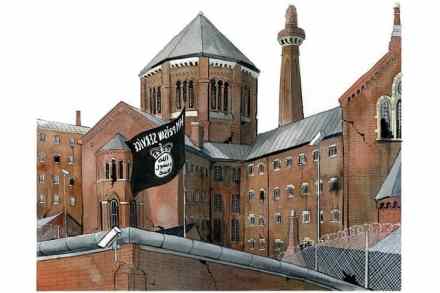
Our prisons are woefully unprepared for Ali Harbi Ali

From our UK edition

The Islamist terrorist Ali Harbi Ali will spend the rest of his life behind bars for the murder of Sir David Amess MP. But as he fades from public view, will his risk also disappear? That’s a headache our beleaguered prison service will now have for decades to come. The signs are not promising. Harbi Ali, who reportedly smirked after stabbing Amess more than 20 times, showed no sign of remorse or contrition throughout his trial. Unlike many of the terrorists he will be joining in one of our high security prisons, he managed to convert his distorted thoughts into lethal action. He’s a blooded jihadist and he will be an iconic figure to many within the system, not just those locked up for ideological crimes.

When the fringe becomes the majority

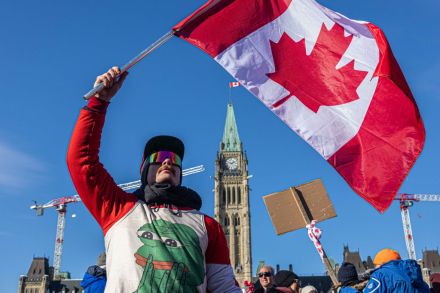
I’ve noticed a pattern over the past few years. We saw it when Joker made over a billion dollars at the box office, despite numerous reviews and think pieces assuring us that everyone who enjoyed it was a dangerous alt-right incel. We saw it most clearly in 2016 and again in 2020 when the tens of millions of Americans who voted for Donald Trump were uniformly smeared as white supremacists. To suggest any other motive was unacceptable. Racists! All of them! We saw it twice in the past week. The first of those instances is related to the ongoing Freedom Convoy protest in Canada. More on that later.

Germany’s growing extremism problem

From our UK edition

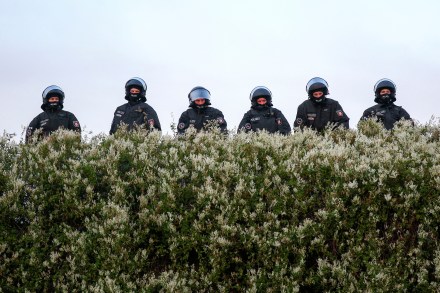
On 2 June 2019, a German politician was found lying in a pool of blood outside his home in Hesse. He had been shot in the head at close range with a .38 Rossi revolver. Walter Lübcke, the 65-year-old leader of Kassel city council, who had been a vocal supporter of Germany's immigration policy, had been assassinated by a German member of the British neo-Nazi group Combat 18. On Tuesday, his killer was sentenced to life in prison. Lübcke’s murder is the most extreme example of Germany’s increasingly alarming relationship with immigration, anti-Semitism, and fanatical politics.

The twisted logic of Shamima Begum’s defenders

From our UK edition

Shamima Begum is back in the news. Firstly because she’s had a makeover. She can be seen on the front page of today’s Telegraph sporting long, flowing locks, trendy shades and Western clothing. Is Shamima the Islamist now aspiring to be Shamima the celeb? Perhaps she’s angling for her own reality TV show: The Real Housewives of Raqqa. But the second reason she’s in the news is because the British-Indian sculptor Anish Kapoor has expressed sympathy for her. He says she’s a victim of British racism. I really wish Sir Anish would stick to what he’s (very) good at — public art installations — and leave the Shamima business alone. Because his comments are risible.

The difficulty of cracking down on ‘hate’

From our UK edition

In general, my experience as a British Sikh has been overwhelmingly positive in my life. Most people who know anything about Sikhism, or the Sikh contribution to the world wars, tend to be enthusiastic Sikhophiles – some have even greeted me with an impromptu Sikh greeting, ‘Sat Sri Akal’. But over the years, especially during my time at university, I faced prejudice from both Islamic extremists and those who might be best described as the ‘Far Right’. It’s been an illuminating experience. Both hated me, albeit for different reasons. One supremacy is religiously motivated against the ‘kaffir’, the other by race. This hate was often accompanied with the slur ‘Paki’ followed by, ‘go back to your own country’.

Yes, it’s time to defund NPR

When the Public Broadcasting Act was signed into law in 1967, the stated goal was to provide public financial assistance to producers and broadcasters of educational programming. And so PBS and NPR came into existence. They enjoy public funding from taxpayers today. But should taxpayers continue to fund these enterprises, when they clearly focus less on educating the public, and more on pushing commentary and opinion, and now, even libel?Public media has long been defended. Frequently it’s pointed out that public funding for NPR is only about two percent of their federal operating budget, the same excuse we hear when Planned Parenthood pushes back against calls to defund it. Just as frequently, right-leaning outlets seek to point out a clear bias in publicly-funded coverage.

npr

No, the Proud Boys aren’t an extremist group

According to a document obtained by the transparency initiative Property of the People, the FBI now regards the Proud Boys (the self-styled ‘pro-West fraternal organization’ founded by right-wing provocateur Gavin McInnes) as an extremist group linked to white nationalism. As someone who’s met similar groups (I’ve stayed with anti-government militias in Kansas and California), I’m not convinced. In my experience, Proud Boy-style groups aren’t racist – if I had to define them, I’d say they’re obnoxious pro-Trumpers whose politics seem less about making America great again and more about antagonizing the other side. Sure, they tend to be strongly anti-immigration and un-PC more generally – but white nationalist?

gavin mcinnes proud boys

Why is Tommy Robinson banned from America?

What does Tommy Robinson, reformed soccer hooligan and English nationalist, have in common with Daniel Pipes, unreformed policy wonk and president of the pro-Israel Middle East Forum? Islam, that’s what. Not that Robinson and Pipes are joining the Sons of the Prophet. Rather, they’re joining forces against Islamist influence in their societies, and against two related, and perhaps more serious problems: the stifling of debate about Islamism and immigration, and how unaccountable social media companies censor the opinions they dislike, even if those opinions have broken no law. On Wednesday, Pipes and the MEF hosted British speakers for a panel in Washington, DC on ‘de-platforming’. The location was kept secret, for security reasons.

tommy robinson stephen yaxley-lennon