Executive orders

The Trump administration is giving us excellence, not equity

Americans are not a naturally gloomy people. We don’t necessarily expect things to go our way, but when they don’t, we can laugh it off. In my part of Vermont there’s a place called Hateful Hill, for example, so-named by stagecoach drivers who had a tough time with the steep road. But Hateful Hill is also a beautiful elevation. Today, even those who don’t “get” Donald Trump need to start seeing the upside. He doesn’t always get his way, which is probably a good thing, but he is leading a long-overdue revival of the American spirit and allowing for the return of optimism and the pursuit of excellence.
Trump

We are living through the Second American Revolution

On March 23, 1775, a month before the first shots would ring out at Lexington and Concord, Patrick Henry entered Saint John’s Church in Richmond, Virginia to deliver a bold conviction. “The war is actually begun,” he said, “I know not what course others may take; but as for me, give me liberty or give me death!” Henry’s rallying cry remains one of the most iconic speeches in American history and is one of my personal favorites. Indeed, multiple times since we moved to northern Virginia in 2021, my family and I have made the drive south to see Henry’s speech reenacted. The message remains as compelling as ever, and this year, on its 250th anniversary, I believe it is especially relevant to our current political moment. We are facing a struggle for ordered liberty.

Why abolishing DEI is only a partial revolution

Elon Musk’s Department of Government Efficiency (DoGE) continues merrily to chop programs and departments left, right and center. Federal diversity, equity and inclusion officials were suspended on his first day in office, prior to being given their marching orders. Government employees have been ordered to justify their existence by explaining what, if anything, they achieved last week. All of this ought to be a positive influence on how the US is governed. Some will claim it to be an ideological war waged by the Trump administration. Yet it is really just the same process that private corporations undergo constantly in their search for greater efficiency and profits. Yet there is a chink in Trump’s strategy.

DEI

The many legal challenges to Trump’s Executive Orders

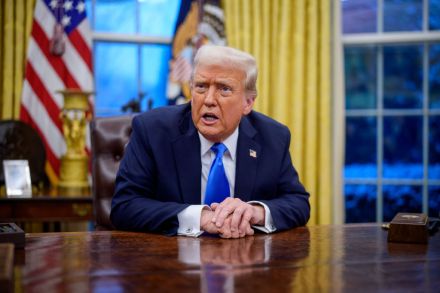
It was Groundhog Day in more ways than one this month. Yes, Punxsutawney Phil (accurately) predicted six more weeks of winter, but America also witnessed newly inaugurated President Donald Trump issue a flurry of Executive Orders, only to see many challenged immediately by Democratic attorneys general and paused by judges.During Trump’s first term, Executive Orders like his one restricting travel from seven Muslim-majority countries were challenged by Democrats and liberal activist groups like the American Civil Liberties Union. This time around, many of the challenges and pauses are focusing on Trump’s work, in conjunction with Elon Musk, to slash government spending radically.

Trump’s attitude on Executive Orders is nothing new

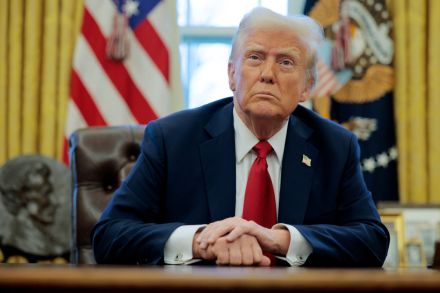
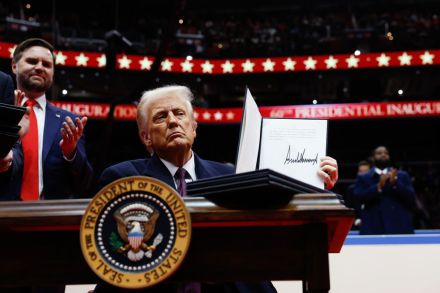
President Donald Trump wasted no time implementing his agenda after taking the oath of office on Monday. He’s issued more than two dozen Executive Orders (and counting), touching everything from immigration to affirmative action to trade. The orders may align with his campaign promises, but underscore a broader trend in American politics: the increasing reliance on executive power over congressional votes. The attitude is far from new. The rise in Executive Orders can be traced back to the beginning of the twentieth century. Theodore Roosevelt issued 1,005 Executive Orders from 1901 to 1909. Woodrow Wilson wrote 1,767 from 1913 to 1921. Herbert Hoover issued 1,003 from 1929 to 1933.