What sea slugs can teach us about organ transplants
From our UK edition
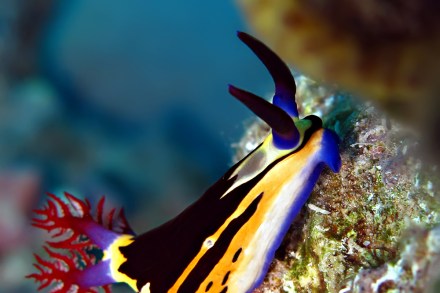
While they may be outnumbered and outweighed by insects, the terrestrial world is really the kingdom of the vertebrates. Mammals, birds, reptiles and amphibians dominate most ecosystems. Yet, as Drew Harvell points out in her fascinating new book, the seeming diversity of the terrestrial vertebrates is deceptive. In fact all are contained within just one of the 34 groups of animals that live on our planet, and their many designs are really variations on a quite narrow set of themes. This means that all share bilateral symmetry – heads with eyes and brains atop bodies with four limbs that contain their organs. By contrast, the other 33 groups of animals, the invertebrates, are astonishingly various in their design, with arsenals of adaptations and biological tricks.