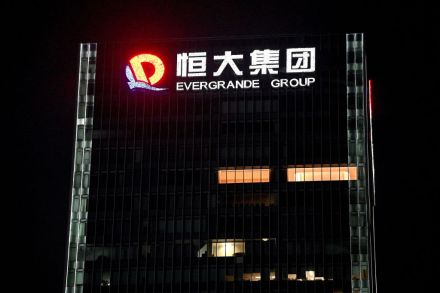
Evergrande

The high odds of a Chinese black swan

I have a memory picture of an urban highway in Shenzen, southern China. Recently built, with abundant flowering shrubs planted along its central reservation, it was lined as far as the eye could see by uncountable apartment towers, many of them unfinished. This was 2009 and it was my first glimpse of the debt-fueled property bonanza that had begun to grip the Chinese economy — alongside the export-led manufacturing boom that was also plainly visible, thanks to satellite maps of the vast agglomeration of factories surrounding the new-rich residential areas. It’s easy to be a permanent bear in any market, because history tells us they all come crashing down in the end.

Evergrande

China delayed its 2008 financial crisis until 2022

The year 2008 was consequential by many measures. The collapse of the US investment bank Lehman Brothers sparked a worldwide financial crisis. Yet China appeared to emerge out of it relatively unscratched after Beijing introduced a massive stimulus package in the world, about three times the size of the United States government's rescue program. Thanks to this expansionary fiscal policy and the easy credit that came with it, the Chinese economy quickly returned to its robust growth by growing 8.7 percent in 2009 and 10.4 percent in 2010. After 2008, the Chinese Communist Party leaders concluded that China "escaped" the financial crisis because of its outstanding leadership and the superiority of the Chinese political system over deeply flawed western democracies.

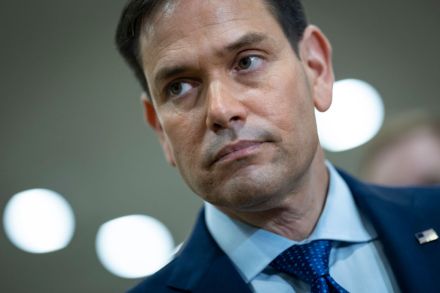
EXCLUSIVE: Rubio questions Harvard on Fauci-China cover-up

Senator Marco Rubio today sent a strongly worded letter to Harvard president Lawrence Bacow expressing concerns prompted by a Spectator magazine investigation by this reporter that Harvard may be “actively supporting [America’s] principal adversary,” the Chinese Communist Party. “Throughout the pandemic, we were told to trust the experts," Rubio told The Spectator exclusively. "But what we increasingly see is so-called trusted experts and institutions engaged in highly questionable behavior. This looks really bad, and if it turns out to be true, any last shred of faith that the American people had in these ‘experts’ will be deservedly stamped out.

The Harvard connection

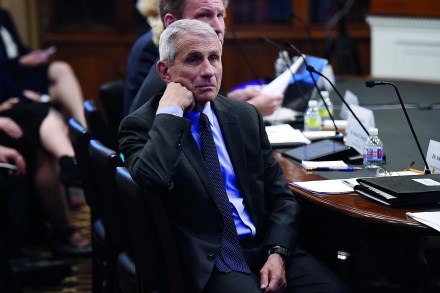
On the morning of Sunday February 2, 2020, Anthony Fauci, then in the middle of putting together America’s pandemic response, received an unusual email with a highly unusual request. The email, revealed as part of a tranche of FOIA documents requested by the Intercept, was from George Daley, the dean of Harvard Medical School. “Alan Garber, Harvard’s provost, and I met yesterday with a team led by Jack Xia, the CEO of China’s Evergrande Company, and Dr. Jack Liu, Evergrande’s chief health officer,” Daley wrote. Addressing the director of the National Institute of Allergy and Infectious Diseases as “Tony,” he asked for “whatever information you are willing to share on your current efforts to coordinate a response.

fauci

Evergrande illusions

At the height of the 2008 financial crisis I was invited to an off-the-record media lunch with a famous investor. I was taken aback when one of the world’s most successful capitalists announced that the crisis showed the Chinese had a superior economic model. China has tried something different from traditional capitalism, with its reliance on the ‘hidden hand’ of the free market. Since the first economic reforms in 1978, the heavy hand of the state has grown and modernized the economy with staggering results. If you believe the data, eight hundred million Chinese people no longer live in poverty and China has averaged 10 percent growth a year since reforms began.

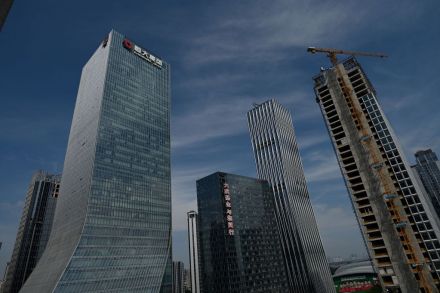
Evergrande

The next real estate crisis could come from China

Debt is as much a part of the real estate business as bricks and mortar. And as the great New York builder William Zeckendorf once famously remarked, 'it’s better to be alive at 20 percent than dead at the prime rate.' But the Evergrande Group, the second largest real estate company in China, has taken corporate debt to new heights, with liabilities of a staggering $310 billion, to finance its breakneck growth. In 2010, it had revenues of $7.3 billion and assets totaling $16.7 billion. In 2020, the figures were $81 billion and $368 billion. To be sure, it is a huge company, with 1,300 projects in more than 240 cities in China and 200,000 employees. This year alone, it began 77 new projects.

evergrande