Europe

Mr Obama, tear down these missile sites

From our UK edition

Today Barack Obama publicly tore down the missile installations that George W Bush put up in the Czech Republic and Poland. The system was ostensibly meant to counter threats from Iran, but given the swift creation of missile sites in Poland and the Czech Republic in the wake of Russian’s invasion of Georgia, Moscow’s elite never bought into this rationale – and perhaps rightly so. The strength of Russian feeling has always been clear. The latest Russian National Security Strategy states that the “ability to maintain global and regional stability is being significantly aggravated by the elements of the global missile defence system of the US”.

Europe rears its head once again for the Tories

From our UK edition

One of David Cameron’s chief successes has been to marginalise Europe as an issue. But the expulsion of Edward McMillan-Scott MEP from the Conservative party, for refusing to withdraw allegations he made against Michal Kaminski, the leader of the controversial Eurosceptic grouping of which the Tories are members, has disinterred the fractious European problem. The Europhile McMillan-Scott launched a pointed attack on the Tory leadership and its European policy on this morning’s Today programme. He said: “I think David Cameron has got most things right on Europe, but this partnership (the grouping) matters...What we will see is the party becoming much more Eurosceptic than it seems now.

Can Cameron learn from Wilson?

From our UK edition

Few Tories will enjoy looking back on 1974, but they may find it useful to study the second Wilson government and its successor, the Callaghan government, when it comes to the question of Europe.  Back then, we had a government coming to power in the midst of a severe economic climate, and which sought to change the pro-European course that its predecessor had set, including by re-negotiating Britain’s relationship with the EU and by appealing to fraternal parties in France and Britain. However, it ultimately ran into blades of domestic discontent and international indifference. The question is: could this end up being the story of a Conservative government from the middle of next year? Sure, there are key differences between then and now.

Sarkozy revs up Franco-German motor, leaving Britain behind

From our UK edition

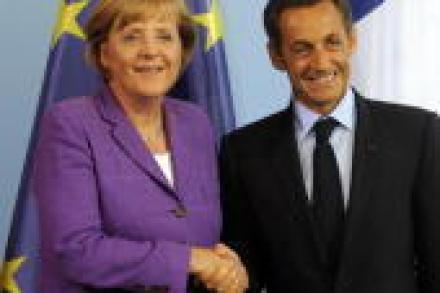
Last week, French President Sarkozy spoke to the annual gathering of his country’s ambassadors. Since he came to power, the French leader has used the annual event to welcome his countrymen back from their holidays and garner a few headlines. This year proved no different with an attack on the Iranian regime receiving the most attention. In a powerful line, the French president pointed out: "It is the same leaders in Iran who say that the nuclear programme is peaceful and that the elections were honest. Who can believe them?" He went on to say that he thought tougher sanctions would have to be discussed if Tehran does not change its position. But the speech was boilerplate Sarkozy – expansive, energetic, and ambitious.

Lisbon treaty moves closer, but Tories stay mum

From our UK edition

Sometimes if you fear something intensely or hate something very strongly, it can cloud your otherwise excellent judgement and analytical foresight. That seems to be happening to many euro-sceptics when they talk or think about the Lisbon Treaty and the forthcoming second Irish referendum. They do not like the treaty and so will find it almost unthinkable that the Irish will vote yes. But a 'yes' vote looks like the most likely scenario.  That will mean that the British Conservatives have to be less mealy-mouthed about their post-referendum strategy; if the treaty is ratified will they try to re-open the document if they win power or let sleeping dogs lie?

Diplomatic faux pas

From our UK edition

There is now much talk of the need to grow the army or build more ships, even in times of economic distress, lest Britain slip down the scales of international importance. Britain is – and will remain – a world power. Not a superpower, of course, but one of three major powers in Europe, and one of only two with a military and diplomatic reach to complement economic and ideological clout. Britain will need to have military capability, including a nuclear capability, to remain powerful. But the one thing Britain will need above all else, especially if defense expenditures are set to fall and our military is loosing esteem in the eyes of the US, is a world-beating diplomatic presence.

Oh No! The Muslims Are Coming!

From our UK edition

Sure as eggs is eggs, you can count on some folk being terribly exercised each time it is "revealed" that lots of boys named Mohammed, or some variation of the prophet's name, are being born in europe. This time it's the revelation [link fixed] that in four Dutch cities Mohammed is the most popular name for boys. Oh no! The Muslims are coming! Never mind that Mohammed is only the 16th most popular boys name in Holland as a whole, better by far to raise the spectre of an Islamic "takeover" of Dutch cities. Never mind that this sort of fear-mongering has become an annual tradition. Did you know, for instance, that Mohammed was already the second most popular boys' name in Britain? Clearly the Caliphate is on the march!

A new world order – don’t be silly

From our UK edition

Go to any international think-tank conference and you will hear one complaint repeated ad nauseam: the intenational system, built after World War II - and incorporating the UN, NATO, the IMF, WHO etc. - is no longer fit for purpose. It needs to change to accomodate new threats, like climate change, and new powers like India and Brazil. The last point is particularly oft-heard. If India provides the majority of UN peacekeepers, should Delhi not have a permanent say on the UN Security Council? Now that China has become a pillar of the global economy, should the Beijing government not have more votes on the IMF board? The limited representation of these states is thrown into relief when compared with the over-representation of European states like Britain and France.

No Brits in Europe’s likely new line-up

From our UK edition

With the Swedish EU Presidency beginning, and most diplomats mildly optimistic that the Lisbon treaty will be approved by the Irish in a new referendum, European leaders have turned their attention to filling Europe’s top jobs. But Tony Blair, who looked a shoo-in for the post of President of the European Council (not quite the “President of the EU”), now looks as if he has been dropped. Blair’s main backer, Nicolas Sarkozy, is said to have gone off the idea of bringing his British friend back from the political cold; while Germany’s Chancellor, Angela Merkel, was never keen.

Turkey in the EU?

From our UK edition

Like George W Bush, Barack Obama is in favour of Turkish accession to the EU. That's grand, though those American progressives who would like to see europe do more, not less and project a more, not less unified approach to all manner of international issues - be they fiscal or military - should remember that Turkish membership makes a common european policy on just about any issue less, not more likely. For that reason, of course, so-called "euro-sceptics" ought to be enthusiasts for Turkish membership.

New American Leadership, Same American Leadership Style: Do As You Are Told.

From our UK edition

Times change, of course. It wasn't so long ago that the American left wondered why Democrats in Congress couldn't "stand up" to the Bush administration in the way that, say, France and Germany opposed the American-led War in Iraq. Now that the worm has turned in Washington, of course, everything is different. Why won't those annoying europeans do as they're told? This time it is the failure of Angela Merkel and Nicolas Sarkozy, among others, to endorse the Americans' "solution" to the financial crisis that is irritating pundits in Washington and New York. Hence, Michael Tomasky*: "confidence has never been especially great here in the states that, even with Obama's massive worldwide popularity, European nations would just do what America wants." Oh noes!

Why Germany Won’t Play Ball

From our UK edition

It's not just Gordon Brown who wants the rest of europe to splash some cash to get us out of the mess we're in. There are plenty of commentators on the American left - Paul Krugman for one - who also fret that unless european countries join the massive stimulus bandwagon they threaten to delay, or even cancel, everyone's recovery. Enemy number one, obviously, is the Germans. But as Tyler Cowen points out, the Germans might have some good reasons for their reluctance to go on a spending spree. They remember the costs of German unification and can recall how spending massive quantities of money wasn't a magic cure-all then either: The two countries united, lots of money was spent and lots of money was borrowed...The results were less than wonderful.

The Advantage of Being a Confederate

From our UK edition

Henrick Hertzberg writes: Most of Europe’s individual “states” have governments that are not just democratic but also energetic and powerful. Hence the “European socialism”—i.e., universal health care, greater economic equality, low crime rates, fast trains, good road signage, excellent broadband—that American conservatives are so scared of. But Europe’s federal government—the European Union—is like the post-independence U.S. government under the Articles of Confederation: it’s weak, it’s atomized, it has feeble powers of taxation, and it can’t act without unanimity or something close to it among its several states.

Italian Jobs for British Workers

From our UK edition

I'm indebted to Justin at Chicken Yoghurt for alerting me to this article from La Repubblica: "PORTO VIRO (Rovigo) - 'It's a pity - È un peccato - I love working with the Italians, I love Italy. I just hope this Ssuff about the Grimsby refinery is just a one-off'. Brian has just got back from the oil rig in the Adriatic where one hundred Brits, along with two hundred Italian and foreign colleagues, are working cheek by jowl on a regasifier that will provide 10% of our country with methane. He doesn't want to talk, as he walks out from the Porto Viro base, guarded like  a barracks, where another one hundred employees work, mostly from Exxon Mobil: British, American, Norwegian, Italian... But the news of those walkouts against the "Italians" arrive like a bad omen.

Obama and Europe, Cont.

From our UK edition

Dan Drezner politely suggests I'm talking (or writing, rather) through my hat in this gloomy assessment of the transformational potential of the Obama presidency. Dan prefers to see the potential rather than the pitfalls. And he may be correct. It would probably be better for all if he were. As it happens, I do think he's right to argue that many european policy elites - and certainly much of the think tank world - do believe that Afghanistan must and can be saved. And it is certainly possible that withdrawing form Iraq (if that proves possible) could create the space and manpower needed to refocus on the "Good War".

Obama’s European Gambit

From our UK edition

Matt Yglesias wrote a column last week in which he disputed what he termed the "counterintuitive" view that President Obama's relations with Europe will not necessarily improve as much or as swiftly as is commonly imagine. On the contray, he suggested, simpley a) not being George W Bush and b) not going out of his way to insult or alienate Europeans would indeed go a long way towards reviving a spirit of transatlantic comity. Robert Kaplan made some similar points in the Atlantic: Obama enters the market at a time when US foreign policy stock is so depressed, the only way is up. Now clearly there's something to this.

The Continued Absence of a Golden Age

From our UK edition

Commenting on the future of transatlantic relations, Anthony writes: The plain fact of the matter is that there are structural issues at play that will ensure tensions remain. One of the great pieces of historical revisionism spurred by the Bush 43 tenure is the conviction that has emerged that under Clinton Euro-American relations were going well. They weren't. Most of the time it was poison. Even between Clinton and Blair things turned fairly sour...We should hope for the best with the emergence of the Obama administration. And at the very least it'll give me an excuse to start having a go at the Continentals again. But managing expectations, so to speak, is undoubtedly the right way to go. There are plenty of issues that have the potential to cause ructions.

Dick Cheney’s Mission to Destroy Europe

From our UK edition

I don't nornally write about Euroloonies, partly because I have trouble taking the European Parliament any more seriously than I do the Liberal Democrats. That is to say, it - and they - cross my mind no more than twice a year. But this, via the indomitable Trixy, is sufficiently priceless as to merit attention: Questions over the funding of the No campaign in Ireland on the Lisbon Treaty referendum Raising a point of order, Co-President Daniel Cohn Bendit (Greens/EFA , Germany) said: "Last weekend, the Irish press revealed that there possibly exists a link between the financers of the no-campaign in Ireland and the Pentagon as well as the CIA. This was a very interesting story and the explanation given was that Europe should not become too strong.

How Bush Made Life Easy for Europe

From our UK edition

I've a piece up at Culture11 considering some of the problems Europe may face when confronted by the next American president. Snippet: The election of a new American President is also a test. One which will determine, as is sometimes avowed, if European discontent is merely a manifestation of anti-Bushism rather than a more virulent, infectious anti-Americanism. In truth, the two cannot be so easily disentangled. Yet Europeans may one day reflect that, unlikely as it may seem, Mr. Bush was a better friend to Europe than they ever imagined. Politics is always a matter of style and substance. Mr. Bush’s style permitted Europe to turn away from and reject the substance of his presidency.

The Belgian Example

From our UK edition

Whither Belgium? Again. Ian Buruma frets that the break-up of Belgium would be A Bad Thing. As is generally the case with such articles, concrete arguments for this proposition are notably absent. Thus, Buruma: So the fate of Belgium should interest all Europeans, especially those who wish the Union well. For what is happening in Belgium now could end up happening on a continental scale. Why, for example, should the prosperous Germans continue to have their tax money pooled to assist the Greeks or the Portuguese? It is difficult to sustain any democratic system, whether on a national or European scale, without a sense of solidarity. It helps if this is based on something deeper than shared interests: a language, a sense of common history, pride in cultural achievements.