Europe

Rome smoulders

From our UK edition

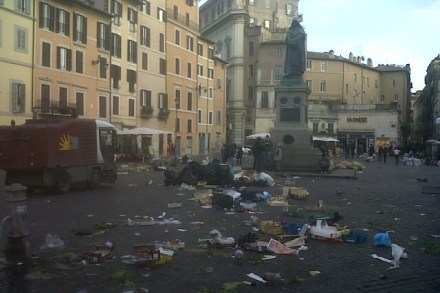
I'm visiting a stylish but tense Rome today, just as the Italian legislature has voted down a non-confidence vote in Silvio Berlusconi, Italy's mogul-cum-leader. "Rome is at war" my taxi driver told me and numerous demonstrations are going on. Ill Cavaliere, as Berlusconi is sometimes known, put in a strong defence of his record in the Senate and managed to coax, cajole and, some claim, bribe enough parliamentarians in the Chamber of Deputies to secure a small victory. He pulled not a Full Monty but a "Full Andreotti", using every trick and tactic in the book (and some scribbled in the margin too). For now, Berlusconi survives and can resume a life of partying pleasure-seeking and friendship with Vladimir Putin, which caused the political ructions in the first place.

Cameron must head for the common ground

From our UK edition

All the attention last week was on the Lib Dem split – but what about the division within the Conservatives? This is the greater threat to the coalition, and while there is not likely to be an earthquake soon, one can discern the outlines of the tectonic plates. Ladbrokes has odds of 5-2 of an election next year, and these don't seem so short when one considers the short life of coalitions in British peacetime history. So where might the tension lie? A while ago, I referred to the bulk of the party as "mainstream Conservatism," as a more useful phrase than the tautological "Tory right". Tim Montgomerie last week drew a distinction between this and what Ken Clarke calls "liberal Conservatism".

Serbia’s Nobel U-turn

From our UK edition

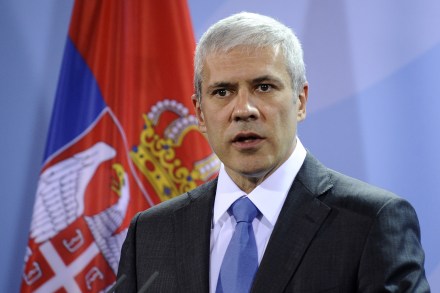
Yesterday, I blogged that Serbia's decision not to attend the Nobel Prize ceremony because of Chinese pressure was a shameful stance for the Balkan would-be EU member to take. Many others felt the same. Now, feeling the international pressure, it seems that Serbia's government has decided that the country's Ombudsman, Sasa Jankovic, will attend the event as special representative of Prime Minister Mirko Cvetkovic. A good outcome, and a sensible decision, which will hopefully be followed by a reprimand to Serbia's calculating Foreign Minister, Vuk Jeremić, who originally decided that Serbia would not attend the ceremony.

China’s new BFF: Serbia

From our UK edition

China is doing what it can do to scupper the forthcoming Nobel Peace Prize ceremony in Oslo. Their Foreign Ministry has now said that countries who decided to attend event would be showing disrespect to China: "We hope those countries that have received the invitation can tell right from wrong," the ministry's spokeswoman told journalists. Many of the world's human-rights abusers have been only too happy to oblige, including Pakistan, Iran and so on. They want to keep friendly with China and share Beijing's anti-democratic agenda. But, oddly enough, Serbia, a would-be EU member, is said to have chosen to boycott the Norwegian event. Keen to get Chinese financial assistance and help in its Kosovo policy, Belgrade's thinking is clear.

Brit-free EU diplomacy takes shape

From our UK edition

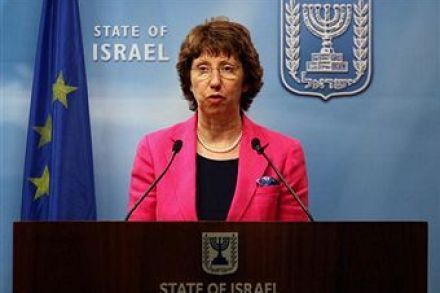
After months of behind-the-scenes work, the shape of the European External Action Service - the EU’s diplomatic corps - is now coming into view. The Bruxelles2 blog has obtained a version of its structure with some of the key names penciled in. You can find it here.      The top three jobs in the EU’s diplomatic headquarters will go to a Frenchman, a Pole and a German. The only senior UK official, besides Catherine Ashton (and her personal aides) is long-serving diplomat and geo-strategist Robert Cooper. But his name, rather mysteriously, is followed by a question mark. Of the EU “ambassadors” that have been appointed until now, there is one one Brit, ex-Ambassador Ros Marsden, who is now the EU envoy in Sudan.

Tax cuts: a Swedish recession remedy

From our UK edition

I travelled in from frozen Stockholm this morning. My colleague Mary Wakefield set out from County Durham. No prizes for guessing whose journey took more time due to snow. When my £38 norewgian.com flight arrived at Gatwick, the captain said: “Sorry, we’re going to be delayed. They can’t seem to find people to open the gate, they say they are short staffed.” The Swedes on the flight burst out laughing: welcome to Britain. Mary’s £107 train was two hours late arriving to the station, and spent a further two hours stuck in the snow. That the Swedes do better at us in the snow is no great surprise, but it’s odd to see them do better at supply-side economics.

At the heart of Europe

From our UK edition

The historic centre of Bruges has 16 museums, enough to cater for every touristic taste. There’s a Diamond Museum, a Lace Centre, a Choco-Story (the narrative element distinguishes it from the 50 chocolate shops) and a Friet Museum — or ‘Belgian Fries Museum’, for English-speakers under the misapprehension that fries are French. But the main focus of the city’s five-yearly festival, now in full swing, is on a local product the French cannot lay claim to: the Flemish painting tradition founded by Jan van Eyck, who died in Bruges in 1441. The historic centre of Bruges has 16 museums, enough to cater for every touristic taste.

A more German Europe?

From our UK edition

Timothy Garton Ash asked an important question in the Guardian recenty - is Europe becoming more German? Or, to put it more accurately, does the EU have to become more German to survive? "If the eurozone falls apart, it will be because Germany did not do enough to save it. If the eurozone is saved, it will be thanks to Germany. This is the greatest challenge to German statecraft since the country was peacefully united 20 years ago." "Yet here is another horn of Germany's dilemma. For half a century, German politicians have repeated, like a mantra, Thomas Mann's call for "a European Germany, not a German Europe".

Iberian blues

From our UK edition

I’m finishing a two-day trip to Spain and am about to board a plane, just as the bond markets turn their attention to the Iberian Peninsula. As James wrote yesterday, the gap between Spanish 10-year government bonds and those of Germany has widened to as much as 2.59 percentage points - the biggest gap since the introduction of the euro. For its part, the Portuguese government said it was under no pressure from the European Central Bank or other Eurozone member-states to accept financial aid to ease its debt and deficit problems. That sounds like the noise before the defeat. Portugal was brought to a halt yesterday by a strike in protest at the government’s spending cuts and tax rises, which aims to reduce the budget deficit from 9.

Why Spain matters to Britain

From our UK edition

So far Ireland and Greece have been bailed out with relative ease. If Portugal required external assistance, Europe could run to that too. But bailing out Spain would be another matter entirely. As The New York Times points out today, the Spanish economy is twice as big as the Irish, Greek and Portuguese ones combined. Spain’s situation is not yet critical. But as the NYT piece sets out very clearly, there are some extremely worrying signs. The gap between Spanish and German gilt yields is now at the biggest point it has been since the introduction of the euro. Spanish banks are also heavily exposed to Portuguese debt.

The strange case of Turkey, Islamic history and V.S. Naipaul

From our UK edition

Nobel laureate V.S. Naipaul has pulled out of the European Writers’ Parliament in Istanbul, following pressure from Turkish writers who felt ‘uneasy’ about comments he had made about Islam in 2001. Naipaul compared Islam to colonialism, arguing that both had had ‘a calamitous effect on converted peoples. To be converted you have to destroy your past, destroy your history. You have to stamp on it, you have to say 'my ancestral culture does not exist, it doesn't matter.’ Naipaul’s comments concern the factual context of Islam’s expansion between the 7th and 17th centuries, hence the comparison with colonialism.

Balkan promises still to keep

From our UK edition

One of the many areas that the Conservative Party took a very different line from Labour was on the Western Balkans. William Hague travelled to the region, frequently asked questions in Parliament and had the war-torn region written into the Coalition Agreement as a government priority. Seven months into the government's mandate, how has Britain's Balkan policy changed? How has Britain been able to affect things for the better? The answer is a tad disappointing. There are no more British soldiers or diplomats in the region than there were before the election. Reconstruction funds are slated to decrease.

The end of the Wall Street world

From our UK edition

Over the last decade, Wall Street has become an important foreign policy actor in its own right, almost as important as the lobbyists on K-Street and the White House on Pensylvania Avenue. The ebb and flow of capital has been a decisive international force in determining the fate of nations - most recently illustrated in the cases of Greece and Ireland. As an aide to President Clinton once said: in a second life he would like to come back as the bond market. But Wall Street has influenced foreign policy in a deeper way too: by changing the way that successive US administrations see the world. Not by focusing on the bottom-line. International relations cannot be reduced to cost/benefit analyses.

Cowen will seek a dissolution next year

From our UK edition

There has been much consternation and intrigue swirling around both Dublin and Westminster this afternoon about the near-collapse of the governing coalition in Ireland. The Greens, who support Brian Cowen’s Fianna Fáil-led government, pulled out; seeking a dissolution in the hope that it might save their skins from the fate that is likely (though not certain) to befall Fianna Fáil. If the government had collapsed, then IMF would have postponed the bailout. At least now Cowen can formulate a monetary plan, hopefully under the oversight of Ireland's international creditors, to free the country from its current extremis.

Carbon omissions

From our UK edition

With the latest round of international climate change negotiations at Cancun less than a week away, Policy Exchange has published research showing that the UK’s and EU’s performance in reducing carbon emissions is not quite what it seems.   According to the official measure, used to determine performance against the Kyoto agreement, the UK’s emissions have fallen.  The UK is set to exceed its Kyoto target of 12.5 percent reduction from 1990 levels.  But, in our new report Carbon Omissions, Policy Exchange has estimated that total UK carbon consumption emissions in fact rose by 30 percent between 1990 and 2006.

Ireland’s crisis is the fault of Fianna Fáil, not just the euro

From our UK edition

In all likelihood, George Osborne will rise this afternoon to groans if not jeers. Britain looks set to lend Ireland £7bn as part of multilateral and bilateral bailouts. Many, particularly the Eurosceptic right, question our involvement, given our straitened financial circumstances and the apparent fact that Britain is sustaining the eurozone’s monetary and debt union, and will have to borrow to do so.     George Osborne has been adamant throughout: Ireland is too important to Britain’s recovery to risk collapse – British and Irish banks are closely linked, debts and borrowing are often co-dependent, trade is very profitable. That the bailout should strengthen the euro is a natural consequence of Ireland being a member of the euro.

The death knell for the Euro?

From our UK edition

Are we witnessing the start of a very long death scene for the Euro? Asked if the Euro will survive, William Hague replied simply: “who knows?”. The new president, Herman Von Rompuy, has said that the Euro faces an “existential test”. We are looking at the very real prospect of the Euro’s collapse. And that “if we don't survive with the eurozone, we will not survive with the European Union”. This would, by necessity, require a new treaty - and give Britain an unprecedented opportunity to renegotiate its membership on terms the public regard as acceptable. In my News of the World column today, I say (£) that this presents Cameron with what would be the greatest foreign policy opportunity of his premiership.

Progress towards an Afghan solution?

From our UK edition

Nato has agreed to the Afghan plan, or so they say. As Lieutenant-Colonel David Eastman says, Afghan security forces are deemed to be sufficiently capable for the handover to begin next year, as Obama and Petraeus hope. There are those who disagree - some doubt the Afghans, some doubt success itself. Nato secretary general, Anders Fogh Rasmussen may have to be added to that former group of dissenters. He said earlier today: ‘If the Taliban or anyone else thinks they can wait us out, they can forget it.’ The problem for those of Rasmussen’s thinking is that the Taliban can wait; Nato can’t.

Nato – from the glass half empty point of view

From our UK edition

Nato leaders are in Lisbon and Daniel Korski has argued that the most successful military alliance in history isn’t done yet. Writing in the Independent, Patrick Cockburn gives an alternative. He contends that Nato will never recover from the Afghan mission, and he has three substantive points: 1). Nato's solutions are the problem. ‘It is not just that the war is going badly, but that Nato's need to show progress has produced a number of counter-productive quick fixes likely to deepen the violence. These dangerous initiatives include setting up local militias to fight the Taliban where government forces are weak. These are often guns-for-hire provided by local warlords who prey on ordinary Afghans.’ 2).

Britain may not be able to avoid bailing out the Irish

From our UK edition

This morning, it sounds as though Ireland has finally buckled to demands that they accept a bailout from the EU. Their central bank governor, Patrick Honohan, has said that he expects a "very substantal loan" from Europe – although the details, and debtees, are yet to be clarified. In the UK, of course, backbench MPs and others have been quick to condemn any move which would force British taxpayers to cough up cash under the EU’s various bail-out arrangements. Only problem is: the UK may not have a choice. The part of the eurozone bail-out package which Britain could be underwriting to the tune of £6-7 billion - the so-called European Financial Stability Mechanism – is not protected by a UK veto.