Europe

Remember this?

From our UK edition

“We will want to prevent EU judges gaining steadily greater control over our criminal justice system by negotiating an arrangement which would protect it. That will mean limiting the European Court of Justice’s jurisdiction over criminal law…” That was David Cameron a year ago when he presented the Tories’ EU policy ahead of the General Election. As we all know, much has changed since then. The pledge to ‘repatriate’ powers has been dropped, a victim of the Coalition deal. But despite this, MPs now have a huge opportunity to make good on pledges to regain control over EU justice laws, and even to repatriate powers should they want to – without having to change a single comma in the EU Treaties. How?

Davis and Straw unite against prisoner voting rights

From our UK edition

David Davis and Jack Straw have joined forces to resist the enforcement of prisoner voting rights, an emotive issue bequeathed to the hapless coalition by the previous government. Beside the obvious moral question concerning prisoners’ rights, Davis hopes to open a second front in the struggle over sovereignty with the European Union. He told Politics Home: ‘There are two main issues here. First is whether or not it is moral or even decent to give the vote to rapists, violent offenders or sex offenders. The second is whether it is proper for the European court to overrule a Parliament.’ Unless Davis has confused his articles, his second point is invalid. This decision has nothing to do with the European Court or the European Union.

The China arms embargo should be discussed – though not lifted

From our UK edition

Today's Times splashed on the spat between Britain and EU foreign policy "czar" Catherine Ashton over the embargo barring arms sales to China. The embargo was put in place after the Tianamen Square massacre and has remained in place, largely at US insistence, ever since. But is it the right policy? The policy has not prevented China from becoming a military power — its annual defense budget officially stands at $70 billion, although the Pentagon believes the real figure to be twice as high. China is developing carrier-killing missiles that even NATO does not have, and will soon sell weapons rather than seek to import them. There is, of course, a moral argument: the sanctions were put in place because of China's human rights violations.

Party management issues

From our UK edition

The trouble over the European Referendum Bill rather sums up the current state of the relationship between the Conservative party leadership and its more truculent backbenchers. The Bill was meant to be something to cheer up the troops. But it has ended up going down so badly that the whips have been left tearing their hair out and wishing that the government had never introduced it. Some of the policy differences between the leadership and the backbenches will never be resolved, particularly in coalition. But, as so often, a lot of the difficulties with this bill have been caused by poor communication and an inability to take proper soundings. The more one talks to Tory MPs, the more one is struck by how they feel that there is no proper feedback mechanism.

The new faces of Tory euroscepticism

From our UK edition

Britain is avowedly eurosceptic. But euroscepticism is not homogeneous; there are different tones of disgust. Many decry further political integration; others oppose Europe’s penchant for protectionism; some are wary of the EU’s apparent collective socialism; a few are essentially pro-European but believe too much sovereignty has been ceded; others hope to redefine Britain’s cultural and political relationship with the Continent, as a bridge between the Old World and the Anglosphere; most see Brussels as an affront to elective democracy; and a handful just want out and vote UKIP. So it has always been – perhaps one reason why William Hague’s ‘ticking time-bomb’ has not yet exploded.

Opposing the EU Bill

From our UK edition

The EU Bill is back in parliament today, amid speculation that Cameron has a Europe-fuelled rebellion on his hands. Despite the talk, the chances are that the Bill will go through Parliament wholly unscathed in its first test.   Today’s debate is about the so-called ‘sovereignty clause’ – or Clause 18 – within the EU Bill. Of the Bill’s 17 pages, the clause only takes up four lines, but has still managed to cause the most fuss (the vast majority of the text relates to the EU ‘referendum lock’).

The broken Lib Dem pledge that didn’t provoke riots

From our UK edition

Coalition politics sure does throw up some peculiar situations. Take today's vote on the EU Bill. As part of the horse-trading that's going on around it, Tory Eurosceptics have put forward a series of amendments to mould the Bill more to their liking. Of these, the most striking is Peter Bone's suggestion that Parliament should legislate for a referendum, not on this minor constitutional change or that, but on whether we should leave the EU altogether. So far, so unsurprising. But the curious part of all this is that the Lib Dems once offered an in-out referendum on Europe themselves. If you remember back to the row over Lisbon, Clegg's get-out clause was what he called "a referendum on Europe with substance".

China in a bullshop

From our UK edition

As if to illustrate Pete’s post about the rise of China and India, Chinese Vice Premier Li Keqiang has just finished a visit to Spain during which agreements worth 5.7 billion euros were signed. The Chinese delegation is said to have committed itself to buying six billion euros of Spanish debt, which helped calm markets and provided some relief for Spain’s recession-hit economy. Around the time that the Soviet Union collapsed, the Chinese used to say only they could save communism. Twenty years on, it seems only they can save capitalism. The Spanish are certainly in no doubt about the importance of their newfound Chinese friends. The left-leaning Spanish newspaper El País wrote that that Li was received in Madrid as "a new Mr.

The right has little cause for alarm

From our UK edition

It is to his credit that nuance is a word inimical to Lord Tebbitt. The unashamedly independent voice of the past has written a cutting piece about the coalition, the Lib Dems and the Oldham East by-election. He says: ‘A Lib Dem win would tilt the Coalition even farther Left and away from Conservative policies.’ Many Tory ministers joke that they thought themselves right wing until meeting their Liberal colleague. This is a radical government that many on the right can cheer.

What to do about Belarus, Europe’s last dictatorship?

From our UK edition

For a while it looked like the West had the upper hand. Belarus' Aleksandr Lukashenko, Europe's last dictator, seemed to be moving away from Russia and closer to the West. A succession of European ministers went to see him and returned to develop packages of support and assistance with his country. In that new "Great Game" played out on Europe's periphery it looked like Vladimir Putin's winning streak was finally coming to en end, after partial success in Georgia and outright victory in Ukraine. Or so European leaders hoped. But any hope of changing Belarus' position has now been dashed with the violent crackdown in Minsk against pro-democracy activists following December's presidential elections.

A preview of the rebellions to come

From our UK edition

Today’s papers are full of the Tory right asserting itself. In the Mail On Sunday, Mark Pritchard—secretary of the 1922 committee—demands that the Prime Minister and his allies come clean about any plans to create a long-term political alliance between the Tories and the Lib Dems. In The Sunday Telegraph, there’s a report that Tory rebels will vote with Labour to try and defeat the coalition’s European Union Bill. I suspect that these stories presage one of the major themes of the year, an increasingly assertive right of the Tory parliamentary party. For too long, Cameron has neglected his own MPs both politically and personally. The result is a willingness to cause trouble for the government.

A debt-filled New Year

From our UK edition

The Spectator is out today, with a cover story that I would commend to CoffeeHousers. Failure to learn from history usually condemns a nation to repeating its mistakes. That's why we should be nervous that no one seems to have worked out what caused the crash. Little wonder: the guys doing the analysis are the same guys who failed to spot the crisis building up, so it suits everyone to blame the banks. "How was I to know," says everyone from Gordon Brown to Joe the Pundit, "that they were doing all these complex debt swap thingies? They deceived everyone, the bounders." There is another analysis – and it's our cover story, written by Johan Norberg.

This year’s biggest story

From our UK edition

This year was so rich in stories - Expensesgate, the election and historic coalition, the Icelandic volcano, General McChrystal's dismissal, the Pakistani floods, Haiti's earthquake, Greece's near-collapse, the Will n' Kate engagement, Wikileaks, the Chilean miners and so on - that it is hard to pick just one story. Looking back over the year, however, I think two stories stand out - because they may herald a seismic change.  The first is, of course, the establishment of coalition. By now, the novelty of government by cross-party compromise has worn off. But, despite the gossipy complaints of a few Lib Dem ministers, a new kind of politics is being forged.

Caught between two great evils

From our UK edition

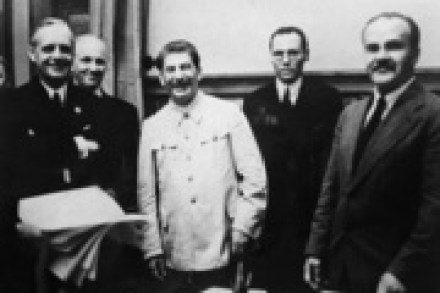
David Brooks, the great New York Times columnist, recommends the best essays of the year every Christmas. His selection this year includes a brilliant essay by Anne Applebaum, of this parish, on Hitler, Stalin and Eastern Europe. It makes you realise quite how bloody the Eastern Front was—‘On any given day in the autumn of 1941, as many Soviet POWs died as did British and American POWs during the entire war’—and think about the effect on these societies of being caught in the middle of these two extremist ideologies. There is always a tendency for us to discuss how the crimes of Hitler and Stalin compare.

The final sting

From our UK edition

It's Christmas Eve, and the Daily Telegraph have wrapped up their sting operation in time for tomorrow. The final victims are the Foreign Office minister Jeremy Browne and the children's minister Sarah Teather. As it happens, Teather gets off without blemishing her copybook: her greatest indiscretion is to claim that Michael Gove is "deeply relieved" to be in coalition, as it means more funding for schools. Browne, though, is a touch more forthright: he says that Tory immigration policy is "harsh" and "uncharitable," but that Lib Dem involvement will provoke a "more enlightened" outcome. He adds that the Tories' EU grouping contains parties that "are quite nutty and that's an embarrassment to them.

Grim parallels with Germany for Nick Clegg?

From our UK edition

Germany is one of the few countries that Nick Clegg has been able to look to for tips on how to be a successful Liberal party in coalition with a larger Conservative party. In 2006, Guido Westerwelle even took a delegation of Free Democrats to a Lib Dem frontbench meeting. Coffee House once predicted that, if the AV referendum was won, Clegg could one day become Britain's Hans-Dietrich Genscher, a permanent powerbroker. The parties are of course different in many ways. The Free Democrats are decidedly more pro-market and pro-business than the Liberal Democrats. They also have a lot more experience of government. Before the last election, the Free Democrats were part of Helmut Kohl's governments until 1998.

Kosovo deserves better

From our UK edition

Dick Marty's report on Kosovo leader Hashim Thaci has rightly caused quite a storm. Accusing the recently re-elected Kosovo prime minister of running a mafia-like state, and even controlling a organ-trafficking ring, has not only led to condemnation but is being used by some as an excuse to re-tell conspiracy theories about what actually happened in the 1990s. First things first. The CoE report's accusations should be investigated by at least two courts: ICTY in the Hague and the Kosovo courts (the latter with the help of the 1800-strong EU police-and-justice mission). If any of these fail to take up the task, a court in an EU member-state should take it upon themselves to investigate the allegations.

Europe keeps vexing the coalition

From our UK edition

That the Conservatives and the Lib Dems disagree fundamentally on Europe is a well-known fact. But how much they disagree is rarely put on display as clearly as in today’s European Voice. Andrew Duff, Liberal Democrat MEP and president of the Union of European Federalists, argues that the coalition’s European Union bill – David Lidington’s masterpiece – amounts to “legal pedantry” and will make the UK an “untrustworthy negotiating partner, particularly in matters of treaty amendment, which is such an important driver of European integration.” 'At home, referenda will unleash the forces of populist nationalism. Facile coalitions of nay-sayers will form to block Britain's progress in Europe.

What Cameron should push for in Brussels

From our UK edition

As David Cameron stays in Brussels for his third European summit as PM, it’s becoming increasingly clear that the EU's approach to the eurozone crisis – put up short-term cash and pray – isn’t convincing anyone.   On Wednesday, Moody’s threatened to downgrade Spanish government bonds another notch, citing the fact that, between them, the country’s government and banks have to raise €290bn next year to keep the party going. And, across the eurozone, banks and governments face daunting refinancing targets in 2011, which begs the questions: at what cost? And what happens if they fail to meet them?

A “two stone” solution to the Euro crisis will unbalance the coalition

From our UK edition

Whatever the British government wants, moves are now afoot on the Continent to address some of the structural problem with the Euro. They may in the end lead to some form of fiscal federalism. So far they are not supported by Angela Merkel, the key decision-maker, who worries constantly about the court in Karlsruhe, which has set clear limits on further European integration. But they are said to be supported, at least in part, by Finance Minister Wolfgang Shauble. Writing in the Financial Times, Frank-Walter Steinmeier and Peer Steinbrück argue that the EU needs "a more radical, targeted effort to end the current uncertainty, and provide stronger support for the future of Europe’s common institutions.