Europe

The coming war with Libya

From our UK edition

If the West is not ready to intervene decisively against Colonel Ghadaffi, it needs to get ready for a post-revolutionary Libya, where the dictator and his bloodthirsty family seek revenge on pro-democracy activists and countries like Britain. Think of Ghadaffi's previous record: the Lockerbie bombing, targeted assassinations like in the 1970s, and attacks on US soldiers in Germany. Libya could in future represent a threat to Britain akin to al Qaeda. So, the British government needs to think how it will deal with Ghadaffi MK II. Its policy should draw on past examples of containment and isolation. Libya's neighbours will have to be incentivised to bolster European - and especially Italian - attitudes.

Cameron’s principled stand over Libya

From our UK edition

Slowly, David Cameron seems to be mutating into a hawk over Libya. I've been increasingly impressed with the way he has made the case for a no-fly zone - knowing that it is an unpopular cause outside of the Arab world. Since the evacuation chaos, which he apologised for, he has pretty much led calls for some form of military intervention to stop Gaddafi bombing his own people back into submission. He was laughed at to start with; accused of making it up on the hoof. But now the 22-nation Arab League backs this position, as does Sarko. It may have been messy at first – but that’s how these things go. From the offset, Cameron was articulating a basic principle: we need to help the Libyan rebels, not sit and watch them get butchered.

The Arab League adds its weight to the calls for a no-fly zone

From our UK edition

We're pushing for a no-fly zone. France is pushing for a no-fly zone. And now the Arab League is pushing for a no-fly zone too. The news fresh out of Cairo is that the organisation has voted in favour of restricting airspace above Libya. It will now push the UN to do the same, which is a considerably more proactive than the stance it adopted earlier this week. While one vote doesn't really seal anything, this is potentially a crucial moment. NATO has made regional support a key condition of a no-fly zone – and now it has it, officially. Those who have been sniffing around for alternatives to the UN and its resolutions will regard this as a positive step.

The growing clamour for intervention

From our UK edition

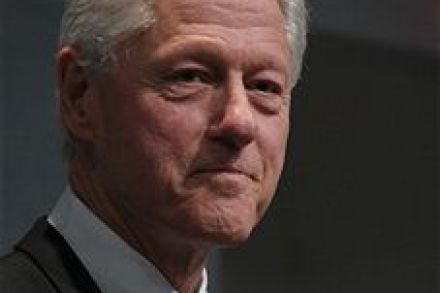
In the last two days, Nato and European leaders have declared that Gaddafi must go, but both have baulked at taking unilateral action. Their reticence has sparked a response from those in favour of intervention. Speaking in Brussels today, David Cameron said that situation on the ground may be getting worse and that Europe and the West in general “must be ready to act if the situation requires it”. Liberal interventionist Bill Clinton went further. Speaking at the Women in the World summit, he said: “I wouldn’t do it if they [the rebels] hadn’t asked… [But] it’s not a fair fight. They’re being killed by mercenaries.

What the Libya crisis means long-term

From our UK edition

The multiple crises in North Africa, from the revolution in Tunisia, through the protests in Egypt and to the conflict in Libya, has reinvigorated British foreign policy. In the last couple of years classic international issues have been pushed to the side by a need to focus on economic statecraft. Foreign ministers became less important as finance ministers gained prominence. This will now change, as leaders shift their focus onto the Libya crisis. The UN is again in focus, not the G20. The second change may be on East/West dynamics.

To strike or not to strike?

From our UK edition

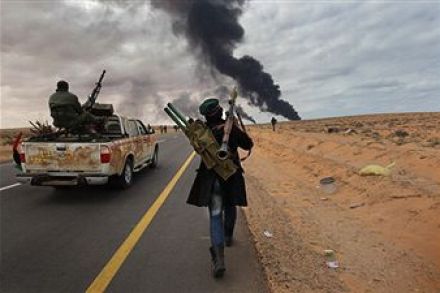
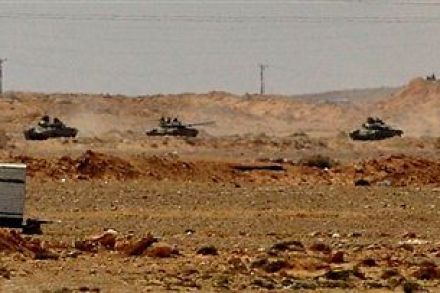
The situation in Libya is still uncertain, but the fog of war is clearing to expose a depressing picture. Forces loyal to the Gaddafi regime are conducting a successful offensive. The Times’ Deborah Haynes confirms reports (£) that Zawiya has fallen and rebels have been forced from the oil town of Ras Lanuf. William Hague has spoken to Mahmoud Jabril, Special Envoy of the Libyan Transitional Council. The Foreign Office has issued a communiqué on the conversation and some of Jabril’s emotional concern escapes the bland text. In the words of the Foreign Office, he wants ‘the West to act to hinder Qadhafi's ability to inflict further violence on the Libyan people, including through a no fly zone.

The British Bill of Rights stalls

From our UK edition

A British Bill of Rights has long been the Tory leadership’s sticking plaster solution to the problems posed by the ECHR. The idea is that a British Bill of Rights would give this country a greater margin of appreciation in interpreting the convention. But this morning this plan is in tatters.   The long-awaited commission on the British Bill of Rights is clearly going nowhere.  Any commission which includes Lord Lester and Helena Kennedy, two of the Lib Dem appointees to it, isn’t going to improve the situation.   The failure of this commission even before it has started is a reminder that this problem isn’t going to be solved in coalition.

Enda Kenny will need the luck of the Irish

From our UK edition

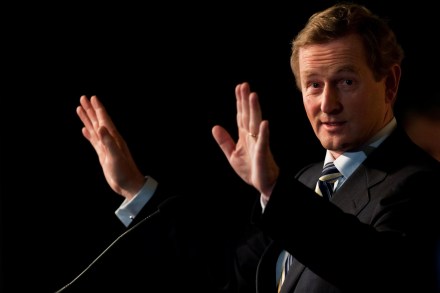
The BBC reports that Enda Kenny’s Fine Gael party has reached agreement with Eamon Gilmore’s Labour party. The new coalition is understood to be determined to renegotiate the precise terms of its EU/IMF bailout. If they succeed (which is far from certain) they will have served two purposes: first, to obtain a better deal for the Irish taxpayer; and second, to give the government a nourishing political victory over ‘the Germans', now loathed by Ireland's boisterous eurosceptic movement.  So, will it be an easy coalition? There is a tendency in Britain to define all politics in terms of left and right; already the BBC is busy with ‘centre-right Fine Gael’ and ‘centre-left Labour’.

Government to appeal on prisoner votes

From our UK edition

PoliticsHome reports that the government is to ask the ECHR to reconsider its verdict in the prisoner voting rights case. The website says: ‘In a response to a parliamentary question from Labour MP Gordon Marsden, Cabinet Office Under-Secretary Mark Harper said: "We believe that the court should look again at the principles in "Hirst" which outlaws a blanket ban on prisoners voting, particularly given the recent debate in the House of Commons."’ This is unsurprising. Last month, the government asked its lawyers to advise on the ramifications of noncompliance. The lawyers were unequivocal: the repercussions of such defiance was diplomatically impossible and extremely expensive.

Boris: give us a referendum on Europe

From our UK edition

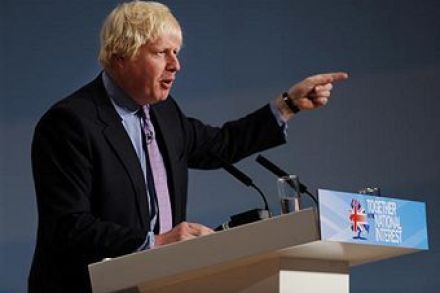
Boris kicks off his Telegraph column today by observing that Colonel Gaddafi and Gordon Brown "look vaguely similar". And yet the really provocative copy, at least so far as the government is concerned, is reserved for the final paragraph: "It is bonkers [by pushing for AV] to be pursuing the last manoeuvre of a cornered Gordon Brown. By all means let us have a referendum – the one we were promised, on the Lisbon EU Treaty. Have you noticed the EU policy on North Africa? Have you heard much from Baroness Ashton? Shouldn't we have a vote on all that?" It's hardly a secret that Boris wanted a referendum on Lisbon: he said as much in an interview before the 2009 Tory conference, and irritated the party leadership in the process.

Sarko’s bloody Sunday

From our UK edition

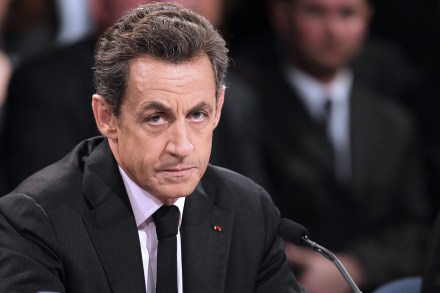
President Nicolas Sarkozy has struck again, forcing the resignation of his dictator-friendly and gaffe-prone foreign minister, Michèle Alliot-Marie, in the hope of shoring up the French government after a terrible couple of weeks. She will be replaced by Defence Minister Alain Juppé, a heavyweight conservative who was prime minister in the 1990s. Speaking to the nation on Sunday, Sarkozy suggested re-launching the Mediterranean Union and called for a meeting of the European Council to discuss Europe's response to the Arab revolutions. Getting European leaders together is a good idea. The scramble by each European country to get their citizens out of Libya could probably have done with a little more coordination.

Are right-wing politicians better looking? Discuss…

From our UK edition

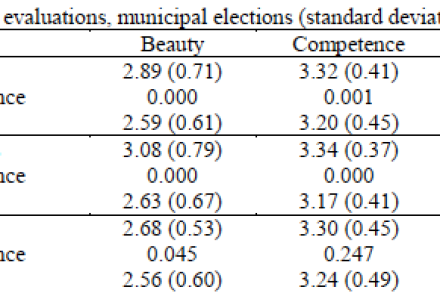
Did any CoffeeHousers hear this discussion between Bill Cash and Stephen Pound on whether the left or the right have the most attractive politicians? It was inspired by a recent Swedish research report that came down in favour of the latter. You can read the whole thing at this link – but, seeing as it's the weekend, I thought a summary might be in order. So here, to help you form an opinion on this most crucial of issues, are four points taken from its pages. Whether their generalisations are correct or not is another matter entirely: 1) The right is better looking. The report dwells, for a whole host of technical reasons, on the 2004 municipal – aka local – elections in Finland. It reviews around 8,00 candidates, and comes up with the following table.

Fine Gael’s unenviable, uncertain victory

From our UK edition

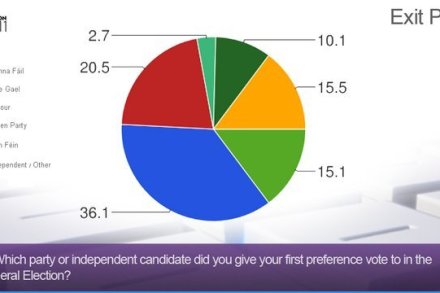
Oh look, the ruling Fianna Fail party is set for defeat in the Irish election. Unsurprising, for sure, but the scale of their drubbing will still be something to behold. An exit poll conducted by RTE has them in third place on only 15.1 percent of the vote – which, as Sunder Katwala points out over at Next Left, is some way down from both their traditional 40+ per cent support and the 41.6 per cent that they achieved in 2007. The same exit poll has the centre right Fine Gael party in the lead (on 36.1 per cent), their best performance for 28 years, although not enough for an overall majority. The probable outcome, as Alex details, is a coalition between them and the second-placed Labour party.

Downing Street’s bureaucratic burden

From our UK edition

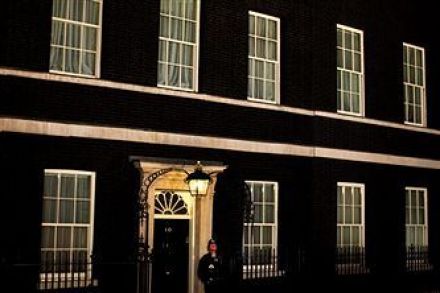
Do head over to ConservativeHome, where Tim Montgomerie has put together a comprehensive guide to the revamped Downing Street operation. I won't spoil its considerable insights here, except to highlight this: "An analysis of papers sent to Downing Street and the Cabinet Office has revealed that just 40% are directly related to the Coalition's programme. Roughly 30% come from the Whitehall bureaucracy and another 30% from the EU." James makes the point in his latest politics column that Tory ministers are becoming more and more Eurosceptic as they face the EU in government. That pile of European directives in the in-tray must just be getting too much.

The EU should impose sanctions on Gaddafi’s Libya

From our UK edition

The EU spends €460 million a year in operational costs alone on its new foreign policy department, the External Action Service, headed up by Catherine Ashton. This body - created by the Lisbon Treaty - was Europe’s ‘great white hope’ for the global stage, finally allowing it to speak with one voice and therefore giving it leverage where it previously had none.   It hasn’t quite worked out that way. Caught between Cairo and Tripoli, the EU has received yet another reminder that its bureaucracies and institutions cannot magically replace 27 individual foreign policies, as EU leaders continue their bickering over what to do.   The EU’s response to the turbulence in Libya has been fragmented at best, and contradictory at worst.

On the basis of this legal advice, the government is not planning to defy the ECHR

From our UK edition

As I wrote this morning, the Times has obtained a copy of a government legal memo (written before last week’s prisoners’ debate in parliament) examining non-compliance with the ECHR’s infamous judgment. The newspaper argues that the government plans to defy the Court; and there are plenty rumours swirling around Westminster to that effect, which is hardly surprising given that the Times chanced upon this document. But it’s mostly hot air. The government lawyers actually advised against non-compliance on four separate grounds and revealed that British officials are working towards compliance. First, here are the recommendations of the advice: 1).

It’s a knock out: judicial activism versus the sovereignty of parliament

From our UK edition

The prisoner voting debate is coming to a head, and Dave has turned once too often. The Times has received (£) what it describes as a government legal memo, urging the government to defy the demands of the European Court of Human Rights. After last week’s parliamentary debate, the government’s lawyers calculate that the ECHR can only put ‘political pressure rather than judicial pressure’ on British institutions. This is a seminal moment: political will has not been met by administrative won’t. But would non-compliance succeed?

Fianna Fail: Winning the Anarchist Vote (Though Not Much Else)

From our UK edition

Who knew Sligo Town was such a cradle for logic and anarchy? If only more usually-pointless TV vox pops were like this. The Economist observed this week that regret is one of the prevailing moods in Ireland these days. Perhaps so, but there's resignation too. The election will prove momentarily cathartic but the deal struck with the ECB and IMF is unlikely to be reshaped significantly and, hence, the election is being held in a strange, make-believe land in which all agree to pretend it matters hugely despite a widespread suspicion that the game is rigged and has, in fact, already been decided. It's not quite just for show and decency but it feels as though it might almost be.

Parliament is not sovereign

From our UK edition

Enough is enough. The British Bill of Rights is set to return: a consequence of the government’s running battle with parliament over the European Convention on Human Rights. Recent days have been filled with clues and suggestions of imminent reform: Dominic Grieve, a former advocate of the ECHR, went so far as to assert that Britain may leave the convention. Cameron let slip the news that a Bill Of Rights commission is to be convened at PMQs; at the time he was answering a question about the Supreme Court’s controversial sex offenders’ register decision. There are no details as to what the commission will consider, but Theresa May aired the guiding philosophy during her statement on the sex offenders’ register.

Cameron breaks from the norm at PMQs

From our UK edition

PMQs today contained a rare moment: the Prime Minister admitting that he wasn’t happy with government policy. Ed Miliband, who split his questions up this week, asked Cameron if he was happy with his position on forestry and Cameron replied, ‘the short answer to that is no.’ The answer rather drew the sting from the rest of Miliband’s questions on the topic. But it was a rather embarrassing admission for the PM to have to make.    Cameron made quite a lot of news at the despatch box this week. He accused Manchester City Council of making “politically driven” cuts, said that more regulations needed to be scrapped and announced that a commission on the British bill of rights is imminent.