Europe

The battle over the 4th carbon budget

From our UK edition

At the weekend, it appeared that Chris Huhne had won his battle with Vince Cable and George Osborne over whether or not the government should sign up to the 4th carbon budget. This budget covers 2023 to 2027 and is all part of a plan to cut carbon emissions by 80 percent by 2050 compared to the level in 1990; they have currently been reduced by 26.5 percent from the 1990 level. But it now appears that the greens in government might have been premature in declaring victory. First, the next set of cuts in UK carbon emissions is dependent on the European Union agreeing to embark on an equally significant emissions cut by early 2014. If this does not happen, then the UK carbon budget will default to the EU average.

Could a Briton run the IMF?

From our UK edition

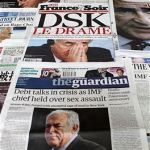
With Dominique Strauss-Kahn, known as DSK, undertaking scientific and forensic tests to determine if he sexually assaulted a hotel maid, the International Monetary Fund will be run by its No. 2 official, John Lipsky. A former banker, Lipsky was appointed “first” deputy managing director in 2006, and was expected to step down later in the year. But the change at the top will bring the former Permanent Secretary of the Department for International Development, Minouche Shafik, into the limelight.

The Arab Spring stalls in Syria

From our UK edition

With more than 800 people thought to have died in Syria, the situation is getting more and more serious. President Bashar al-Assad has clearly decided he cannot allow any challenge to his regime and has rejected even the advice of friends like Turkey and Qatar to step back from the brink. The military — principally the loyalist 4th and 5th divisions — has now perfected their anti-protest tactics. People in Hama and Homs are fearing that what was visited upon Deera — where the regime cut off water, electricity and telephones before assaulting the city — will happen to them. Yet, for all this, it would be wrong to think that Syria is on the edge of an all-out uprising against the regime, for a number of reasons.

Another European squabble looms

From our UK edition

There is much excitement in Westminster at the moment about Hugh Fearnley-Whittingstall’s campaign to end ‘discards’ under the Common Fisheries Policy. DEFRA and non-governmental organisations estimate that perhaps as much as 60 per cent of a catch will be returned dead to the sea because the CFP’s controversial quota system is based on the amount of fish caught. DEFRA has been pressing the European Commission to reform the quota system for years. At last, they seem to have succeeded. The commission is due to announce in July that the quota system will now be based on the amount of fish landed in port. With that apparently comes a concession to reduce discards significantly.

Mixed news from the Eurozone

From our UK edition

France and Germany’s better than expected growth numbers are making news today. But the divergence within the Eurozone — Estonia grew at 2.1 percent in the first quarter, Portugal shrank by 0.7 per cent — highlights one of the single currency’s biggest problems: how can one interest rate fit all? Economists expect Germany, whose GDP is now larger than before the financial crisis, to continue to outperform the rest of the Eurozone. Given that Germany and France together make up half of the Eurozone economy, interest rates will have to be set with this in mind. But, on the other hand, the Iberian countries and Greece are struggling with austerity and need a continued monetary stimulus.

The gulf between public opinion and Westminster opinion on Europe

From our UK edition

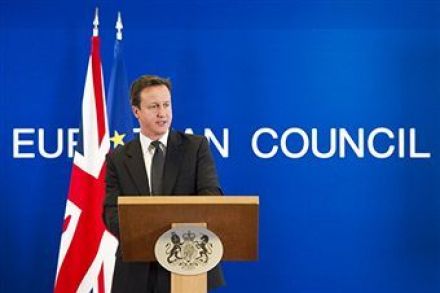
It's Europe Day today, where the flag of the EU will be flown by 26 of its 27 member states. David Cameron is refusing to join in* — and rightly. Why celebrate an institution to which the British public is hostile? I've always found it strange that Euroscepticism is caricatured as a fringe, minority position when the polling evidence is so overwhelming. The European Commission anxiously monitors this, conducting identical polling in all member states — the largest poll in the world. The results are never publicised in Britain because they make clear the depth of public hostility. We have dug a few out, from the Eurobarometer data archives, and print them below.

Another European mess for the coalition to deal with

From our UK edition

Financial meltdown. As Ben Brogan says this morning, it tends to concentrate the mind. And so it is with the coalition, after days of infighting and spiteful diversion. The meltdown is not our own, of course, but that of the Greeks. And although much will be said by Conservative and Liberal Democrat politicians about how "there, but for the grace of George Osborne," etc., the real issue for them is simply this: how much are we in for? If Greece requires another bail-out, how much British money might be involved? Osborne himself – speaking across the news channels yesterday – has set out out a firm line. "We certainly don't want to be part of any bail-out of Greece," stresses the Chancellor.

A model for the Duke and Duchess of Cambridge

From our UK edition

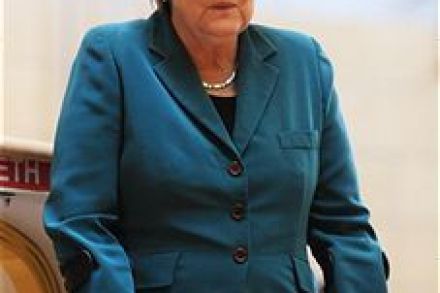
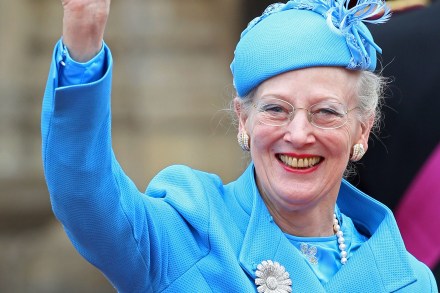
With the newspapers still full of Royal Wedding pictures, I thought I’d draw CoffeeHousers' attention to something remarkable: a visit by Queen Margrethe II of Denmark (pictured, left, at Westminster Abbey last Friday) to Helmand Province. That’s right, the 71-year old Danish monarch visited the her country's troops in late March this year, accompanied by the defence minister. Crown Prince Fredrik persuaded her mother to visit the troops after his own previous trip to the region. In this YouTube clip recorded in Helmand, Queen Margrethe talks to the camera (sorry, it is in Danish) about her experiences in the war-torn province. She pays tribute to the two British soldiers who died while she was visiting, saying the loss is also her loss.

The government has a problem with lawyers

From our UK edition

The government’s strained relationship with the Civil Service is a recurring story at the moment. Much of the disquiet seems to be the normal tit for tat exchanges immortalised in Yes Minister. In the main, ministers and their advisors express high regard for their officials. But there are some resilient bones of contention between the government and its lawyers. Again, this is not unusual. When Gordon Brown was Chancellor, parliamentary counsel were exasperated by his inability to take decisions. Brown’s budgetary machinations were finalised in a predictably mad rush, which incensed those who had to amend the bill hours before it was put to parliament.

What the GDP figures mean politically

From our UK edition

The coalition can breathe a little easier today. The economy returned to growth in the first quarter of this year, avoiding a double-dip recession. It expanded by 0.5 percent which is in the middle of City economists’ forecasts but below the OBR’s prediction of 0.8 percent. Recoveries are generally choppy and particularly so when coming out of a debt-induced recession.  Labour, though, will see these numbers as a further chance to claim that cuts have sucked the confidence out of the economy and that Britain is just bumping along the bottom. This, obviously, isn’t the whole picture. The deficit reduction plan has, crucially, kept the cost of borrowing low and enabled a continuing monetary stimulus.

Reasons for optimism in the Middle East | 22 April 2011

From our UK edition

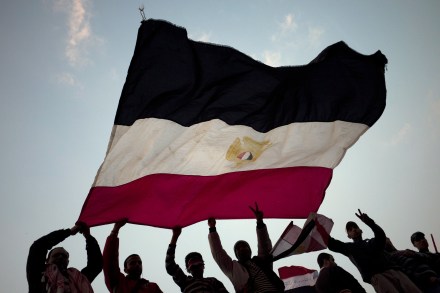
As the Libya crisis drags out, and Bashar al-Assad orders a crackdown in Syria, many have begun to doubt whether the changes seen in Tunisia and Egypt will actually spread to the rest of the Middle East. One former British ambassador recently suggested that perhaps the peoples of the Middle East preferred a mixture of authoritarianism and democracy — and that Britain should accept this; not impose its values and views.   But there is plenty of reason for optimism. The first is to look at the countries that have transformed themselves over the course of the last fifty years. Powerhouses like India and Brazil, but also smaller countries such as Vietnam, were mired in poverty, maladministration and the consequences of war.

Much ado about Brussels, bailouts and budgets

From our UK edition

The news that the European Union has decreed that its Budget be increased by 4.9 percent in 2012 ties a knot in the stomach, as I ponder an Easter weekend spent in Margate rather than Majorca due to austerity. As Tim Montgomerie notes, the government is taking this opportunity to assert its euroscepticism. Stern communiqués are being worded; stark warnings are being issued. Behind the scenes, the government has joined with the Dutch, its closest ally on the Continent, to confront the avaricious Commission. Patrick Wintour reports that the French will also oppose the proposed Budget, and the Austrians, Danes, Swedes, Finns and Belgians are expected to lend their weight to the cause.

How the Finns might rock the European boat

From our UK edition

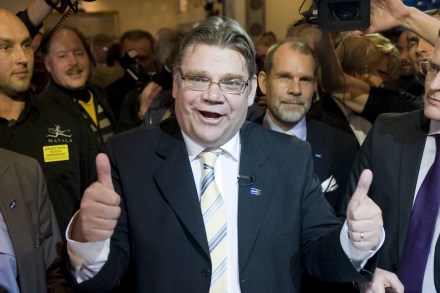
Normally, the results of the Finnish elections don’t merit much discussion. But the success of the True Finns, the only party to put on seats in the elections there last week, could have a major impact on this country.   The True Finns ran almost as a single issue party during the final week of the campaign. Their message: we’ll say no to bailing out other Eurozone countries. Seeing as they are almost certainly going to be part of the next Finnish government, this rather throws a spanner in the works of Brussels’ plan to bail out Portugal.

Cameron can make common cause to solve Europe’s immigration concerns

From our UK edition

Vince, it seems, is Vince. But Britain is not alone in struggling to arrest immigration. A mass of displaced North Africans is descending on Malta and Italy. The United Nations estimate that more than 20,000 people have already landed this year and many more expected. Neither Malta nor Italy can cope alone. On Monday, Malta called for the EU to invoke a 2001 directive that grants migrants temporary protection in cases of ‘mass influx’. Italy also petitioned Brussels to spread the physical burden. The EU did not acquiesce in either case, which especially outraged the Italian government: both Berlusconi and immigration minister Maroni said that the European Union stands and falls together, and they threatened to withdraw.

Hague’s return

From our UK edition

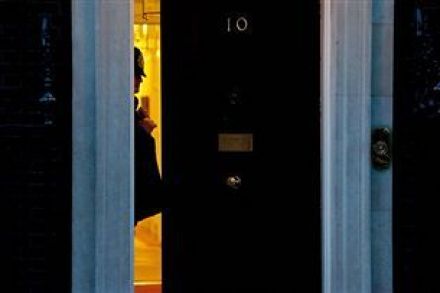
William Hague has had a good war. He began poorly, as the FCO struggled to evacuate Britons from Libya. But since then, the Foreign Secretary has showed deft diplomatic skill and leadership. The FCO has been focused on Libya and every able-bodied person has been drafted into duty, with diplomats now running the operation in No 10, and the Cabinet Office. On the Today programme, the Foreign Secretary batted away the idea, much loved by realists and pessimists, that because Britain did not know, with forensic detail, how exactly the intervention would end, it should not have become involved. There are many mountains still to climb.

Another fight looms for Cameron over votes for prisoners

From our UK edition

Prisoner voting is back on the agenda. The European Court of Human Rights has rejected the British government’s appeal and declared that the coalition has six months to draw up proposals to change the law.   David Cameron now has to decide whether to ignore the Strasbourg Court or go against the will of his MPs, who voted overwhelmingly to oppose giving prisoners the vote in response to the court’s initial decision. In many ways, ignoring the court is the safer option. Tory MPs aren’t inclined to back down on this issue and if Cameron tried to make them he would create a lot of ill-will and take an awful kicking from the press.

Going to the Ball Does Not Guarantee A Right to Dance

From our UK edition

So Washington will just have to make do with government-as-normal after all. Oh well. The White House appears to have decided that the best way to respond to defeat is to just call it victory and hope no-one notices. Hence President Obama's speech this evening in which he will take credit for a budget deal he resisted. That's fine. That's politics. The numbers, of course, are trivial. A $38bn cut in federal outlays is a fraction of a tiny fraction of the matter. Nevertheless, it's a political victory for the GOP, not least since spending-restraint is not something this President is interested in. Nor, of course, was his predecessor but that was then and this is now.

From the archives: Nigel Lawson on the Euro

From our UK edition

13 years ago, The Spectator carried an interview with Nigel Lawson in which he gave his views on the EU’s Economic and Monetary Union – views that seem especially prophetic today. ‘It’s going to be very nasty’, Christopher Fildes, The Spectator 2 May 1998 The Nigel Lawson Diet now seems to suit its inventor. Gone are the days when I had to defend him as chancellor against his girthist critics. Then he fell out with Margaret Thatcher – at first, over Europe. He wanted to put the pound into the exchange rate mechanism: she would not hear of it. Now I catch up with him at the House of Lords, in one of its fine rooms that the Lord Chancellor has not yet collared, looking out across the river. Europe is still on our minds.

Europe, and the UK, should be much more proactive about Portugal

From our UK edition

As Portugal bites the dust – following Ireland and Greece in asking for an EU bail-out – the most important question is still not being asked by EU policy-makers, or by the British government for that matter: will a bail-out actually solve any of Portugal’s problems? The simple answer is, it won’t. Asking the European Central Bank to take on more junk bonds, or piling more taxpayer-backed loans on Portugal’s already heavily indebted economy is not a long term solution. Ireland and Greece have already sought to renegotiate their bail-out terms as they are struggling to grow fast enough to repay their EU/IMF loans (ECB rate increases like the one we saw yesterday are unlikely to help).

A headache made in Lisbon

From our UK edition

Developments aplenty on the Portuguese front — the most noteworthy being that Britain is probably in for a €4.8 billion share of the €80 billion tab. Robert Peston explains the numbers here, although it basically comes down to the lending mechanisms that will be deployed. Add up our 13.5 per cent exposure to the European Financial Stabilisation Mechanism (EFSM) with our 4.5 per cent exposure to the IMF's pot, and it comes to €4.8 billion. Or, rather, £4.2 billion. The politics of the situation are precarious for the coalition. Yet I doubt they'll be unduly troubled by Ed Balls's suggestion that "it would be better if this was sorted out by euro area countries themselves given that this is a euro area issue".