Europe

Labour could be jumping the gun with early EU mischief-making

From our UK edition

If you've felt your heart beating a little faster than usual, and a strange sense of excitement creeping all over you, it's because #letbritaindecide fever is back in Parliament. Yes, folks, the fun returns, and this time for the committee stage of the bill, from 2pm today. I've already reported Mike Gapes' amusing amendments to the legislation which are designed to cause trouble. He has put a few more down of a similarly mischevious ilk, changing the question about Britain's membership of the EU to a question about whether Britain should join the Schengen Agreement, or the euro. But Labour's frontbench has also tabled some changes to provoke a row.

Soggy Tories decamp to the National Liberal Club

From our UK edition

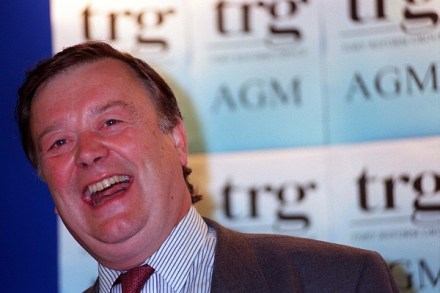
This may be a question to which the answer is no, but have you heard of the Tory Reform Group? The TRG is a marginal Conservative club these days because it is generally regarded as being less than sound, if not outright soggy, on the issues. Indeed, there was some embarrassment earlier in this parliament when Ed Miliband tried to use the TRG’s thinking to shape his NHS policy. The TRG numbers Ken Clarke, Lord Patten, Lord Heseltine and David Curry among its illustrious alumni. Goodness knows what these august men and their heirs have planned for Mr Cameron (or his successor) during the EU referendum, should it ever materialise. For the officers of the group have a keen and provocative sense of irony.

EU referendum plotting meeting: exclusive details

From our UK edition

As trailed on Coffee House yesterday, MPs in favour of an EU referendum met today to discuss how to advance James Wharton's private member's bill and how to pressure Labour and the Lib Dems to change their stance on the issue. I hear colleagues from all parties agreed with Wharton's warning that amendments in the Commons could endanger the Bill, while the Stockton South MP also suggested that though trouble looms in the Lords, any attempts to wreck the legislation there could provide a nice opportunity for a debate about the legitimacy of the Upper Chamber turning down legislation sent up from the Commons. As with gay marriage, dark mutterings about what could happen to this Bill once it reaches the Lords could prove unfounded.

‘Weak, weak, weak’ Labour will have to avoid looking panicked on any referendum pledge

From our UK edition

David Cameron's statement on the European council was another example of how easy it is at the moment for the Tories to portray Ed Miliband as a weak leader. He made it perfectly clear what he wanted those watching to take away by stealing Tony Blair's 'weak, weak, weak' line in 1997 when attacking John Major (which is well worth watching again). Today the PM told the Commons that Ed Miliband's position on Europe could be summed up in three words: 'weak, weak, weak'. He said: 'What I thought was interesting about the right hon. Gentleman’s response was that we heard not a word about the referendum that we are going to discuss and debate on Friday. I think I know why. The right hon.

‘What’s more important obeying a Brussels directive or keeping the lights on?’

From our UK edition

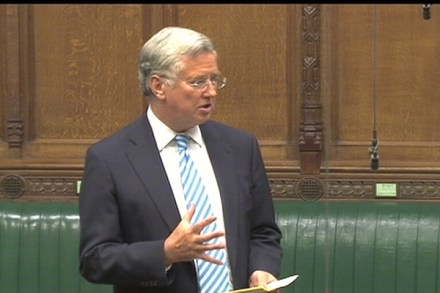
Andrew Neil’s interview of Michael Fallon on The Sunday Politics was a reminder of just how much of UK energy policy is determined by EU rules. When pressed on why there’s such a capacity crunch that there’s a risk of blackouts in the winter of 2015-16, Fallon explained that this was because a whole series of ‘dirtier’ plants are coming off-stream because of EU rules. If this wasn’t happening, there wouldn’t be a problem. Intriguingly, when asked ‘what’s more important obeying a Brussels directive or keeping the lights on?’ Fallon responded that ‘Keeping the lights on is the job of the government’. But he stressed that the government was ‘not planning to break any particular laws’.

Miliband’s EU referendum dilemma

From our UK edition

Friday’s vote on James Wharton’s EU referendum bill is going to push the whole Europe question right back up the political agenda. The Tories will try and use it to highlight their support for a vote and the opposition of the other major parliamentary parties. It will be very hard for Ed Miliband to go into the next election opposed to a referendum. It would look like he was opposed to giving the public a say. I also suspect that it will become almost politically impossible to oppose a referendum after the European Elections in 2014. Patrick Wintour reports today that Labour is toying with the idea of either amending the Wharton Bill to back an instant In / Out vote or committing to one within the six months of the next election.

Tory Wreckers Will Shipwreck David Cameron on the Coast of Belgium

From our UK edition

Do you understand what David Cameron's Europe policy is supposed to achieve? If so, you're way ahead of me. I've said before that I think Europe will cripple Cameron unless Ed Miliband gets there first and nothing has happened since to change my mind. Isabel's scoop published today, revealing the results of the Tory party's internal consultation help make the folly of Cameron's policy even clearer. With some understatement Isabel concludes that the results "underline how big the expectations are on Cameron to bring about big change in Europe". Indeed they do. Tory members are telling the Prime Minister that the European parliament should be abolished. This may not be the worst idea in the world but it is one of the most fanciful.

Exclusive: Tories go public with EU referendum bill

From our UK edition

This story broke as an exclusive in tonight's Coffee House Evening Blend, a free round-up and analysis of the day's political stories. Click here to subscribe. The Conservatives will table James Wharton's Private Member's Bill for an EU referendum tonight for publication tomorrow. Coffee House has exclusive details of the changes to this piece of legislation, and a clever new plan by the party to make the most of this backbench bill as possible. The bill has been amended following extensive talks between Wharton and Conservative backbenchers about its wording. It now includes a requirement for the Secretary of State to announce the date of the referendum by the end of 2016.

Tony Blair is pessimistic about the chances that Europe will change

From our UK edition

Tony Blair has plenty to say on the crisis in Syria in his interview in today's Times, as you might expect. But he also makes a few points on other aspects of foreign policy that are worth noting, particularly regarding Europe. The former Prime Minister tells Alice Thompson and Rachel Sylvester that David Cameron was wrong to offer a referendum on Britain's membership of the European Union. He says: 'We should at least pause for thought on this. I can tell you, people around the world now ask about this constantly, with an air of incredulity that Britain should even think of such a thing. Europe will be a lot less effective and probably less effectively run if Britain absents itself. If you pull out, that's a big decision. You're going to relegate your influence.

Europe will end David Cameron’s political career

From our UK edition

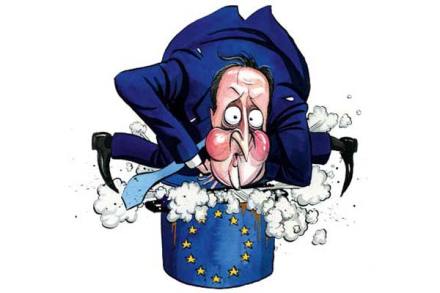
Poor old David Cameron has never been blessed with attractive options on the European front. But for a while it was possible to suppose that it might not ruin his career to anything like the degree it helped to scupper the ministries of John Major and Margaret Thatcher. That pretence is over, however. There's a storm coming and Cameron will be shipwrecked on the Belgian coast and that will be that. A few months ago I suggested that all the talk of Tory "unity" on the European question was so much hogwash. The best that could be said was that all these clever ploys and stratagems for renegotiating Britain's membership of the EU had bought Cameron a little time.  But only a little.

The Tory party are finally going to have to decide about Europe. It’ll break them

From our UK edition

By the time the G8 is next held in this country, the United Kingdom may well have left the European Union. In the next eight years, the question of whether Britain is in or out will be settled. We know that if David Cameron is Prime Minister after the next election, that decision will be made in 2017. But whoever is in No. 10, a referendum is coming. When it comes, the Tory party will have to decide whether it is for exit or staying in. Either way, it is hard to see the party staying together. On Monday, we had a preview of the coming argument. David Cameron gave a speech declaring that EU membership ‘is not some national vanity; it is in our national interest’. This would have been relatively uncontroversial even during the bitterest period of John Major’s leadership.

Tories pressure Labour and Lib Dems on EU bill

From our UK edition

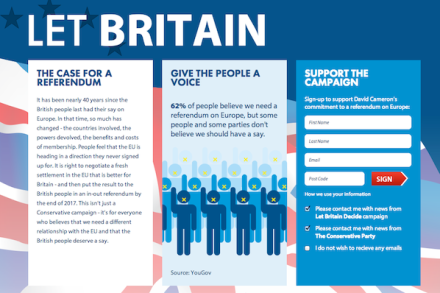
Credit where credit's due to the Tory spin machine for following up a good idea and putting pressure on Labour and the Lib Dems. This doesn't happen very often, so it's noteworthy. The party has launched a website called Let Britain Decide, which asks the public to back James Wharton's private member's bill for an EU referendum. It asks visitors to sign up to the campaign, lobby their MP, write to their local paper and brandish posters supporting the bill. A clever little paragraph on the site reads: 'Currently, only one of the main three political parties believes the British people deserve a say on Europe: the Conservatives. They are bringing forward a draft bill to legislate for an In-Out referendum before the end of 2017, following a renegotiation.

European Commission does eurosceptics’ dirty work, again.

From our UK edition

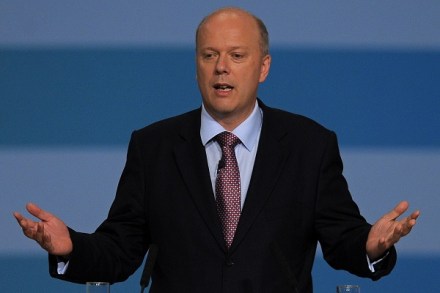
Defenders of the status quo in the European Union like to argue that 3 million jobs in this country currently depend on Britain's membership. Aside from the rather shaky maths behind that figure, it's striking that today Chris Grayling is making a stand on a Brussels plan that will cost jobs in this country, rather than boost them. The Sunday Telegraph reports the Justice Secretary accusing the European Commission of 'not living in the real world', with new data protection laws threatening to cost british businesses around £360 million a year. Grayling makes it very clear in his interview with the newspaper that he views these proposals as a direct threat not just to Britain's competitiveness, but to Europe's position in the 'global race' (that phrase isn't going away).

Ed Balls: Labour will include pensions in its welfare cap

From our UK edition

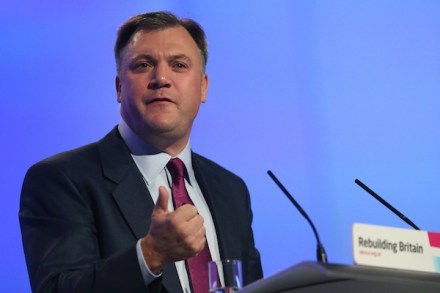
Ed Balls has just told Andrew Neil on the Sunday Politics that Labour will include pensions in their welfare cap. This opens up a major dividing line with the Tories who have been clear that George Osborne will exclude pensions from his spending cap. I suspect that Balls and Ed Miliband will now be badgered with questions about whether, if necessary, they’ll cut pensions — or not up-rate them — to meet the cap. Given the power of the grey vote in British politics (Labour estimates that one in every two voters in 2010 was over 55) they are going to come under massive pressure to rule this out. But, strikingly, Balls was not prepared to do this on  Sunday Politics. He even drew attention to the amount of welfare payments which go to the over-60s.

What you believe has everything to do with how old you are

From our UK edition

We’ve got bogged down, that’s the thing. Bogged down and caught up, all at once. The Prime Minister is rude about people and people mind, even if they’re the sort of people who are habitually rude about him. Europe is a mess we either need or we don’t, and the notion of chaps marrying other chaps gets everybody terribly excited, whether they’re in favour or against. And so travelled are these paths of debate, and so much fun do we all have having them, that I suspect we’ve lost sight of the biggest political fight of all. Which isn’t really about any of these things at all, but about people. And how old they are. Personally, I’m not normally a fan of columns based upon numbers.

Eurovision was as hilarious as ever

From our UK edition

Only in The Guardian could Britain’s humorous disdain for the Eurovision Song Contest be linked to the rise of UKIP and the decline of the British Empire: 'I think Eurovision-bashing reflects a crisis of collective national identity in the UK; it's a way of expressing feelings of unprocessed anger, frustration, and loss about the UK's place in the rapidly changing Europe and in the world more broadly. The great British social theorist Paul Gilroy has written of the UK's post-colonial melancholy, a failure to properly process and accept the end of the country's status as world leader, and I think that's what's at play here. The UK has been suffering a prolonged national identity crisis since the 1950s, in which resistance to European integration became a crucial unifying factor.

UKIP, Pierre Poujade and a political class that’s seen to be “out-of-touch”.

From our UK edition

Parliament is a "brothel". The state is an enterprise of "thieves" engaged in a conspiracy against "the good little people" and the "humble housewife". Time, then, for a party that will stand up for "the little man, the downtrodden, the trashed, the ripped off, the humiliated". Not, as you might suspect, the most recent UKIP manifesto but, rather, the sentiments expressed by Pierre Poujade during the run-in to the 1954 elections to the French National Assembly. Poujade's party, the Union to Defend Shopkeepers and Artisans,  shocked France's political elite by winning 2.5 million votes and sending 55 deputies to Paris.

Refusing to bang on about Europe has brought about even more banging on than before

From our UK edition

The BBC loves nothing better than a narrative in which Tory anti-European eccentrics split their party, and a bewildered public votes Labour. It is certainly the case that some of the Tory sceptics are half-crazed by dislike of David Cameron. But the reason the subject keeps coming up is because it matters, and it remains unresolved. The Tory rebels understand this in straightforward electoral terms: the rise of Ukip threatens their seats, so they must do something about it. What is maddening is not so much Mr Cameron’s actual policy on Europe, but his patent longing to avoid the subject. His refusal to ‘bang on’ about Europe has brought about more banging on than ever. This is an extract from Charles Moore's Spectator's Notes in this week's magazine.

Will the draft EU referendum bill calm Tory tensions?

From our UK edition

The last few days have seen the Tory party losing its collective head. Number 10 hopes that the publication of a draft referendum bill will begin to restore order. If this bill had been published by the leadership a week ago, it would have looked like a bold move. Today, it appeared panicky. But it is now out there, and any Tory backbencher who comes high up in the private members bill ballot on Thursday has a chance of guiding it through. I suspect if a vote could be won on second reading, the parliamentary dynamics of this debate would change yet again. What’ll be intriguing is to see how much the Tories campaign on this. David Cameron has already sent out an email to party supporters.

Tory leadership publishes draft EU referendum bill in a panic, and fails to convince backbenchers

From our UK edition

David Cameron was trying to work out how on earth to deal with the latest Europe row in his party. He heard them demanding legislation in this parliament for a referendum in the next, and this evening, after nearly a year of letter-writing and speeches, he announced that the Tory party will publish a draft bill doing just that. They still can't get it through Parliament through the government channels, so they'll be putting it up for any willing backbencher (of which there are many) to adopt in the Private Member's Bill ballot. Figures close to the Prime Minister were hinting to Tory MPs this evening there would be a move for legislation, but they were taken by surprise when, just a few hours later, the announcement was made that the draft bill will be published tomorrow. So is this it?