Europe

Voters have no time for the flaccid centre

From our UK edition

A depression has settled on the Liddle household ever since Norbert Hofer narrowly failed in his bid to become the president of Austria. I like a man who keeps a Glock pistol in his jacket pocket, and there is something noble in the cut of his jib. Norbert was thwarted by the voters of Red Vienna and the usual fraudulent postal ballots, most of which will have come from immigrants, as happens time and again in this country. So he lost. Instead the Austrians are saddled with a lunatic, Alexander Van der Bellen, a hand-wringing Green halfwit representing what George Orwell was habituated to call the ‘pansy left’. Interestingly, both of the two leading candidates for the job of president seem to loathe Austria and wish for it to be abolished.

If I were in charge of Leave, here’s what I’d say…

From our UK edition

It may be too late. But with only about three weeks before our referendum on EU membership I am itching to take the leadership of the Leave campaign. I could do them a power of good. Two serious objections may be raised to my bid. First, I couldn’t chair a parish meeting, let alone a snakepit of warring Leave enthusiasts. Secondly, I certainly don’t think Britain should leave the European Union. Setting these disqualifications aside, however, as a former speechwriter and politician I see so clearly the strategic direction the Leave campaign should set if they are to stand an outside chance of winning — and a much greater chance of losing with honour. I find myself barking advice at the radio whenever one of them is on.

Hilton: Brexit would be the crowning achievement of Tory modernisation

From our UK edition

In a speech to Policy Exchange today, Steve Hilton—David Cameron’s former senior adviser—will make the case that ‘any intellectual rigorous examination makes it impossible for a Tory moderniser to support staying in the EU’. He argues that Tory modernisation was about trusting people, and that the EU does not; that modernisation was about localism, and that the EU is inherently centralising; and that the EU helps the rich and not the rest. I think there’s much to be said for Hilton’s analysis. (Though, of course, it should be recognised that there are Tory modernisers on both sides of the argument.) But where Hilton is surely right is that the EU is not the future, it is an idea of its time—the late 20th century.

The Boris, Cameron ruck over EU

From our UK edition

David Cameron and Boris Johnson are the two biggest beasts in the Tory jungle. But they are currently involved in an increasingly undignified scrap over Brexit. As I say in The Sun today, it is hard to see how it ends well for both of them or the Tory party.  As one Cabinet Minister lamented to me recently, ‘it is a personal fight’ between Cameron and Boris and that ‘the Conservative party is on a hiding to nothing.’ Boris and Brexit is the itch that Cameron can’t resist scratching. When Iain Dale asked him about Boris going Out, Cameron—in effect—accused the former Mayor of putting his personal ambition ahead of the national interest which is about the most serious charge you can make of a politician.

This luvvies’ letter warning against Brexit isn’t worth the paper it’s written on

From our UK edition

Politicians from across the spectrum have had their say on Brexit. So, too, have various business leaders. Spy chiefs have spoken out. And even Ian Botham has chipped in to spell out his opinion on the EU referendum. So it was probably just a matter of time before the luvvies did the same. And today they’ve done just that: Jude Law, Keira Knightley and Benedict Cumberbatch are amongst some 300 actors and musicians who have backed the call for Britain to stay in the EU. In a letter, put together by Britain Stronger in Europe, they urged Britain not to become ‘an outsider shouting from the wings’.

Tory MPs get physical over the EU referendum

From our UK edition

Although it was already evident to many that relations in the Tory party are far from rosy thanks to the upcoming EU referendum, it seems tensions are higher than anyone first anticipated. In today's edition of The Times, Rachel Sylvester's column -- titled 'The Tories need a new breed of modernisers' -- includes a curious anecdote. Sylvester says that one Brexit-backing Tory MP attempted to trip up a minister in the members' lobby in frustration after the minister plumped for In: 'Some are almost literally coming to blows: one minister says a Brexiteer tried to trip him up in the members’ lobby of the Commons after he announced he would be backing Remain.' Let's hope Cameron gets a grip on his party before any physical casualties emerge.

Today’s inflation figures tell us nothing about Brexit. Why does the Treasury pretend otherwise?

From our UK edition

We’re now at the stage in the EU referendum debate where every announcement is explained in terms of its relationship to Brexit - whether relevant of not. So today we learn that inflation is still flat, dropping to 0.3pc in April. As per usual. But bizarrely, the Treasury is pretending that this tell us about the misery coming our way if Britain walks away from Europe. Here’s what a Treasury spokesman had to say about the figures: ‘Today’s inflation figure continues the trend we’ve seen over the past year. Pay is growing faster than prices, boosting families’ spending power.

Which polls are you going to believe?

From our UK edition

Today’s ICM phone and online polls are a reminder that the polls aren’t going to offer much certainty about the result of the EU referendum. ICM’s traditional phone poll has IN ahead 47 to 39, and with the don’t knows excluded up 55% to 45%. This would suggest that IN is on course for a fairly comfortable victory. But its online poll has Out up 47 to 43, and with the don’t knows excluded ahead 52% to 48%. Phone polls are generally regarded as slightly superior to online ones, they are certainly more expensive. So, I suspect that most people in Westminster will take these polls as a sign that IN is probably ahead. Interestingly, Number 10 briefed out some of its own thinking on the current polls to the Sunday papers.

Why the Queen won’t be the centre of political attention next week

From our UK edition

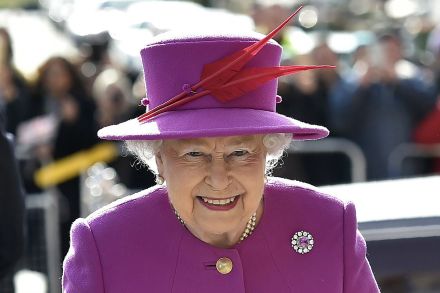
In normal times, the government clears the decks ahead of the Queen’s Speech. It wants to ensure maximum publicity for its legislative agenda. But these are not normal times: there’s an EU referendum campaign raging. Number 10 are being quite clear, as I write in The Sun today, that with less than six weeks to go to polling day, there won’t be a campaign ceasefire this week. ‘It is too close now’ one senior source tells me. So, why is the Queen’s Speech taking place at all? One IN supporting Minister complains that it is ‘moronic’ to be having it now, as it means that the measures announced it are likely to get caught up in the referendum cross fire.

Liam Fox is wrong to suggest that the EU controls the Foreign Office

From our UK edition

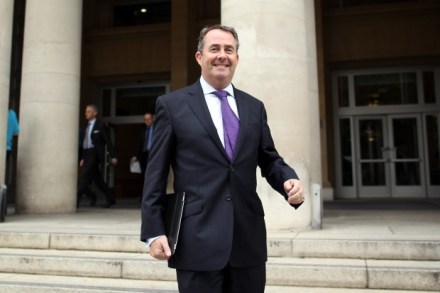
Former Defence Secretary Dr Liam Fox told an audience at the Royal United Services Institute last week that the Foreign Office had been reduced to "little more than the EU embassy in Whitehall". He is not the first person to accuse the FCO of promoting the interests of foreigners above those of Britain. But his analysis is way off target. Full disclosure: I am a recovering diplomat. I know the Foreign Office's shortcomings – including its tendency to sit on the fence in a crisis until it is too late; and its habit (now changing, at last) of moving staff with expertise to deal with countries in which they are not an expert.

Is the Brexit campaign ‘morphing into Ukip’?

From our UK edition

Is the Brexit campaign 'morphing into Ukip'? That's what Sir John Major will say he fears is happening later. In a speech at Oxford University, he'll argue that those calling for Britain to leave the EU are 'fuelling prejudice on immigration'. He'll also say that: 'As the leave arguments implode one by one, some of the Brexit leaders morph into Ukip and turn to their default position - immigration. I urge them to take care, this is dangerous territory that - if handled carelessly can open up long-term divisions in our society'. So does he have a point? It's definitely credible to see how some elements of the leave camp are focusing their positions around the immigration debate.

Boris needs you!

From our UK edition

Boris Johnson is nodding along as he reads Karl Marx. To be more precise, he is standing in the Spectator boardroom reading a letter that Marx and Engels wrote to this magazine in 1850 complaining about being pursued by Prussian government spies in London. He then admires a picture of the youthful Taki chatting up Joan Collins at a New York nightclub in 1957. When he was editor of this magazine, he called it ‘the best job in London’. But now he says that being mayor of London was even better. Less fun, perhaps, but more fulfilling. After eight years at City Hall, he is turning his mind to what he will do next. As we sit down to lunch, he suggests that since he has so much more time on his hands, perhaps he could write the leading article or proofread some pages.

David Cameron is now in full ‘Project Fear’ mode

From our UK edition

David Cameron's speech this morning about the EU referendum will succeed in doing one thing: infuriating the hell out of Eurosceptics. The Prime Minister is set to warn that peace and stability could be at risk if Britain walks away from Europe. He'll also go on to say that the European Union has brought together countries previously 'at each others' throats for decades'. In the Project Fear brand, it's certainly a classic in the genre. But will it work? One of the interesting aspects of his line of argument is the appeal it is likely to have to younger people. Those under the age of 34 are generally much more in favour of remaining in Europe, with only a third (29 per cent) of those aged 18-34 backing Brexit, according to an Opinium poll.

Donald Trump backs Brexit

From our UK edition

Donald Trump has waded into the EU referendum debate tonight, saying he thinks that Britain is better off walking away from Europe. It was just a matter of time before Trump had his say on Brexit, as the presumptive Republican nominee has never been shy about giving his opinion on a whole host of matters. But whatever people think about Trump, now that he looks to have the GOP race wrapped up, there's an argument we should take him seriously. After all, where has laughing at Trump got us? Here's what he had to say on Fox News: 'I think the migration has been a horrible thing for Europe, a lot of that has been pushed by the EU. I would say that they're better off without it, personally.

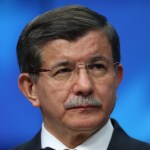
What does Davutoglu’s resignation mean for Turkey and the EU?

From our UK edition

Ahmet Davutoglu’s resignation comes at a sensitive moment for the EU’s migration deal with Turkey. Why did the prime minister fall from the sultan’s favour, and what does it mean? Over the past few weeks Davutoglu appeared increasingly worried about the hollowing out of his position. He had every right to be frustrated. In late April his grip on the AK party was weakened, as party bosses decided to stop him from appointing provincial party executives. Davutoglu has been, of course, head of government and head of the ruling AK party in name only. The real chief sits in a 1000-room presidential palace overlooking Ankara.

Let’s renew the EU

From our UK edition

From the time of the French revolution, the Catholic Church has always encouraged relationships between nations that draw them together rather than divide them. It is for this reason that the Church has always been broadly supportive of the European Union, although with reservations. There will be many Catholics on both sides of the coming referendum. Many of us have concerns about recent developments in the EU, such as the official removal of the reference to the continent’s Christian history from the European Constitution a few years ago. The more general push towards secularisation troubles us, too. Recent popes have questioned the tendency to regard the goal of the EU as the optimisation of market forces.

Letters | 28 April 2016

From our UK edition

Green reasons to stay in Sir: As Conservatives we are clear that the European Union has been central to improving the quality of the UK’s environment. European policy is not always perfect, but on environmental issues it has allowed us to move forward in leaps and bounds. The wealth of the environment on which our economy depends is not confined to national boundaries, which is why the EU has become such a vital forum for negotiating Britain’s interest in maintaining healthy seas, clean air, climate security and species protection. It is largely thanks to European agreements that we now have sewage-free beaches in Britain. Because of tough European vehicle standards, British car drivers spend less on fuel.

Number 10 might be more confident than ever of EU referendum victory, but they’re still trying to load the debate dice

From our UK edition

Downing Street is more confident than it has ever been that the EU referendum will be won. It is not just Barack Obama’s full-throated warning against Brexit that is responsible for this, but—as I say in my Sun column this morning—the sense that they have got the argument back onto their home turf of the economy. Indeed, it was striking how much Obama talked yesterday about the economic benefits to Britain of EU membership and the single market. The fact that this was his main message, rather than Western unity against Putin and Islamic State, shows which argument Number 10 thinks is working.

Coffee House Podcast: Barack Obama’s Brexit intervention

From our UK edition

Barack Obama has waded into the Brexit debate but should he be lecturing us about the EU referendum? On this special edition of the Coffee House podcast, Spectator editor Fraser Nelson is joined by Isabel Hardman and James Forsyth to discuss whether the President's intervention is a welcome one and whether it will actually work. On the podcast, Isabel Hardman says: 'I think the out campaign is certainly hoping that Barack Obama will be seen to be patronising British voters and patronising Britain suggesting that it is a sort of weak nation. And I think also the idea of foreign governments lecturing voters on what they should do in their referendum is certainly something the out campaign will look to exploit.

Did Stephen King write the In campaign’s script?

From our UK edition

One of the most striking things about the debate on Britain’s future relationship with Europe is that the case for staying is couched overwhelmingly in negative and pessimistic terms, while the case for leaving is positive and optimistic. Those of us who want to Leave believe Britain’s best days lie ahead, that our country has tremendous untapped potential which independence would unleash and our institutions, values and people would make an even more positive difference to the world if we’re unshackled from the past.